Pressure sores don't appear suddenly
When you are caring for someone, you may be told:
- Watch out for pressure sores.
You may hear this.
But many people may wonder:
- At what point has a pressure sore actually started?
This is a common question.
In fact, pressure sores don't suddenly become deep wounds.
In many cases, they start with small changes in the skin.
Noticing those changes early is the first step in preventing pressure sores.
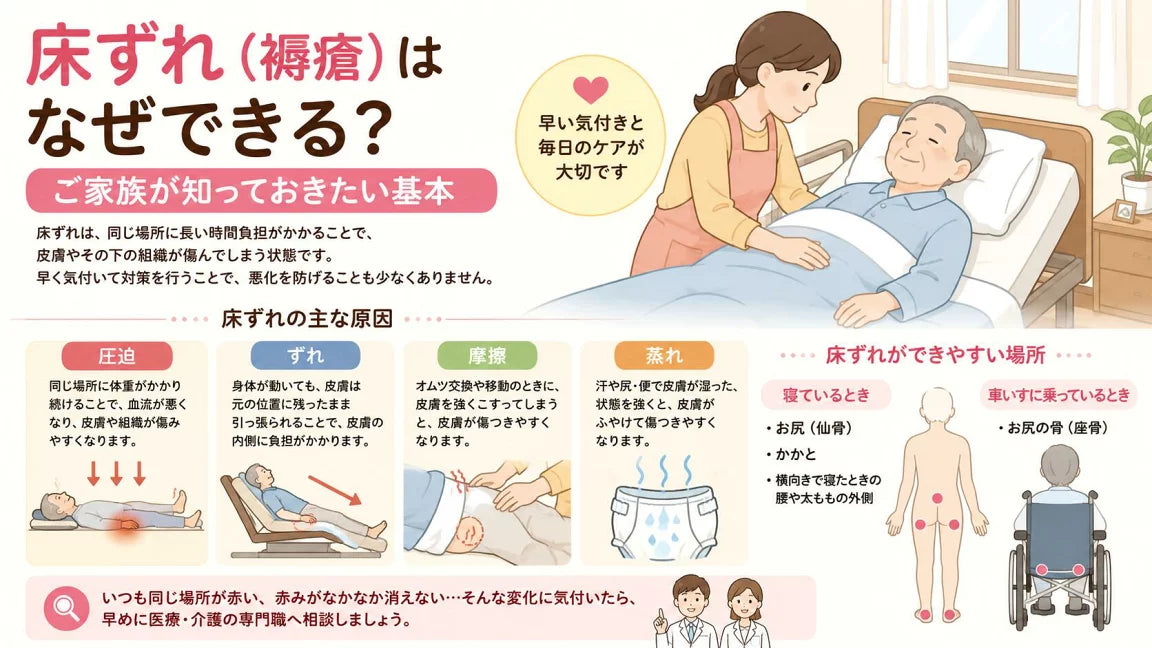
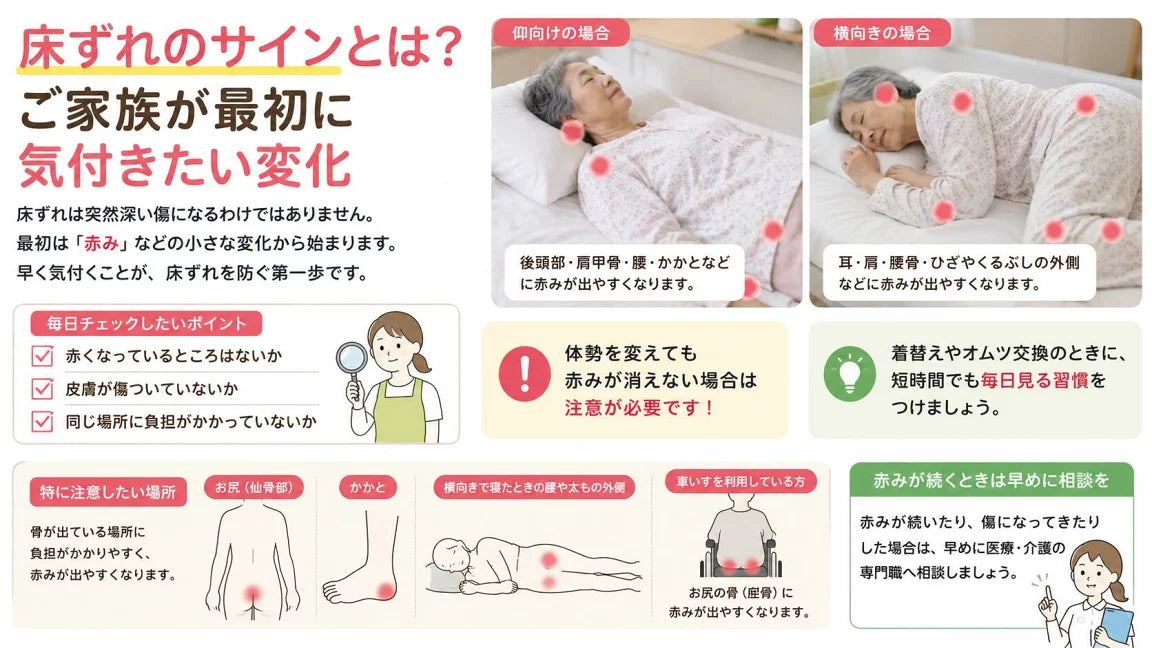
The first sign is "redness"
In the early stage of a pressure sore, the skin may turn red.
For example, redness may appear on:
- The buttocks
- The heels
- The parts that bear weight when lying on the side
and so on.
Be especially careful if the redness does not fade for a while even after changing position.
Redness may be the skin's way of saying:
- Please let me rest a little.
It may be a sign like this.
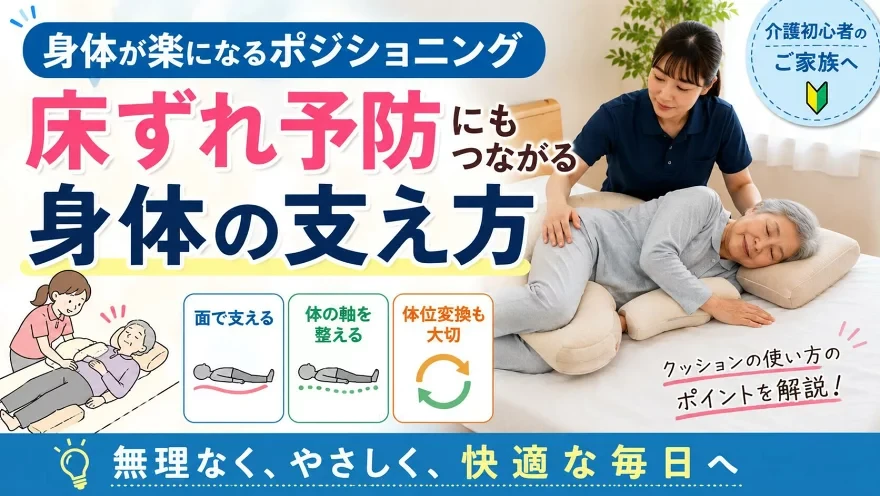
If you find redness, first change the position
If the skin is red, first try changing the position so that weight does not keep pressing on the same spot.
For example:
- If lying on the back, turn onto the side
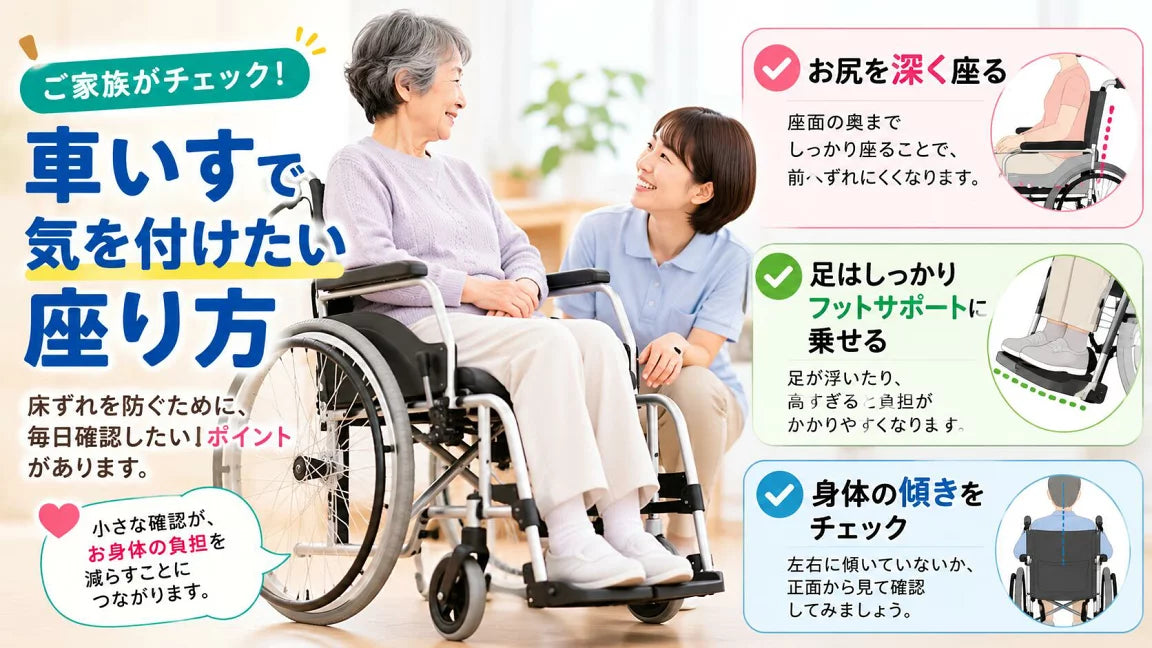
- If in a wheelchair, adjust the posture once
- Check that clothing and sheets are not wrinkled
Even small steps like these can reduce the strain on the skin.
If the redness still does not fade for a while, consult a medical or care professional early.
Make a habit of checking every day
Pressure sores can be noticed through small observations every day.
For example, at times such as:
- When changing clothes
- When changing incontinence pads
- When bathing
take a look at:
- Are there any red areas?
- Is the skin damaged?
- Is strain falling on the same spot?
Check these points.
Even if only briefly, looking every day is what matters.
Places where redness appears especially easily
Pressure sores are known to develop easily where bones stick out.
Check the buttocks and heels every day in particular.
For wheelchair users, care is also needed around the sitting bones (ischial bones).
Deciding which places to check every day makes it easier to notice small changes.
It's also important not to think "it's only a little red"
If there is only redness, you may think:
- It's probably still fine.
You may think this.
However, that redness may be a sign that the skin is under strain.
Changing the position or reviewing where the strain falls at an early stage can sometimes prevent pressure sores.
If you are concerned, consult someone early
If redness continues or the skin starts to become a wound, consult a medical or care professional early.
It is said that the earlier pressure sores are noticed and dealt with, the easier it is to prevent them from getting worse.
- Let's wait and see.
While thinking this, the wound may become deep.
If you notice a worrying change, it is important not to struggle alone and to ask for advice.
Summary
Pressure sores don't start as large wounds.
First, it is important to notice the small sign of redness in the skin.
Daily changing of clothes and pads also helps prevent pressure sores.
- Is it a little red?
A small observation like this may help protect the person's skin.
References and sources: Japanese Society of Pressure Ulcers, "Guidelines for the Prevention and Management of Pressure Ulcers (4th edition)"; Associate Professor Ukita (浮田徳樹), Department of Rehabilitation, Faculty of Health Sciences, Tohoku Fukushi University, "Using welfare equipment and positioning to prevent pressure ulcers: checkpoints for lying and sitting" (attended in 2026) (in Japanese)
*This article was reorganised for families who have started caregiving, based on what we learned in Associate Professor Ukita's webinar. If redness continues or the skin is damaged, please consult a medical or care professional early.