In a wheelchair, "how you sit" helps prevent pressure sores
When someone is sitting in a wheelchair, you may think:
- They're sitting properly, so it's fine.
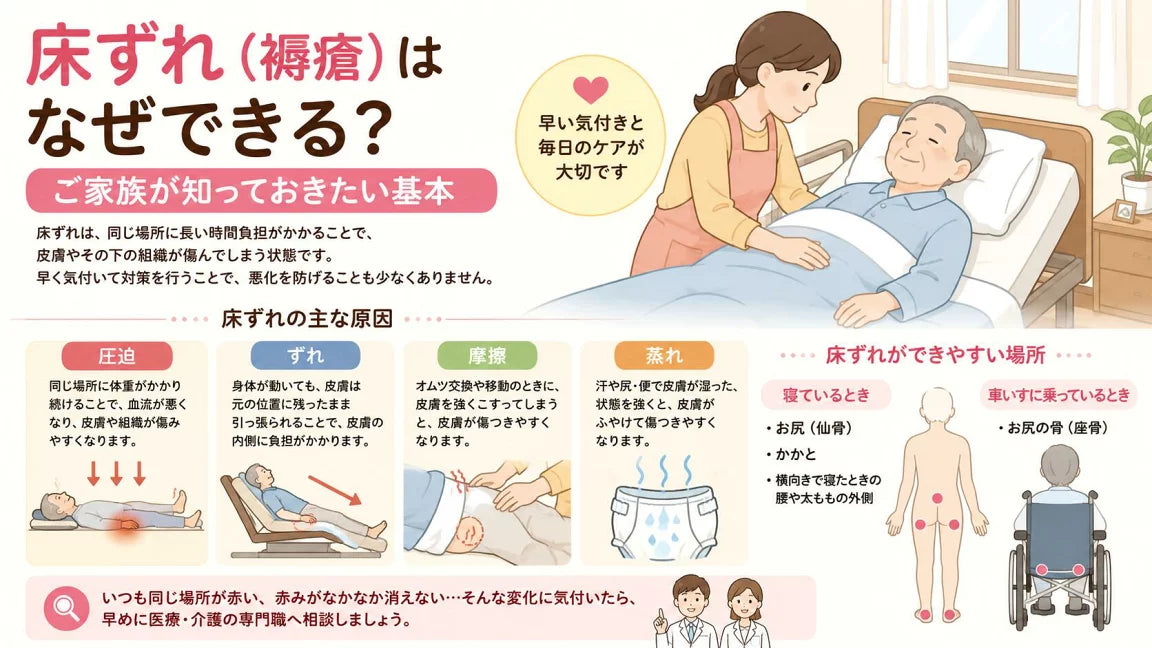
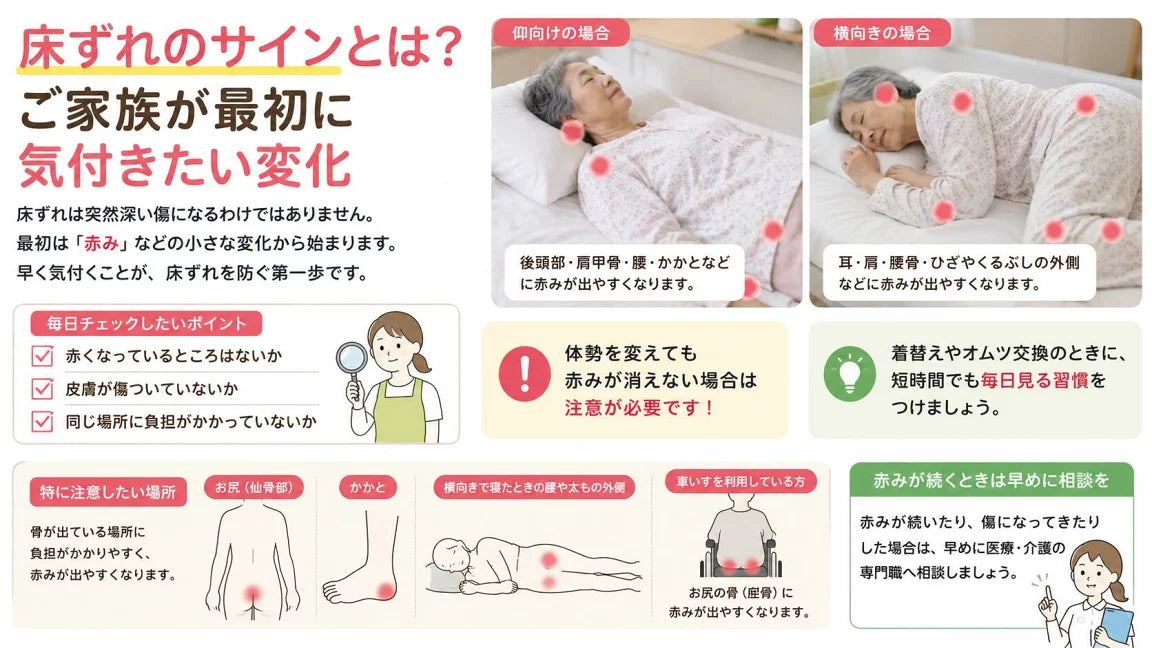
But depending on how they sit, body weight can keep pressing on the same spot, which can lead to pressure sores.
Knowing the points that families can check may help reduce the strain on the body.
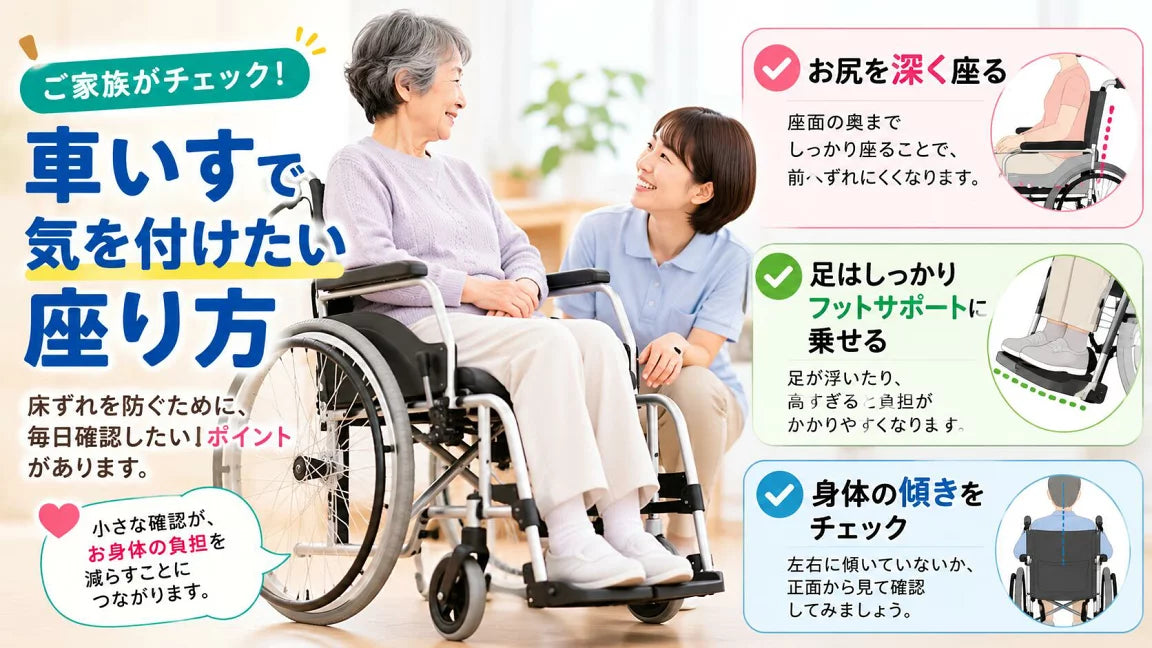
Check that they are sitting well back
In a wheelchair, it is important to sit with the hips as far back in the seat as possible.
Sitting shallowly makes the body more likely to slide forward and can put extra strain on the buttocks and back.
Even after repositioning, the person may gradually slide forward over time, so check on them from time to time.
Are the feet resting firmly on the footrests?
If the feet are lifted off the footrests (the plates the feet rest on), or if the footrests are set too high, strain tends to build on the buttocks and other areas, which can lead to pressure sores.
Check that both feet are resting firmly and that the posture is comfortable.
Check that the body is not leaning to one side
Some people lean to the left or right while sitting.
If they stay leaning in the same direction, the strain concentrates on one side of the buttocks.
Looking from the front, check that the body is not leaning a lot.
It also matters whether the same posture continues for a long time
When someone spends long hours in a wheelchair, body weight keeps pressing on the same spots.
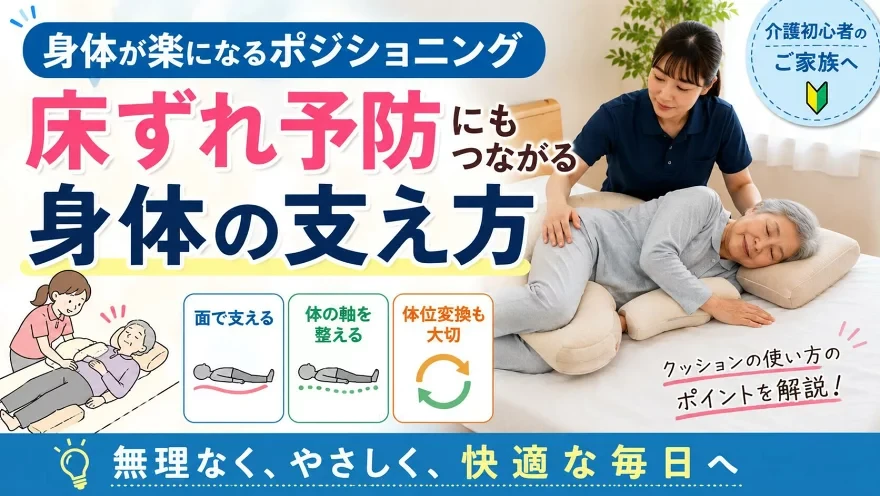
Adjusting the posture from time to time, or repositioning in consultation with the care staff, also helps reduce the strain on the body.
If you are concerned, consult a professional
- They slide forward however many times we reposition them.
- Their body leans to one side.
In such cases, the wheelchair may not suit the person's body.
Consulting a care manager, physical therapist, occupational therapist or welfare equipment specialist may get you advice on adjusting the wheelchair or cushion.
Summary
In a wheelchair, staying in the same posture for a long time tends to put strain on the buttocks and other areas.
The points families should check are:
- Are the hips sitting well back?
- Are the feet resting firmly on the footrests?
- Is the body leaning to the left or right?
These three.
A small check every day can help prevent pressure sores.
References and sources: Japanese Society of Pressure Ulcers, "Guidelines for the Prevention and Management of Pressure Ulcers (4th edition)"; Associate Professor Ukita (浮田徳樹), Department of Rehabilitation, Faculty of Health Sciences, Tohoku Fukushi University, "Using welfare equipment and positioning to prevent pressure ulcers: checkpoints for lying and sitting" (attended in 2026) (in Japanese)
*This article was reorganised for families who have started caregiving, based on what we learned in Associate Professor Ukita's webinar. How to adjust a wheelchair depends on the person's physical condition. If you have concerns, please consult a medical or care professional.