Do you find yourself thinking "please eat more"?
When an older family member starts eating less, it is natural to worry:
- I wish they would eat a little more.
- Won't they lose their strength?
However, when appetite has dropped, trying to increase only the amount of food often does not work as hoped.
At such times, rather than "getting them to eat a lot," what matters is "finding ways to take in the necessary nutrition even from a small amount."
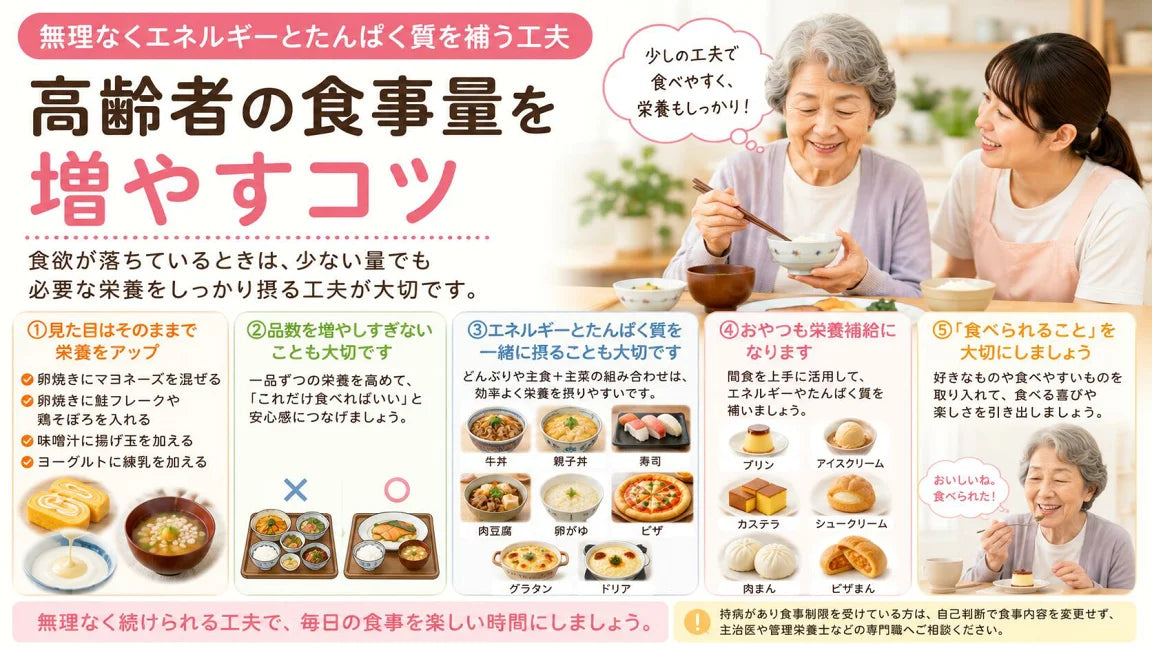
Raise the nutrition while the meal looks the same
For someone who eats only a little, just adding a bit of nutrition to each dish can help.
For example:
- Mix sugar or mayonnaise into rolled omelet
- Put salmon flakes or seasoned minced chicken into rolled omelet
- Add tempura bits to miso soup
- Add condensed milk to yogurt
With adjustments like these, energy is easier to supplement without greatly changing how much food there appears to be.
It also matters not to add too many dishes
When you think:
- I want them to build up their nutrition.
you may want to set out many side dishes.
But among people whose appetite has dropped, some feel "I can't finish all this" just from seeing many dishes laid out.
In that case, raising the nutrition of each dish can lead to the reassurance of "I only need to eat this much."
Take in energy and protein together
To maintain muscle, not only energy (calories) but protein too is important.
For example:
- Beef bowl (gyudon)
- Chicken-and-egg bowl (oyakodon)
- Sushi
- Simmered meat and tofu
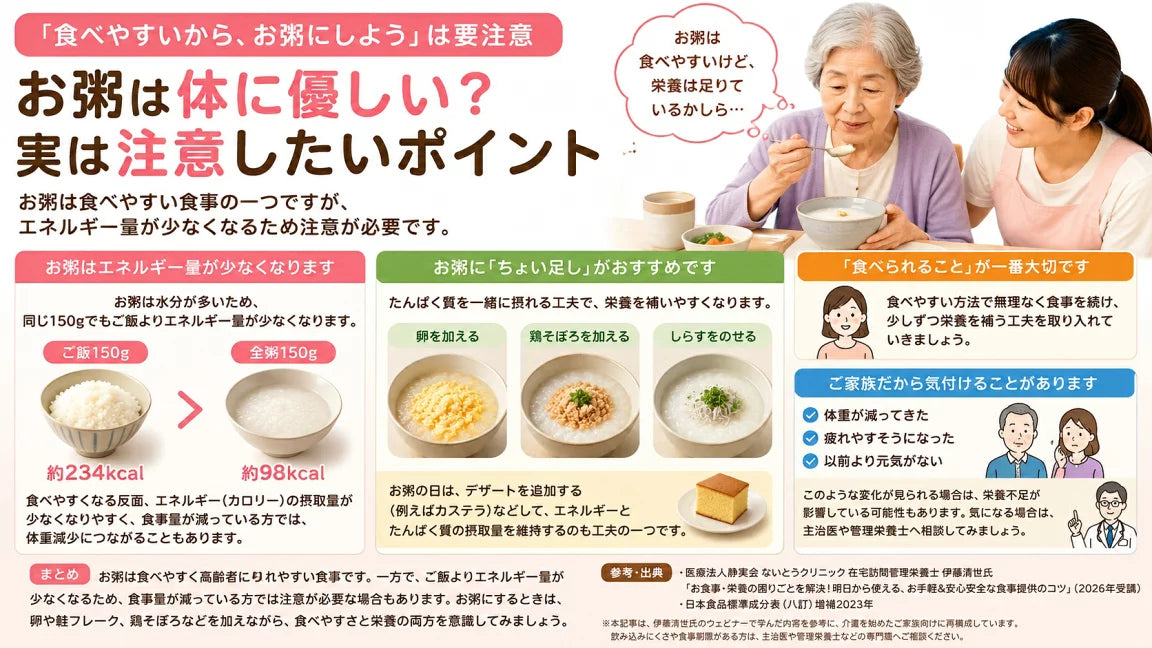
- Egg rice porridge
- Pizza
- Gratin
- Doria (rice gratin)
- Cheeseburger
These are examples of dishes that make it easy to take in energy and protein together.
Snacks are nutrition too
For someone who cannot eat enough at three meals, there is also the option of making use of snacks.
For example:
- Custard pudding
- Ice cream
- Castella sponge cake
- Cream puffs
- Steamed meat buns
- Steamed pizza buns
Some of these make it easy to supplement not only energy but protein as well.
Rather than deciding that "snacks don't count as nutrition," one approach is to include them comfortably at times when the person is able to eat.
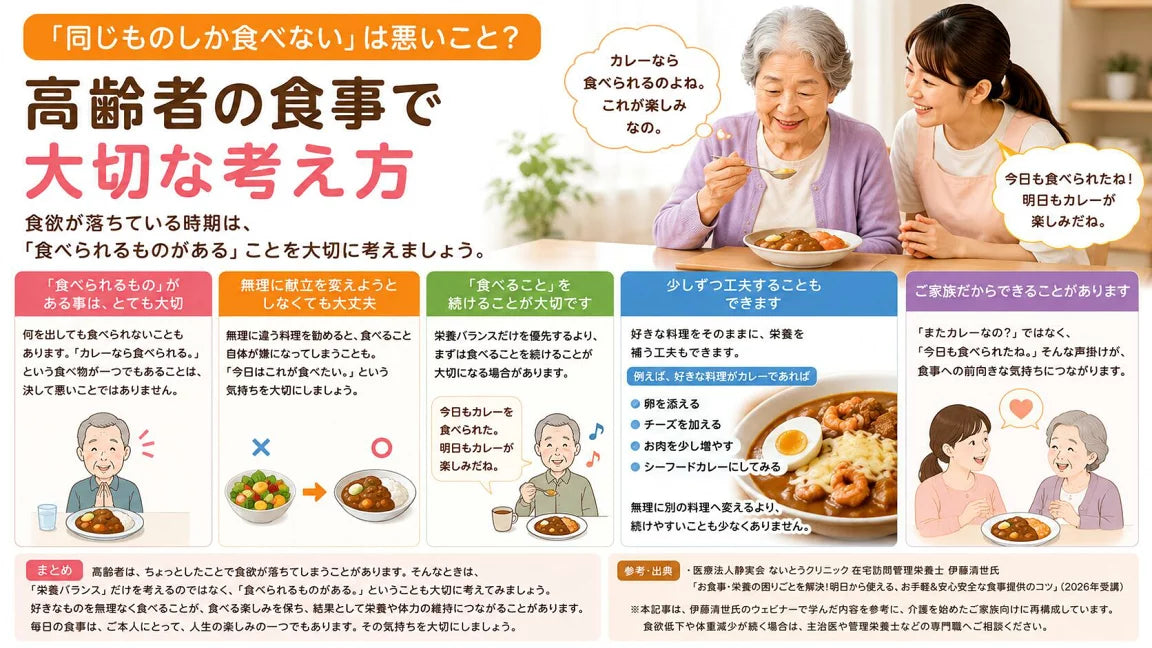
Let us value "being able to eat"
When appetite has dropped, rather than thinking too much only about nutritional balance, it can be good to begin by valuing "being able to eat."
Including things they like, things that are easy to eat, and things that make them think "I could eat this today" often reawakens the joy and fun of eating, and as a result leads to the will to eat and to nutrition.
Summary
As people get older, the amount they can eat at one time may become smaller.
At such times, rather than forcing the amount of food up, try bringing in ways that make nutrition easier to supplement even in a small amount.
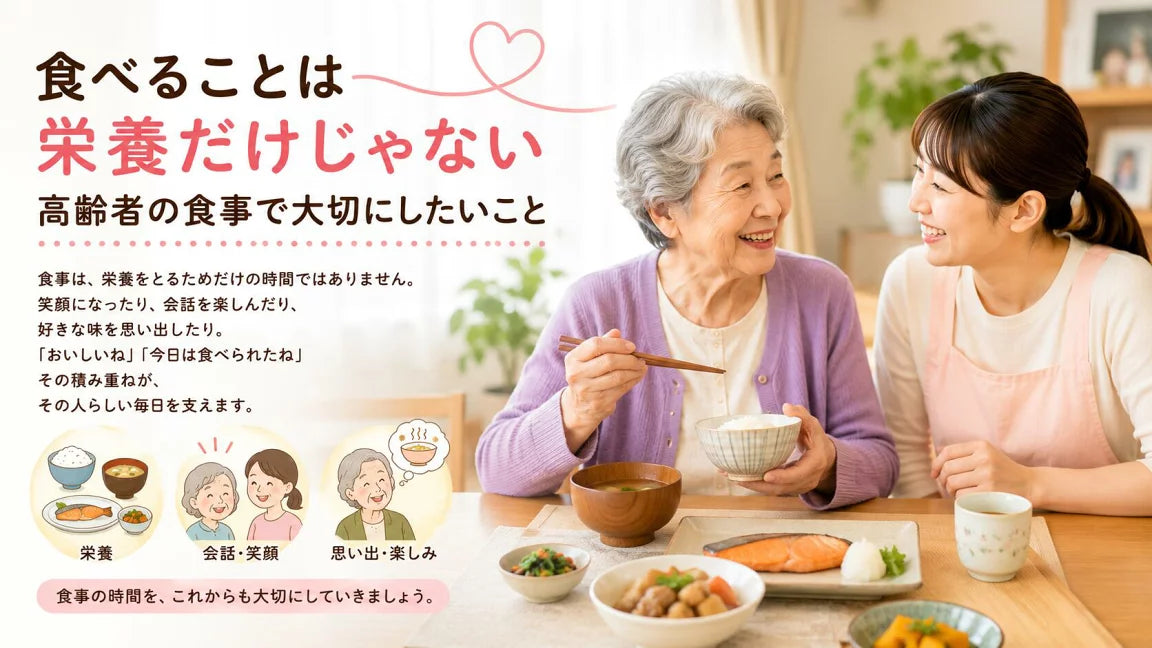
Daily meals are not only for taking in nutrition; they are an important time for feeling the joy and pleasure of "This is delicious" and "I was able to eat."
While respecting the person's own pace, let us find a way that can be continued without strain.
References: Ministry of Health, Labour and Welfare, "Summary of the Results of the 2023 National Health and Nutrition Survey"; Ministry of Health, Labour and Welfare, "Dietary Reference Intakes for Japanese (2020)"; Kiyoyo Ito, home-visit registered dietitian, Naito Clinic (Seijitsukai Medical Corporation), webinar 「お食事・栄養の困りごとを解決!明日から使える、お手軽&安心安全な食事提供のコツ」 (on easy, safe ways of providing meals; attended in 2026, Japanese)
* This article is restructured for families who have just begun caregiving, with reference to what we learned in Ms. Ito's webinar. Those who have a chronic condition and are under dietary restrictions should not change their diet on their own judgment, and should consult the doctor, a registered dietitian or another professional.