Is it true that "snacks are bad for you"?
Does an older member of your family do this?
- They don't eat much at meals, but they will eat a snack.
As family, it is natural to worry:
- Is it all right, just snacks?
- Wouldn't it be better to get them to eat proper meals?
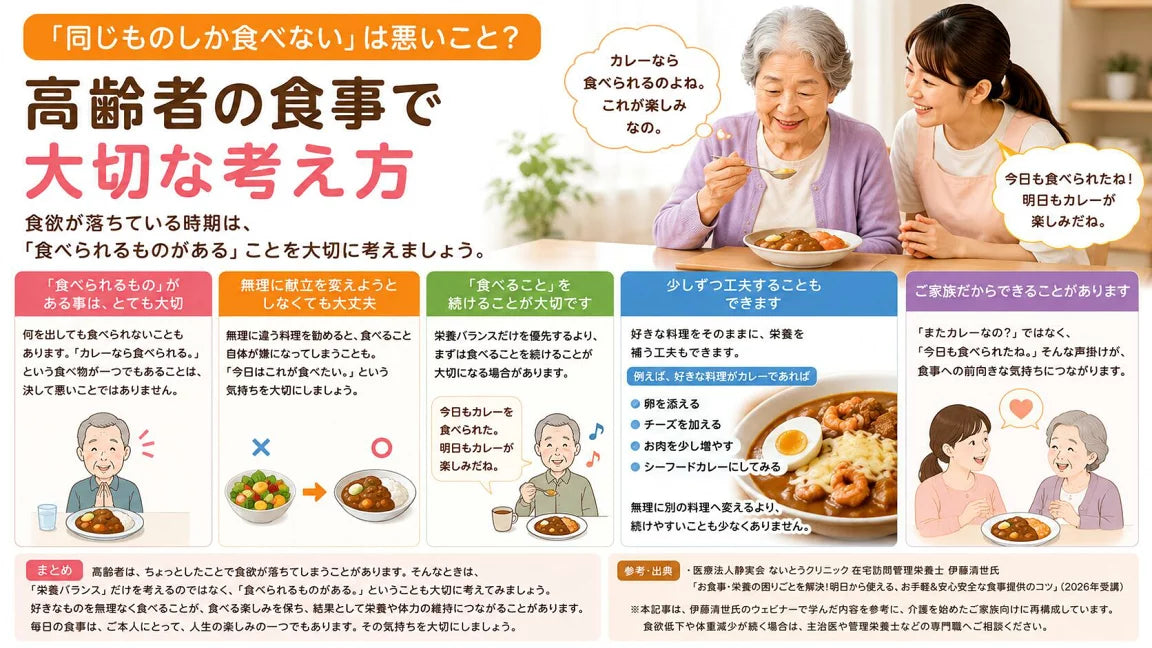
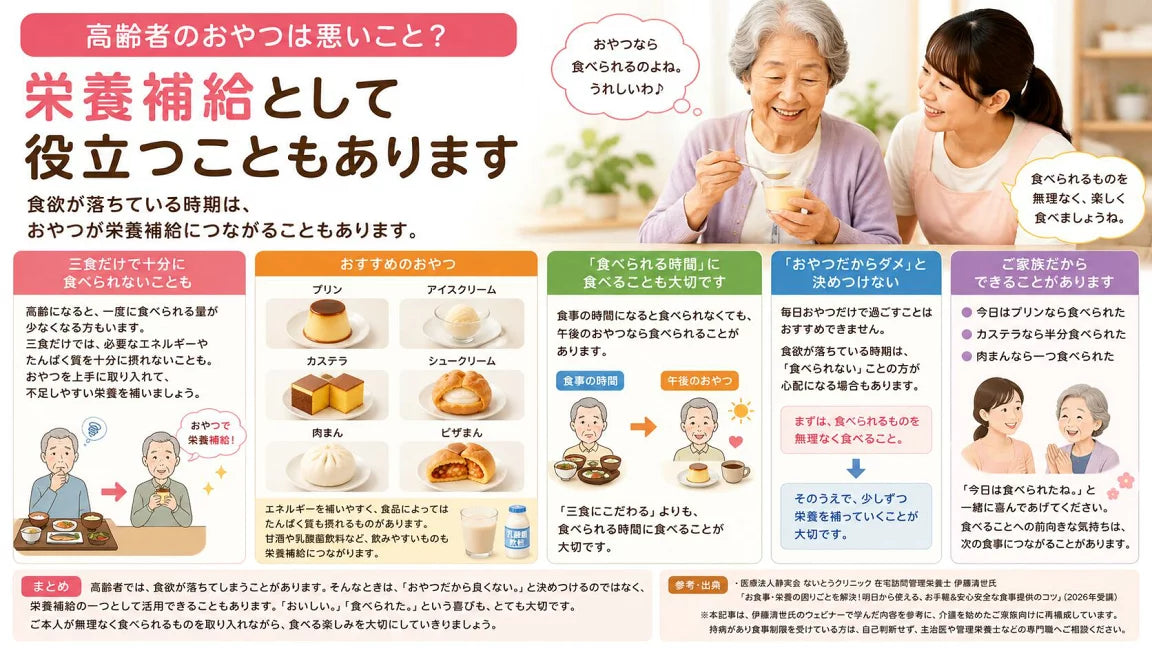
But for an older person whose appetite has dropped, snacks can be a source of nutrition.
Three meals alone may not be enough
As people get older, some can eat less at one time.
So with three meals alone, they may not be able to take in enough of the energy and protein they need.
At such times, including snacks wisely can make up for nutrition that tends to run short.
Snacks we recommend
For example:
- Custard pudding
- Ice cream containing milk fat
- Castella sponge cake
- Cream puffs
- Steamed meat buns
- Steamed pizza buns
Among these are foods from which it is easy to take in not only energy but protein as well.
Drinks such as amazake (sweet fermented rice drink) and lactic-acid drinks are also easy to drink and can provide nutrition.
Eating at "a time when they can eat" matters too
Someone whose appetite has dropped may be unable to eat at mealtimes, yet able to eat an afternoon snack.
Rather than "sticking to three meals," the idea of eating at a time when they can eat is also important.
Do not decide "it's a snack, so it's no good"
Of course, getting by on snacks alone every day is not recommended.
However, at a time when appetite has dropped, "not being able to eat" can be the greater worry.
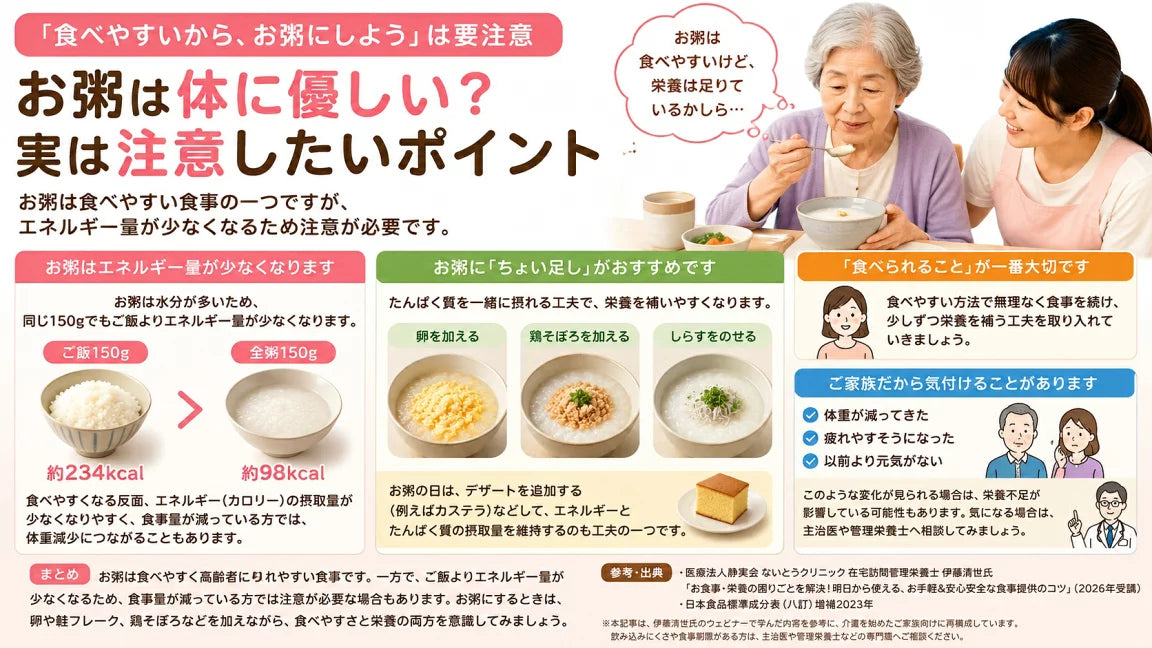
First, eat what can be eaten, without strain.
Then, on top of that, it is important to supplement nutrition little by little.
There are things only family can do
- Today they managed a custard pudding
- They managed half a piece of castella
- They managed one meat bun
On a day like that, please be glad together with them:
- You managed to eat today.
A positive feeling about eating can lead on to the next meal.
Summary
Older people can lose their appetite.
At such times, rather than deciding "it's a snack, so it's not good," snacks can also be used as one way of supplying nutrition.
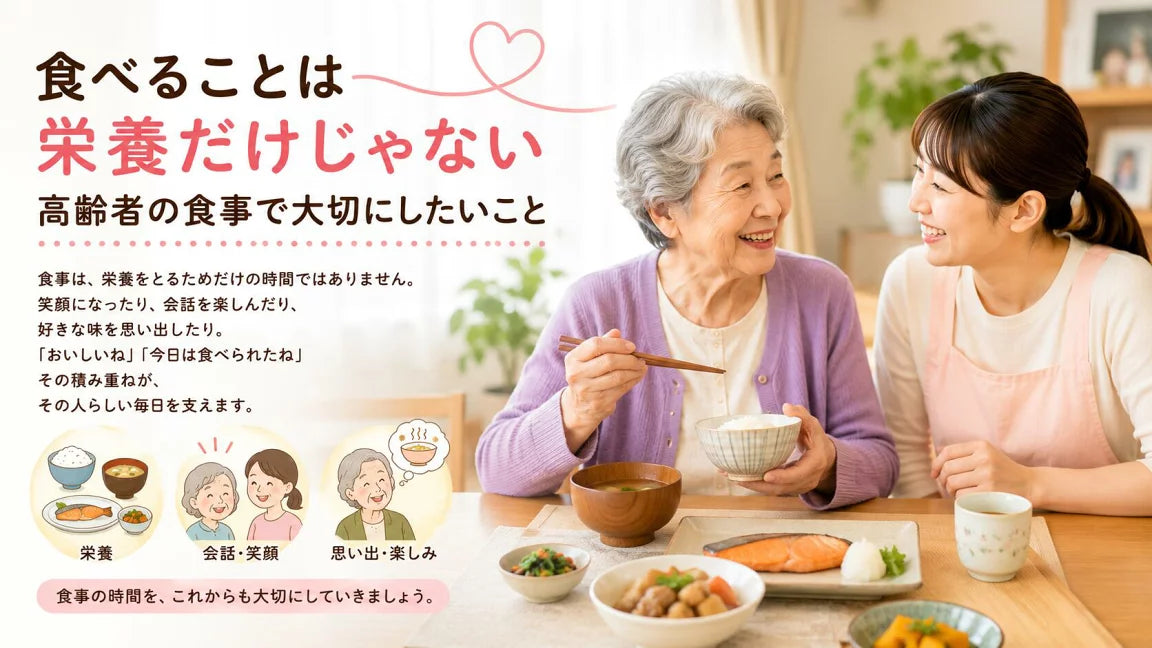
Daily meals are not only about taking in nutrition.
The joy of "This is delicious" and "I was able to eat" matters very much too.
While including things the person can eat without strain, let us value the pleasure of eating.
Reference: Kiyoyo Ito, home-visit registered dietitian, Naito Clinic (Seijitsukai Medical Corporation), webinar 「お食事・栄養の困りごとを解決!明日から使える、お手軽&安心安全な食事提供のコツ」 (on easy, safe ways of providing meals; attended in 2026, Japanese)
* This article is restructured for families who have just begun caregiving, with reference to what we learned in Ms. Ito's webinar. Those who have a chronic condition and are under dietary restrictions should not decide on their own, and should consult the doctor, a registered dietitian or another professional.