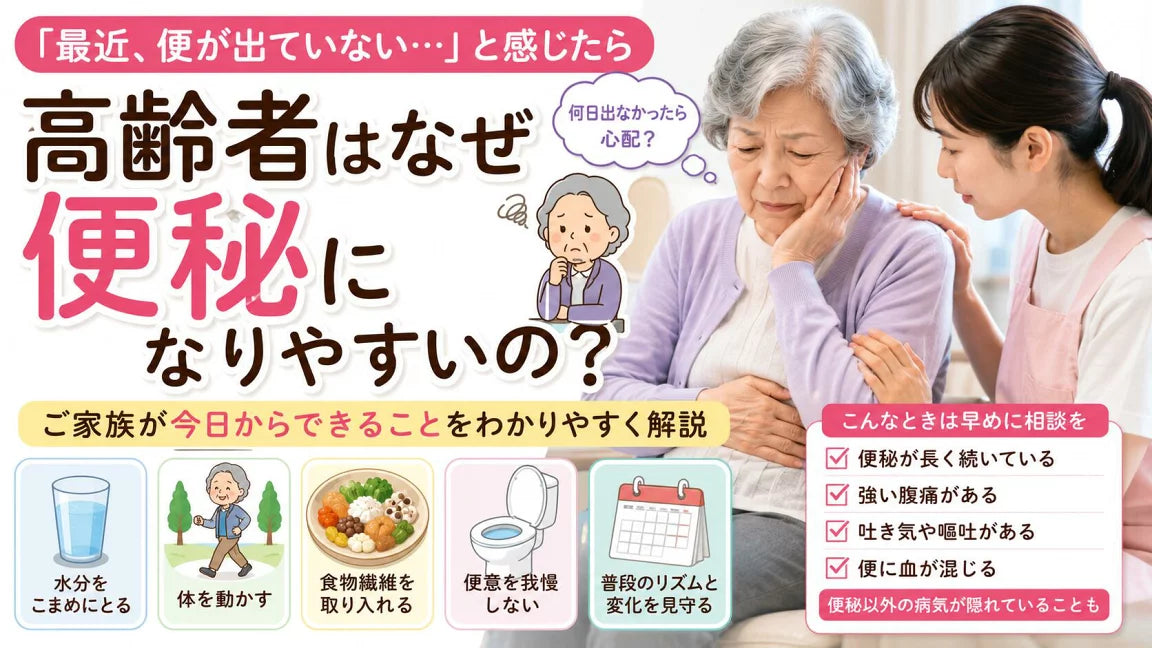
Have you felt "they haven't had a bowel movement lately"?
When caring for someone, do you ever notice:
- They don't seem to have had a bowel movement lately.
- They get constipated more often than before.
As family, it is natural to feel uneasy:
- How many days without one should I worry about?
- Is there anything I can do?
In fact, there are reasons why people become constipated more easily as they get older.
Reason 1: The bowels can slow down
As we age, the movement of the bowels can gradually slow down.
As a result, stool stays longer in the intestines, and constipation becomes more likely.
Reason 2: Fluids tend to run short
Stool needs water.
As people get older, they may become less aware of thirst, or hold back on fluids.
As a result, stool can become hard and difficult to pass.
Reason 3: There can be fewer chances to move the body
Going out less than before, or having fewer chances to move the body, can also affect the movement of the bowels.
Moving the body within comfortable limits, such as going for a walk, also matters.
Reason 4: The amount eaten can decrease
When the amount of food decreases, there is also less material for stool.
So when appetite has dropped, it can lead to constipation.
Take fluids frequently
A lack of fluids is one of the causes of constipation.
Rather than drinking a lot at once, aim to drink a little at a time, frequently.
* Those with fluid restrictions should follow their doctor's instructions.
Move the body, even a little
There is no need for strenuous exercise.
For example:
- Take a walk around the neighborhood
- Step out into the garden
- Walk around the house
Making time to move the body like this helps the bowels become more active.
Include foods that contain dietary fiber
Dietary fiber works to increase the bulk of stool and keep the stomach in good order.
For example, dietary fiber is found in:
- Vegetables
- Beans
- Potatoes and other tubers
- Mushrooms
- Seaweed
- Fruit
Let us include them comfortably in daily meals.
When the urge comes, do not hold it in
If holding in the urge continues, stool can become hard and even more difficult to pass.
It is also important, as far as possible, not to hold it in when they want to go to the toilet.
"Not every day" does not necessarily mean "abnormal"
When it comes to constipation, many people may think:
- There has to be a bowel movement every day.
However, the frequency and rhythm of bowel movements differ from person to person.
Even without a bowel movement every day, if there is one regularly every few days and the person is getting on as usual, it is not necessarily abnormal.
What matters is not "whether it happens every day," but watching for any change compared with their usual rhythm.
There are things only family can notice
For example:
- No bowel movement for many days
- A bloated stomach
- A drop in appetite
- Looking in discomfort when passing stool
Changes like these are easy to notice precisely because family see the person every day.
Consult early in cases like these
In cases like the following, we recommend consulting the doctor.
- Constipation has continued for a long time
- There is strong abdominal pain
- There is nausea or vomiting
- There is blood in the stool
An illness other than constipation may be hidden.
Do not judge for yourself; consult a medical institution.
Clothing that does not squeeze also adds to comfort
When the stomach is bloated from constipation, clothing that squeezes the waist can feel uncomfortable.
Clothing with a relaxed waist makes each day easier to spend comfortably.
Also, pants that are easy to pull up and down in the toilet help reduce the burden of toileting.
Here are examples of pants with a soft waist that are easy to pull up and down.
Pants we recommend for comfort around the waist
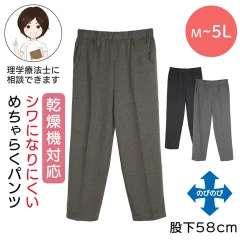
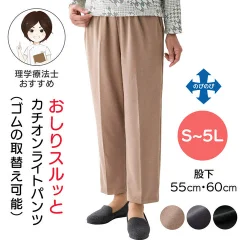
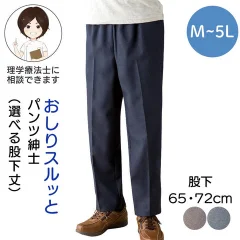
If you are unsure about clothing, come to Setagaya Kaigo
At Setagaya Kaigo, we ask about things such as:
- The person's physical condition
- Ease of toileting
- Ease of changing
- Everyday comfort
and suggest care clothing suited to that person.
Please feel free to ask us.
Feel free to ask us on LINESummary
As people get older, constipation becomes more likely as various factors overlap — changes in bowel movement, activity, and the amount of food and fluids.
Even so, there is no need to give up, thinking "it's age, so it can't be helped."
Small daily adjustments — frequent fluids, comfortable exercise, meals that include dietary fiber — help prevent constipation.
Also, there is no need to worry too much simply because there is no bowel movement every day.
Watching for any change compared with the usual rhythm is also important support that family can give.
On the other hand, if constipation continues for a long time, or there is strong abdominal pain, nausea, blood in the stool or the like, consult the doctor early.
Being able to feel comfortable every day also contributes to the person's comfortable life and quality of life (QOL).
While respecting the person's own pace, let us think together about habits that can be continued without strain.
* This article is based on general medical knowledge as of July 2026. If constipation continues for a long time, or there are symptoms such as abdominal pain, nausea or blood in the stool, please consult a medical institution early.
References: The Japan Geriatrics Society, 『健康長寿診療ハンドブック』 (Handbook for Healthy Longevity Practice), "9-2 Defecation disorders"; Ministry of Health, Labour and Welfare, Health Japan 21 Action Support System, "The need for dietary fiber and health" (Japanese)