Do you ever find yourself thinking "please drink some water"?
Once caregiving begins, you may say "Have some water," only to be told:
- I'm fine for now.
- I'm not thirsty.
That happens often.
As a family member, you naturally worry:
- Are they really getting enough?
That concern is well founded.
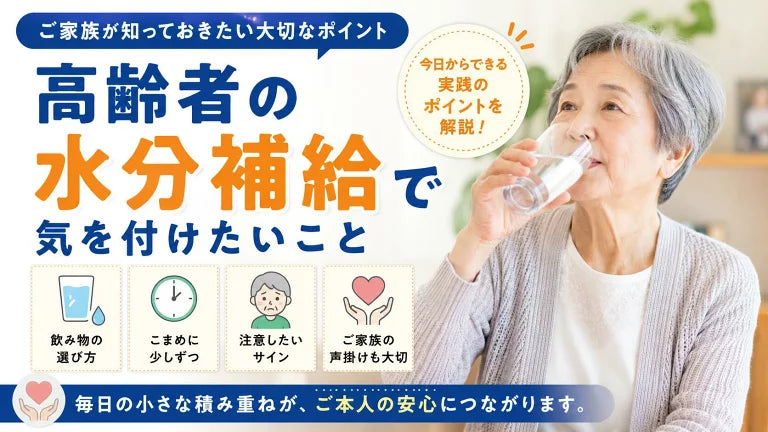
In fact, it is said that as people grow older they become more prone to a lack of fluids than when they were young.
Why do older people become short of fluids more easily?
There are several reasons.
For example:
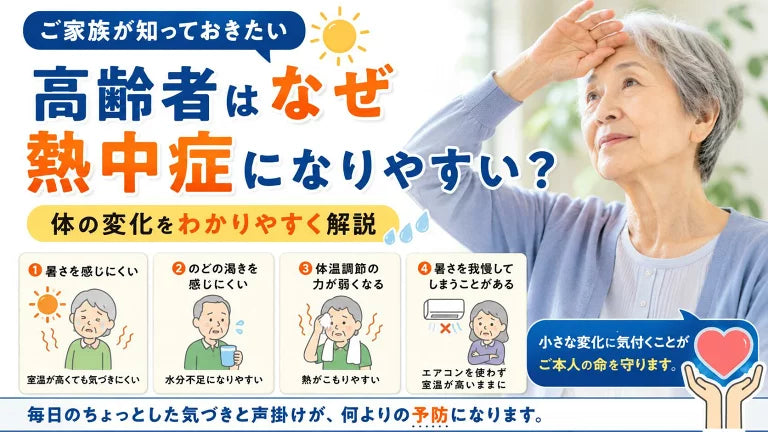
- They become less aware of thirst
- They can no longer drink a lot at once
- They cut down on drinking out of worry about needing the toilet more often
- They eat less, so they also take in less fluid from meals
These are typical.
Even when the person thinks "I'm fine," they may be short of fluids without noticing.
There is no need to drink a lot at once
Even if you urge them to "drink more," drinking a lot at once is hard.
What matters is to keep it up little by little.
For example:
- On waking in the morning
- At mealtimes
- When taking medicine
- At snack time
Building a habit of drinking naturally in the course of daily life makes it easier to continue.
What should they drink for everyday hydration?
Water
It is the basis of everyday hydration.
Serving it at a temperature that is easy to drink can make it more appealing.
Barley tea
Barley tea contains no caffeine, so it is an easy drink for everyday hydration.
It is widely used both at home and in care facilities.
Green tea
Green tea also counts toward hydration.
However, it contains caffeine, so take care not to drink too much.
For everyday use, it is reassuring to think mainly in terms of water and barley tea.
Sports drinks
After sweating heavily, they make it easy to replace fluids and electrolytes (such as sodium).
On the other hand, some contain a lot of sugar.
Rather than for everyday hydration, it is reassuring to use them at times such as after heavy sweating.
Oral rehydration solution
Oral rehydration solution is a drink used when dehydration is suspected or there is a risk of it.
Its role differs from that of sports drinks, and it is not intended for everyday hydration.
It is used when dehydration is a concern because of fever, diarrhea or vomiting, or when recommended by a doctor.
Watch for signs like these
For example:
- Less energetic than usual
- No appetite
- Not quite their usual self
- A dry mouth
- Dry lips
- Dark urine
- Little urine
When you see something different from usual like this, their physical condition may be changing.
If anything concerns you, consult a medical institution early.
Some people have fluid restrictions
Some people, because of heart or kidney disease and the like, have been given instructions by a doctor about how much to drink.
In that case, it is important to follow the doctor's instructions rather than increasing fluids on your own judgment.
How the family speaks matters too
Rather than urging "Drink some water!" again and again, natural invitations such as:
- Shall we have some tea together?
- Let's take a little break.
can make it easier for them to drink.
Small things built up day by day lead to the person's peace of mind.
Clothing matters too for a comfortable summer
Summer brings a lot of sweating, so along with hydration, it is reassuring to prepare clothing that is easy to change and comfortable even after sweating.
For people living in a facility, laundry and tumble dryers are often used, so dryer-safe clothing is also helpful.
Undershirts we recommend as summer changes
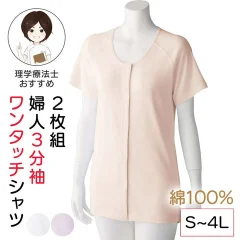
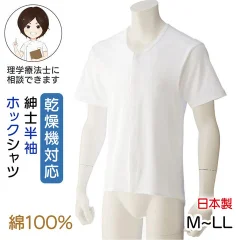
If you are unsure about clothing, come to Setagaya Kaigo
At Setagaya Kaigo, we ask about things such as:
- The person's physical condition
- Life at the facility or at home
- Ease of changing
- How laundry and tumble dryers are used
and suggest care clothing suited to that person.
Please feel free to ask us.
Feel free to ask us on LINESummary
As people grow older, they become less aware of thirst and can no longer drink a lot at once, so they become short of fluids more easily.
A lack of fluids can lead to things such as:
- Heatstroke
- Constipation
- Urinary tract infection
- Feeling hazy or less alert
These are worth keeping in mind.
For everyday hydration, it is important to make water and barley tea the basis and keep it up little by little.
Sports drinks and oral rehydration solution each have a different role.
Use them wisely according to the person's condition and the situation.
And noticing small changes such as:
- Maybe they haven't drunk much today.
- Maybe they seem a little low on energy.
is also an important form of support that the family can give.
* This article is based on general thinking as of July 2026. If there are chronic conditions or fluid restrictions, please follow the doctor's instructions.
References: Ministry of Health, Labour and Welfare, "Information and materials for heatstroke prevention"; Ministry of the Environment, "Heat Illness Prevention Information" (Japanese)