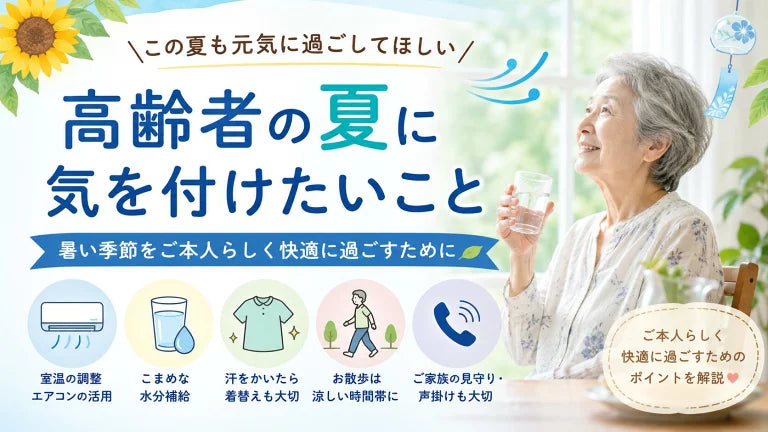
Hoping they stay well this summer too
Another hot summer has arrived.
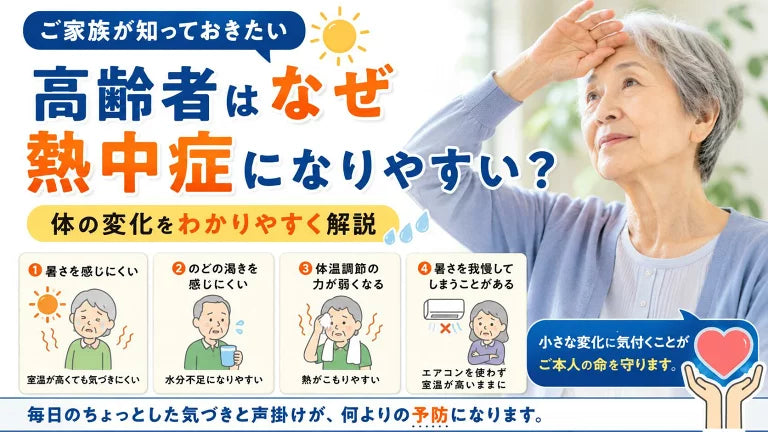
As people get older, they can become less aware of heat and thirst.
So many families probably hope:
- I want them to stay well again this summer.
Whether you live together or they live in a facility, the hot season is a little worrying.
Summer is a season when the small changes that only family can notice matter.
Are they putting up with the heat too much?
Some older people say:
- It's not hot yet.
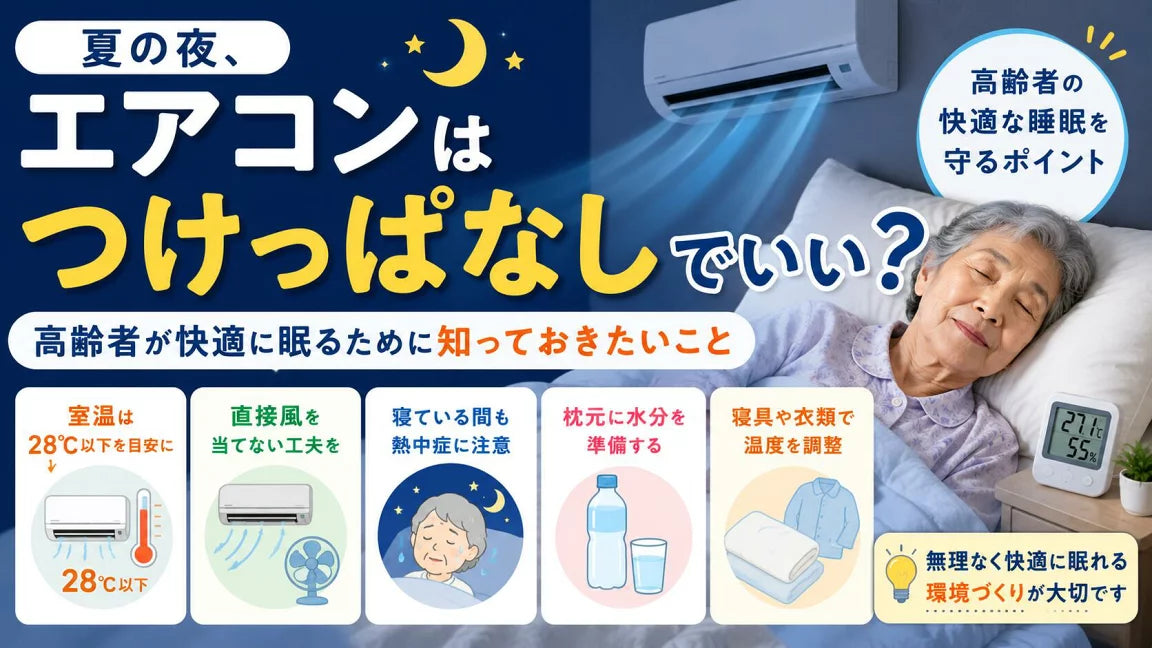
- The air conditioner is a waste.
However, continuing to put up with the heat can put strain on the body.
While watching the room temperature and how the person is, how about looking for a way of saying it that lets them use the air conditioner or fan without strain, such as:
- Let's turn it on just a little, and turn it off when it's cool.
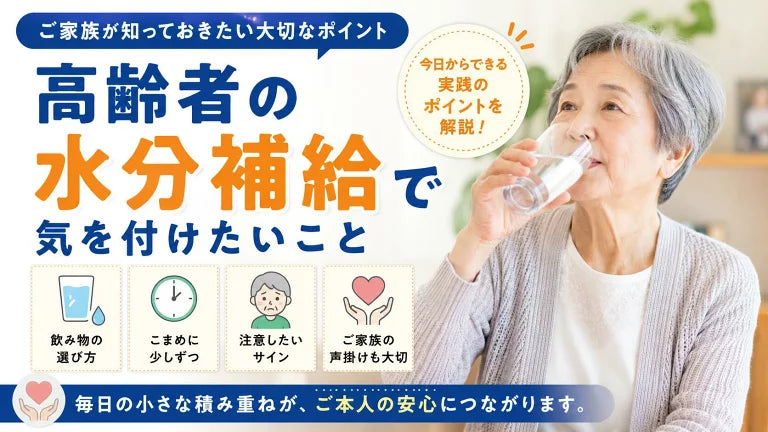
For fluids, "before feeling thirsty" is the guide
As people get older, they can become less aware of thirst.
So it is important to drink frequently, not after feeling thirsty.
Rather than drinking a lot at once, a little at a time is an easier way to stay hydrated.
* Those with fluid restrictions should follow their doctor's instructions.
Changing clothes after sweating matters too
There are more occasions to sweat in summer.
Staying in sweaty clothing is not only uncomfortable but also a burden on the skin.
Preparing a few extra changes of clothes gives peace of mind to both the person and the one assisting.
Walks at cooler times of day
A walk is a good chance for a change of mood and for moving the body.
However, the hot hours put a greater strain on the body.
When going outside, choose relatively cool times such as morning or evening, and if they look tired, rest without pushing.
On summer walks, even on a familiar route in the neighborhood, it is reassuring to carry a drink for hydration.
What family living apart can do
When you live far away, you cannot check on them every day.
That is exactly why simply asking on the phone:
- Are you drinking enough?
- Are you using the air conditioner?
or checking their clothing and room environment when you visit, can lead to peace of mind.
Even if they say "I'm fine," keeping them in mind a little is summer support that family can give.
Also, if you notice small changes — less energy than usual, no appetite, slow responses — consult a medical institution early.
Checking matters for those living in a facility too
In facilities the air conditioning is managed, but in summer the number of changes of clothes can increase.
When you visit, it is reassuring to keep in mind:
- Do they have enough clothes?
- Are they sweating?
How often laundry is done also differs by facility, so preparing a few extra changes of clothes is reassuring.
Choosing clothing matters in summer too
In the hot season, besides being cool, the following are also important points:
- Easy to change even after sweating
- Easy to wash
- Holds up well even when the facility uses a dryer
Because it is worn every day, we want to choose clothing in which the person can be comfortable.
In the season when sweating is frequent, it is reassuring to have 100% cotton undershirts ready as changes.
Undershirts we recommend as summer changes
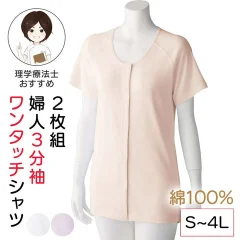
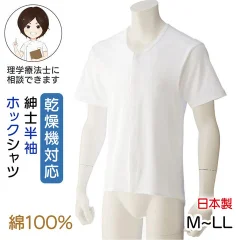
If you are unsure about clothing, come to Setagaya Kaigo
At Setagaya Kaigo, we ask about things such as:
- The person's physical condition
- Life at the facility
- Ease of changing
- How washing and the dryer are used
and suggest care clothing suited to that person.
Please feel free to ask us.
Feel free to ask us on LINESummary
Summer is a season in which older people can easily become unwell.
Small daily habits — not putting up with the heat too much, drinking frequently, adjusting the room temperature, changing after sweating — lead to a comfortable life.
And the family's feeling of "I want them to stay well" is a great support too.
Keeping them in mind within comfortable limits, let us watch over them so that they can spend this summer too in their own way.
Precisely because the hot days continue, please take care not only of the person's condition but also that the family does not overdo it.
* This article is based on general thinking as of July 2026. If there are chronic conditions or fluid restrictions, please follow the doctor's instructions.
References: Ministry of Health, Labour and Welfare, "Information and materials for heatstroke prevention"; Ministry of the Environment, "Heat Illness Prevention Information" (Japanese)