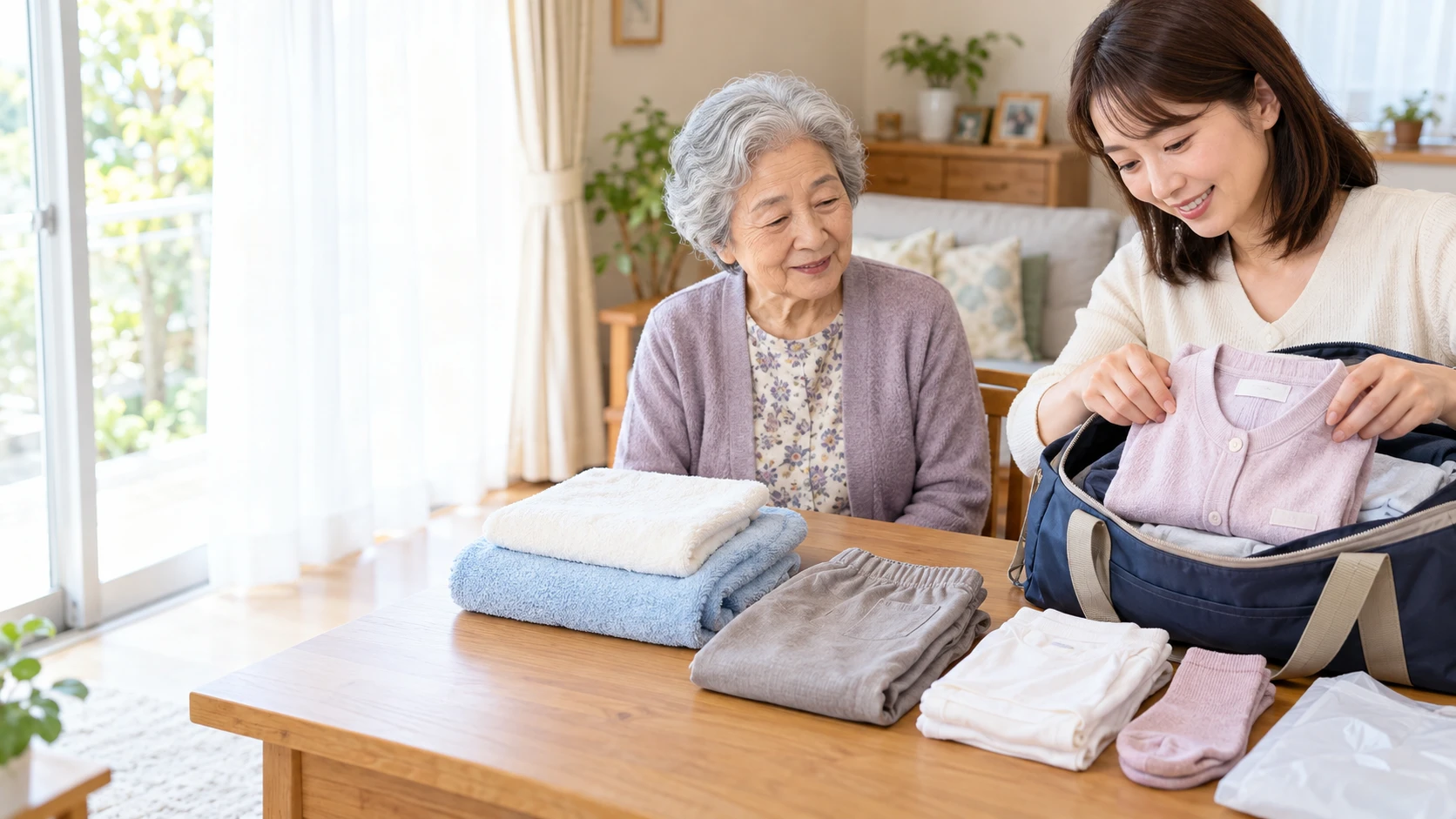
When a hospital stay or a move into a care facility has been decided,
- I don't know what clothes to prepare
many families find themselves unsure like this.
Should it open at the front? How loose should the size be? What shape of trousers is easy to put on?
At Setagaya Kaigo, through the consultations we hear every day, we value looking at where in changing clothes the person is having difficulty, rather than thinking "it's for care, so it has to be these clothes".
In this article, we introduce guidelines for choosing clothing that suits how the person moves and how they change.
A guide based on movement (tops)
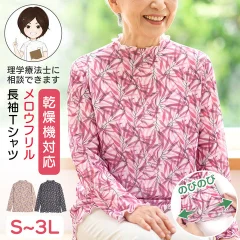
People who can raise their arms and pull clothes over their head without strain
For people who can raise their arms and pull clothes over their head without strain, we also recommend pull-over tops.
Choosing a neckline that is not too tight and a stretchy material makes changing easier.
Recommended clothing
People who have difficulty raising their arms
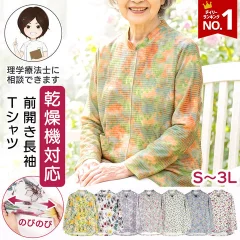
For people who find it hard to raise their arms high, we recommend front-opening tops.
They reduce the need to pull clothes over the head, which may make changing less of a burden.
Recommended clothing
People with weak fingers or hands
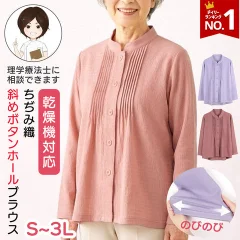
We recommend front-opening types with large buttons or fastenings that are easy to do up and undo.
Examples include snap buttons that close with a light press, large buttons that are easy to grip, and touch-fastener tape that closes just by pressing it together.
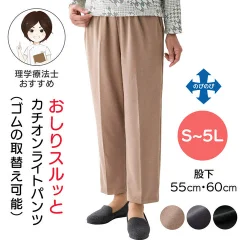
For trousers, we also recommend our "Oshiri Surutto" trousers. With a smooth lining and a roomy elastic waist, they are designed to be easy to pull up even for people with weak hands.
Recommended clothing
People who need help changing
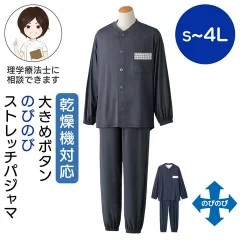
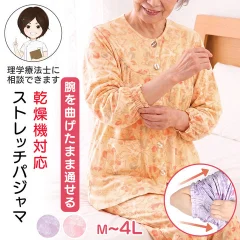
For people who change with help, we recommend front-opening clothing in a soft, very stretchy fabric.
Also check whether movements such as putting the arms through and pulling up the sleeves are easy.
Recommended clothing
A guide based on movement (trousers)
People who can stand and pull their trousers up and down themselves
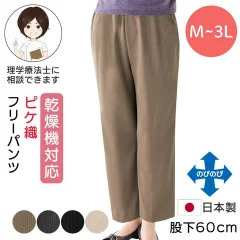
For people who can pull their trousers up and down themselves, we recommend trousers with a fully elasticated waist and a stretchy material.
Also check that the waist does not squeeze the stomach too much and is easy to hook a hand into.
Recommended clothing
People who are unsteady standing or pull their trousers up and down with one hand
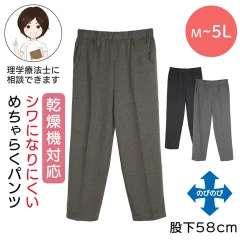
We recommend trousers that are easy to pull up at the back. They are easier to pull up and down even while holding on to a handrail.
Recommended clothing
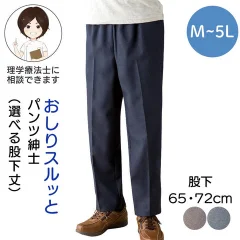
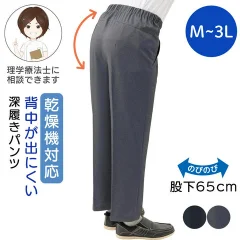
People whose back has started to bend
We recommend trousers with a deep rise and room at the back. The back is less likely to show.
Recommended clothing
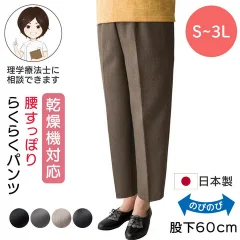
People who spend long hours in a wheelchair
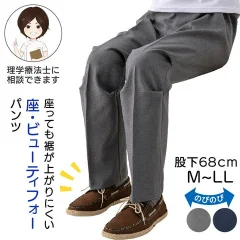
We recommend trousers whose hems ride up less when seated, or trousers with a longer inside leg. Choose the length for sitting, not standing.
Recommended clothing
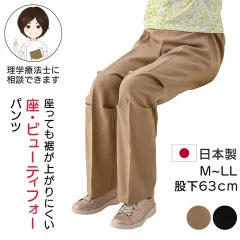
People who use incontinence pants
Because the stomach and hips become bulkier, usual trousers may start to feel tight. However, it is not always necessary to go up a size. If the usual trousers do not feel tight, the same size may be fine.
Beyond the size, we recommend trousers shaped with a fully elasticated waist, a deep rise and room around the stomach and hips.
In a facility or a wheelchair, people spend long hours sitting, so please also check these points in a seated position.
- The stomach does not feel tight
- The back does not show
- The thighs do not feel pulled
Recommended clothing
Things to check besides movement
- Laundry: if a tumble dryer is used, for example at a facility, choose dryer-safe clothing.
- What is bothering you now: you can also choose from the problem, such as the back showing, trousers slipping down or sleeves riding up.
- The person's feelings: if they want to choose for themselves, leave room for them to take part.
- Requirements from the facility or hospital: some facilities set conditions for clothing, such as front-opening, dryer-safe or labelled with the person's name. It is reassuring to check before buying.
If you are unsure, first check "where the difficulty is"
If you are unsure when choosing care clothing, start by checking "where in changing clothes the person is having difficulty".
- Arms are hard to raise → front-opening tops
- Buttons are hard to do up → snap buttons or touch-fastener tape
- Trousers are hard to pull up → a fully elasticated, easy-to-pull-up shape
- The back is bent → trousers with a deep rise and room at the back
- Long hours in a wheelchair → check the length and the stomach area in a seated position
Thinking from the difficulty in this way makes choosing easier.
Clothing is not just something to wear. It is one of the tools that helps the person keep doing what they can and spend each day comfortably.
You don't need to decide everything perfectly from the start. Some things only become clear once daily life begins, so adjust little by little as needed.
If, after reading this, you still wonder "how should I choose in my case?", please feel free to ask us.
We will think about clothing together with you, listening to the person's physical condition and living environment.
Go to our care clothing consultation desk