Is changing clothes in bed a struggle?
- I can't manage my family member's clothes changes well.
- Moving their arm looks painful, and I worry.
- The daily changes are hard on the one assisting too.
Quite a few families have worries like these.
When changing the clothes of someone who spends long hours in bed, doing it by force can hurt both the person and the one assisting.
It can also increase strain and stress on both sides, making daily caregiving feel hard.
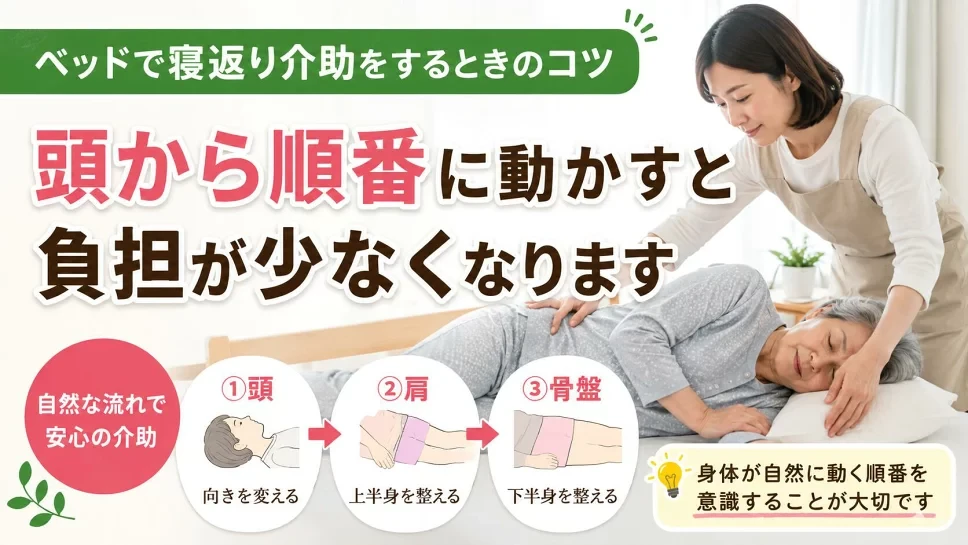
However, simply adjusting the order and the method a little can lighten the strain on the body.
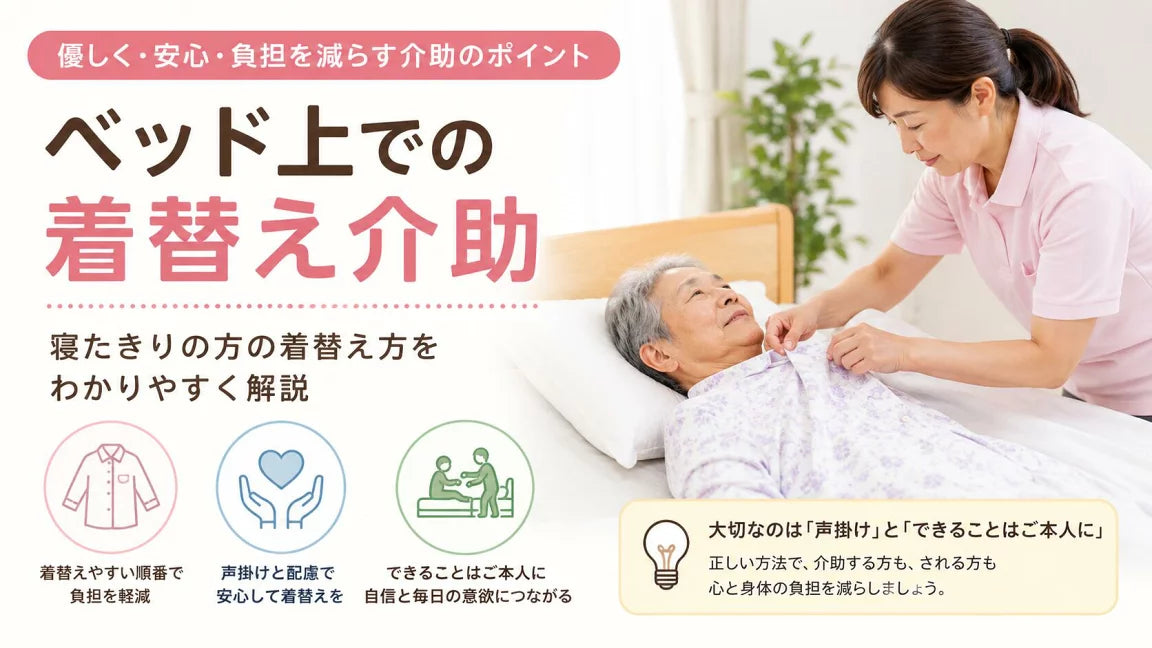
This article introduces the basic way of assisting with a change of clothes in bed.
* What is introduced here is a general method of assistance. The suitable method differs with the person's physical condition and illness. If you are uneasy, please consult the rehabilitation staff in charge, a home helper, or a medical or care professional.
The basics of changing clothes in bed
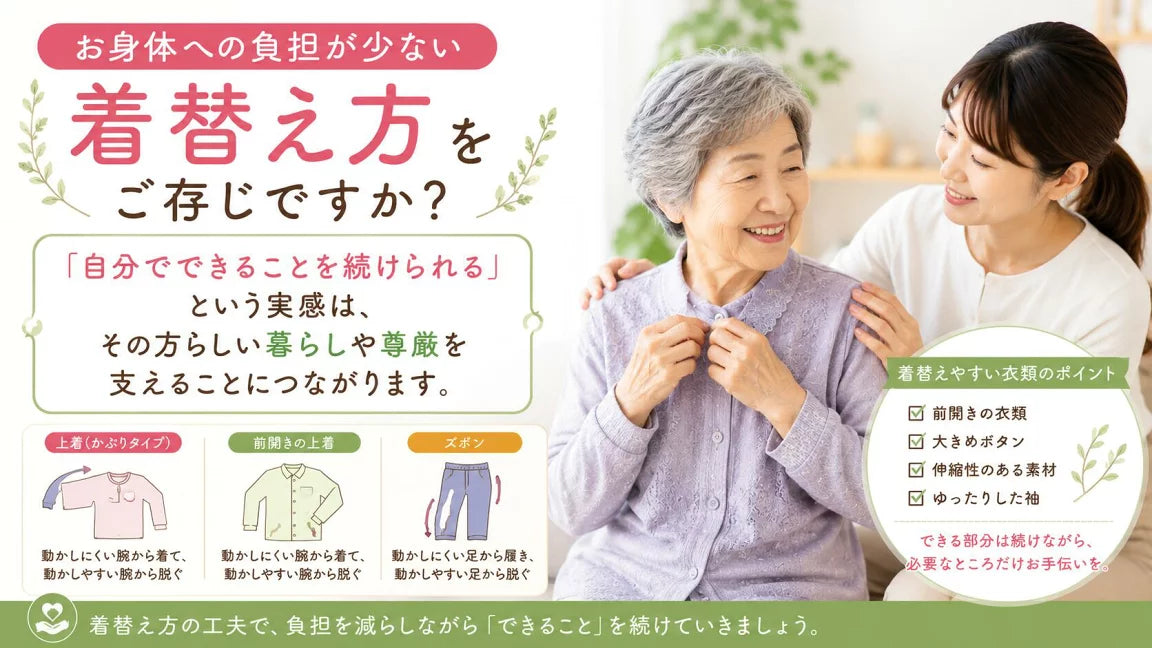
In changing clothes, the basic rule is: "put on from the side that is harder to move" and "take off from the side that is easier to move."
Following this order reduces the strain of forcing the arms and legs to move.
Putting on and taking off tops (front-opening recommended)
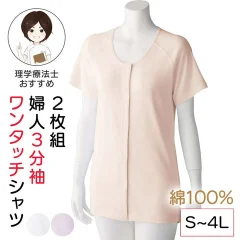
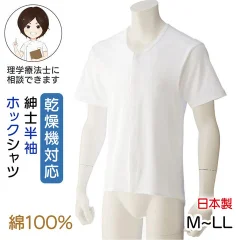
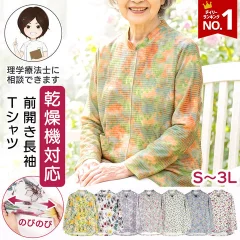
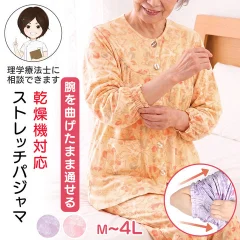
When changing in bed, front-opening clothing is recommended because it is easy to assist with.
How to put a top on
- Put the sleeve on starting with the arm that is harder to move or is painful.
- Have the person turn onto their side so that that arm is uppermost.
- Lay the garment along the back and, as the person slowly returns to lying on their back, bring the garment across so the other sleeve can be put on.
- Once they are on their back again, put the other arm through its sleeve.
- Turning slowly to the left and right, straighten the garment.
- Finally, fasten the buttons.
How to take a top off
- Undo the buttons.
- Have the person turn onto their side so that the arm that is easier to move is uppermost.
- Take the upper arm out of its sleeve.
- Ease the garment away from the line of the back and, as the person slowly returns to lying on their back, send the garment across to the other side so the other sleeve can come off too.
- Take the other arm out of its sleeve.
Putting on and taking off pants
How to put pants on
- Put the leg that is harder to move through first.
- Next, put the other leg through.
- Pull the pants up to about just below the buttocks.
- Having the person turn to the left and right, pull them up to the waist little by little.
How to take pants off
- Turning to the left and right, lower the waistband to the buttocks.
- Take the leg that is easier to move out first.
- Finally, take out the leg that is harder to move.
If there is no difference between left and right in how easily the legs move, either side may be done first.
What matters in changing clothes
What matters in changing clothes is "speaking first" and "leaving to the person what they can do."
In assisting with changing, not only the method but also the way of relating to the person matters.
Speak before assisting
Being moved or touched suddenly can startle the person or make them anxious.
- I'm going to put your arm through.
- We're going to turn a little to the side.
Proceeding while speaking at each step like this makes it easier to change with peace of mind.
Also, changing clothes involves moments when the skin is exposed.
Let us not forget consideration for the person's feelings and privacy, such as closing the curtains.
Ask the person to do what they can
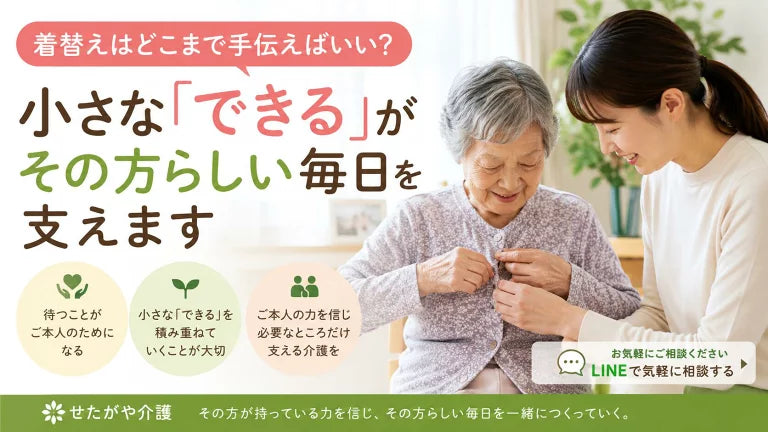
In assisting, doing everything for the person is not necessarily best.
For example:
- They can turn over by themselves
- They can fasten just the buttons
- They can move their arm a little
It is also important to have the person do movements like these themselves, as far as they are able.
This not only helps maintain the person's physical function but also leads to the confidence of "I can do it myself."
Front-opening clothing suited to changing in bed
Here are examples of front-opening underwear and clothing that is easy to change.
Front-opening clothing that makes assistance easier
Summary
The daily change of clothes is an important time for both the person and the family.
It can be a point that gives the person a sense of time and builds a daily rhythm, and a time for conversation with the family.
To enjoy that family conversation too, the ideal is for both sides to get used to changing and be able to cooperate.
- I wonder if this method is right.
- I'm looking for clothes that are easy to change.
- I'd like to choose front-opening clothing that is easy to assist with.
At times like that, please do not worry alone; feel free to ask us.
At Setagaya Kaigo, we ask about the person's physical condition and lifestyle and help with choosing clothing that is easy to change.
We sincerely hope that the daily change of clothes becomes a time with even a little less strain, for the person and for the family.