Family members who are caring for someone sometimes ask us:
- How much should I help with changing clothes?
When the person seems to be struggling,
- Wouldn't it be better if I just did it for them?
you may find yourself thinking this.
We believe that feeling is a kindness that comes from caring deeply about the person.
At the same time, in caregiving it is also considered important for the person to keep doing what they can do for themselves, as much as possible.
Why it matters to keep doing what one can
This is the story of a woman in her 90s who was cared for by a physical therapist formerly on the staff of Setagaya Kaigo.
She became bedridden after a lumbar compression fracture, but she kept up her own exercises as well.
Little by little she became able to sit, then to walk, and in the end we are told she recovered to the point of going shopping at the supermarket with a rollator.
What this experience taught us was
to believe in a person's strength.
And
to support them so they can keep doing what they can.
That is how important those things are.
This does not apply to everyone
What this episode tells us is not that
- Anyone can recover this far if they try hard enough
Each person's physical condition is different.
The speed of recovery is different too.
Even so, through this experience we felt once again how important it is to believe in the strength a person has.
And we think that supporting them so they can draw on that strength is also an important role of caregiving.
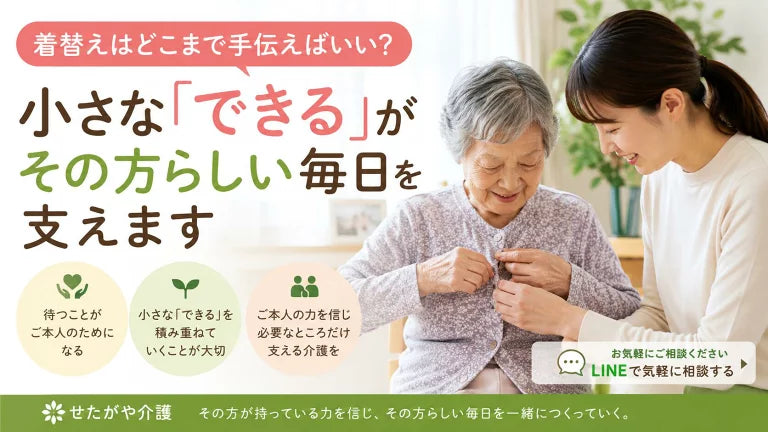
Valuing each small "I can"
For example, even if most of the changing needs assistance, the person may be able to fasten just the last button themselves.
Today, a button. Next, putting an arm through a sleeve.
Building up small "I can" moments like that can lead to the next step.
The sense of "I can keep doing things for myself" helps support a life that is truly their own, and their dignity.
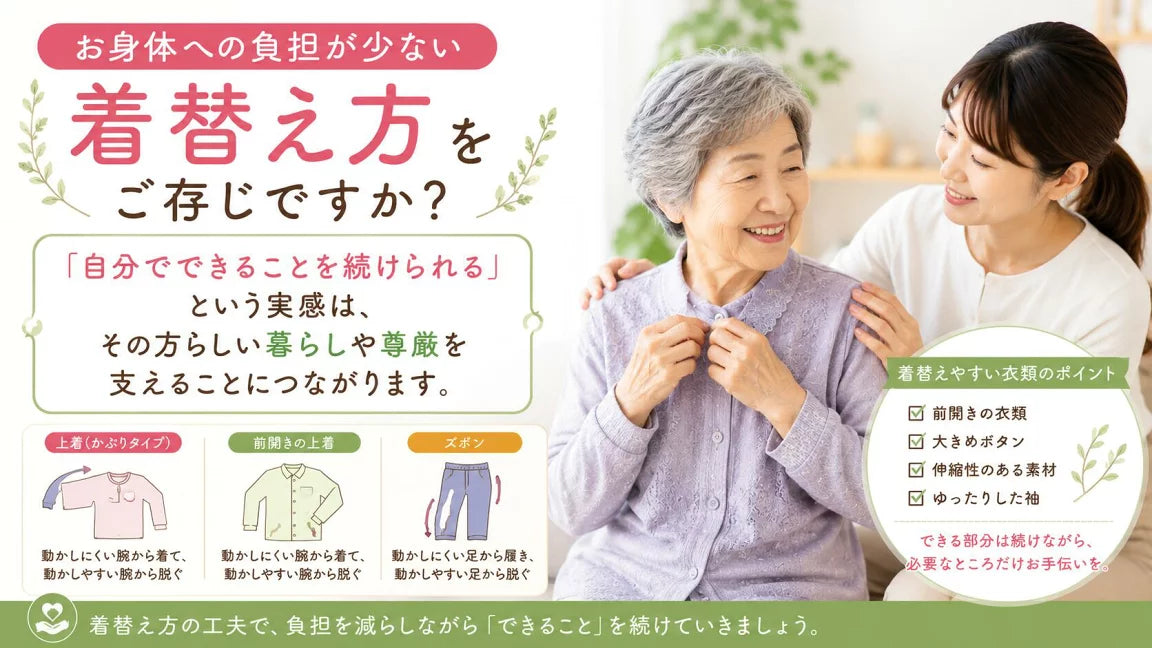
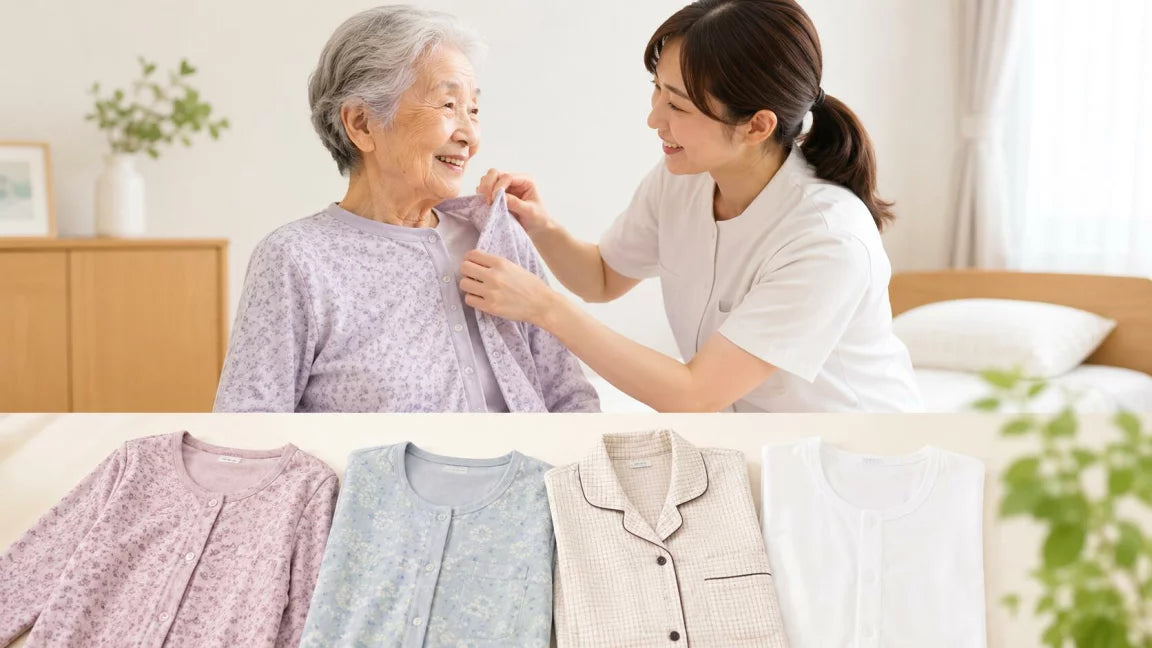
That is why we believe choosing clothing that suits the person's physical condition is also important, so they can keep doing the parts they are able to, as much as possible.
Clothing, too, is part of the environment that supports what a person can do
For example,
- Front-opening clothing
- Larger buttons
- Stretchy materials
- Clothing that can be changed without large body movements
can help the person keep doing what they can do for themselves.
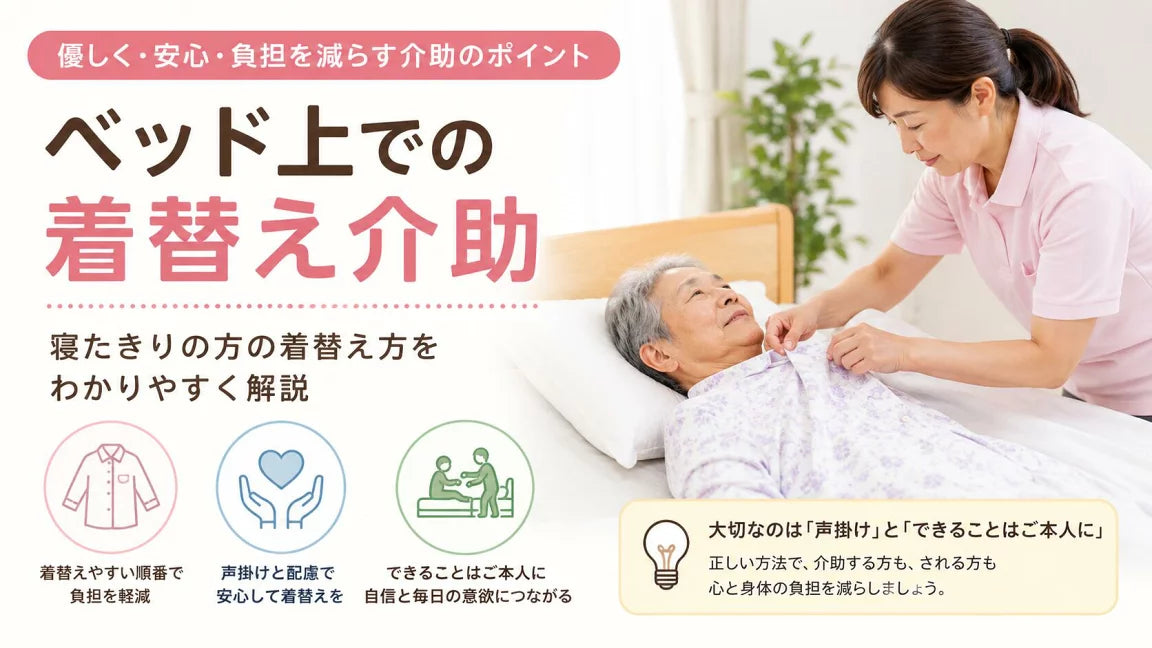
Caregiving does not mean doing everything in the person's place.
We believe it is also important to trust the strength the person has, support only where it is needed, and build together a daily life that is truly their own.
If you are unsure, please ask us
- How much should I help?
- Do you have clothes they can put on by themselves?
At times like these, please feel free to contact us.
At Setagaya Kaigo, we listen to the person's physical condition and living environment, and think together about clothing that lets them keep doing what they can do.
We believe clothing, too, is part of creating an environment that supports each person's own way of living every day.
* This article has been re-edited based on a case that a physical therapist formerly on the staff of Setagaya Kaigo experienced in home-visit rehabilitation, also reflecting current knowledge and the consultations we receive every day.