- My shoulders are getting harder to lift
- Putting on pants looks difficult
As we age, the movement of the shoulders, hips and knees gradually changes, and it can become difficult to change clothes the way we always have.
Even then, a small change in the order of dressing can ease the strain on the body.
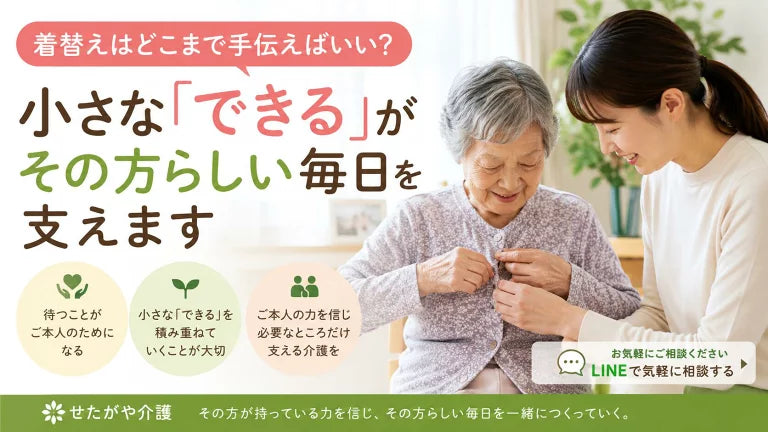
In caregiving, it is also considered very important for the person to keep doing what they can do for themselves as much as possible.
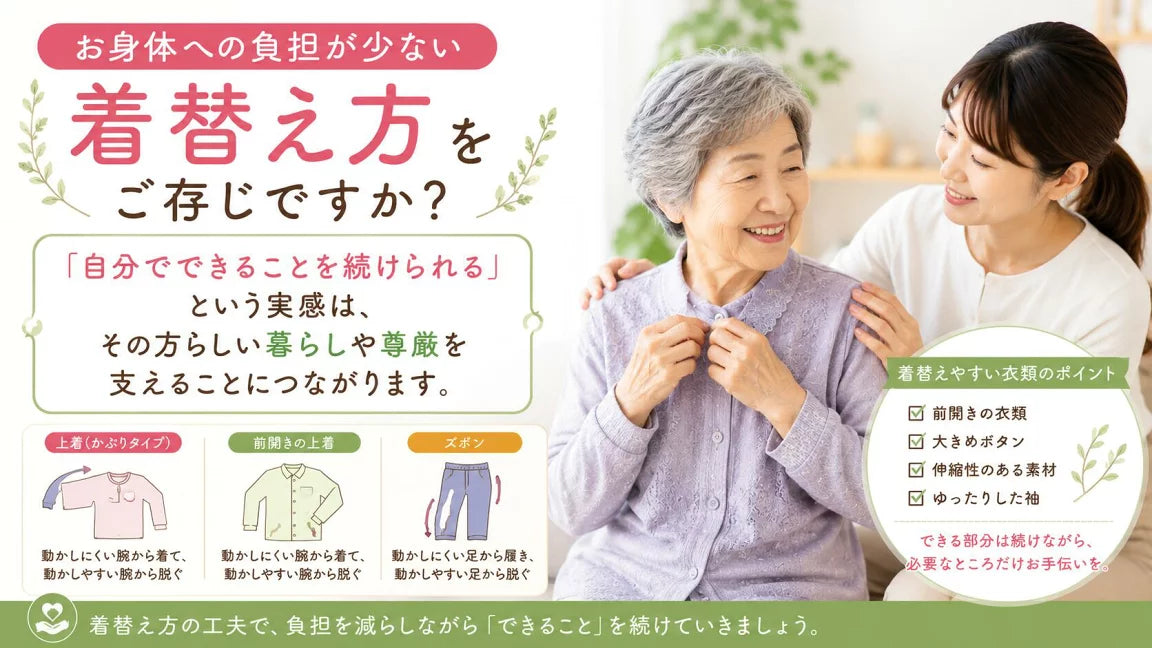
The sense of "I can still do this myself" helps support a life that is truly their own, and their dignity.
Of course, everyone's physical condition is different, but here we introduce general ways of changing clothes.
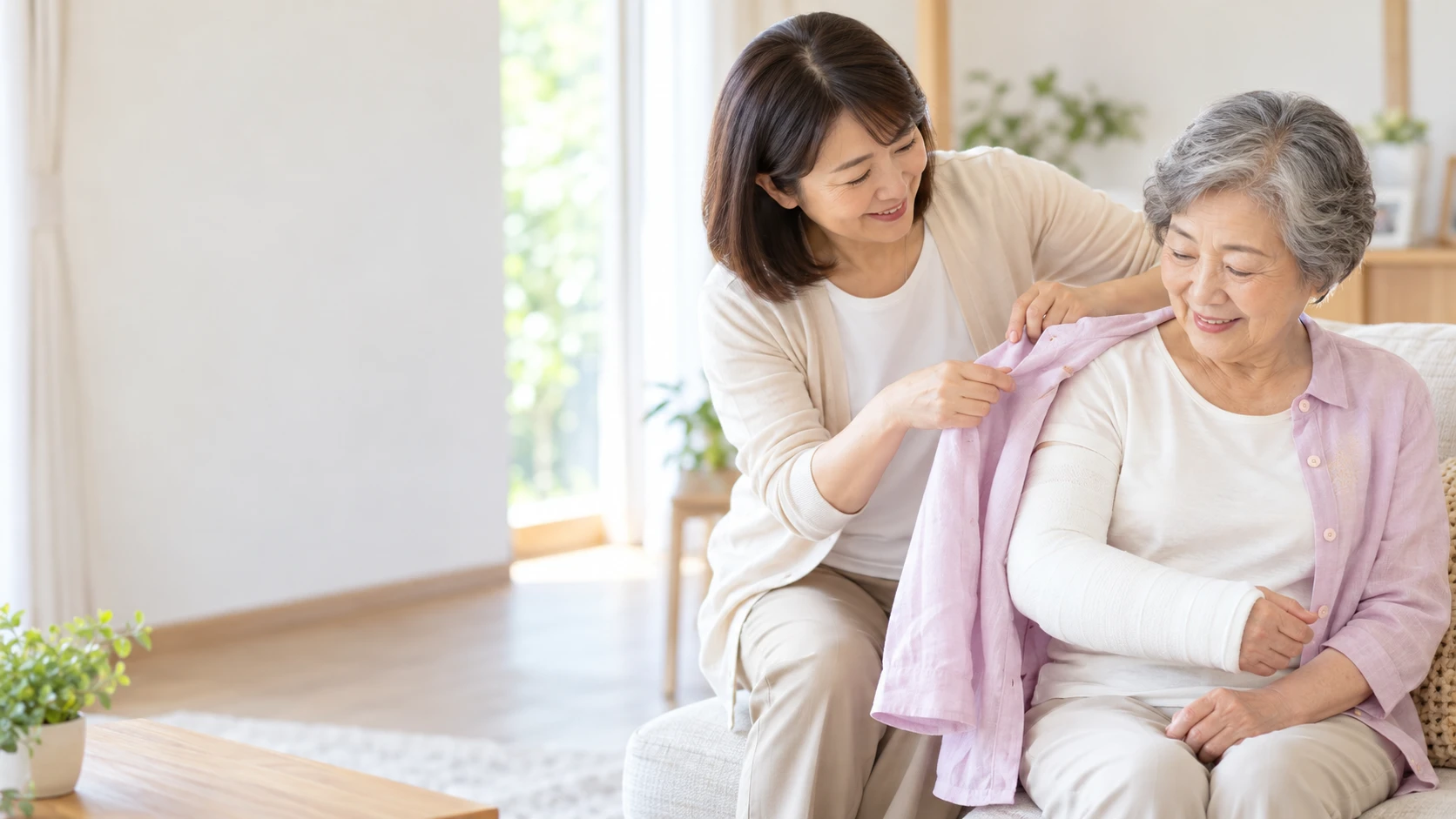
Dress the harder-to-move side first, undress the easier-to-move side first
When one side of the body moves more easily than the other,
"Put clothes on starting with the side that is harder to move, and take them off starting with the side that is easier to move."
This order is the basic rule.
Keeping this order in mind can reduce the strain on the arm or leg that is harder to move.
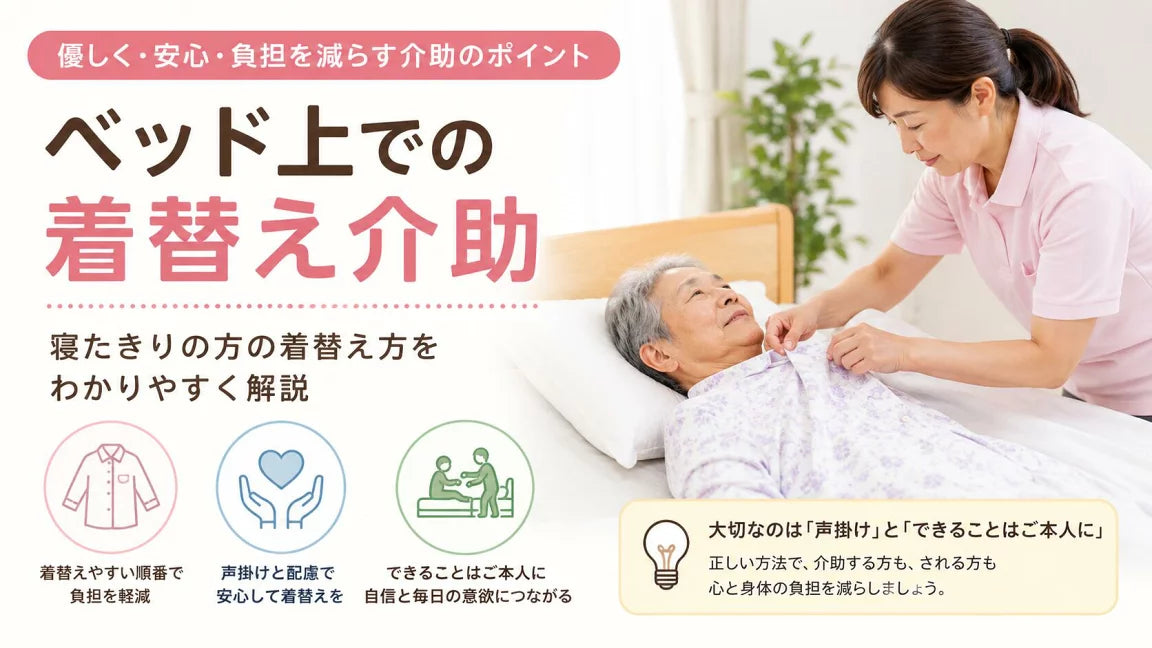
Putting on and taking off a pullover top
Putting on
- Put the arm that is harder to move, or painful, through its sleeve.
- Put the other arm and the head through.
- Straighten the hem.
Taking off
- Take out the arm that is easier to move.
- Take the head out.
- Finally, take out the arm that is harder to move.
Putting on and taking off a front-opening top
Putting on
- Put the arm that is harder to move through its sleeve.
- Bring the garment around the back and put the other arm through.
- Fasten the buttons or fasteners.
Taking off
- Undo the buttons or fasteners.
- Take out the arm that is easier to move.
- Finally, take out the arm that is harder to move.
Putting on and taking off pants
Putting on
- Sit on a chair and put the leg that is harder to move through.
- Put the other leg through.
- Stand up and pull the pants up to the waist.
Taking off
- While standing, lower the pants to below the knees.
- Sit on a chair and take out the leg that is easier to move.
- Finally, take out the leg that is harder to move.
Choosing clothes that are easy to change is important too
In addition to how you change clothes, the choice of clothing matters as well.
For example,
- Front-opening clothing
- Larger buttons
- Stretchy materials
- Loose-fitting sleeves
can ease the strain on the body.
Let the person keep doing the parts they can, and help only where it is needed.
For that reason too, choosing clothing that suits their physical condition is very important.
If the pain is strong, do not push it — get assistance, or consult a physical therapist or occupational therapist.
If you are unsure, please ask us
- Do you have clothes that are easy to change?
- What kind of front-opening top would suit my mother?
At times like these, please feel free to contact us.
At Setagaya Kaigo, we listen to the person's physical condition and living environment, and think together about clothing that is not only easy to change, but also lets them keep doing what they can do.
We believe clothing, too, is part of creating an environment that supports each person's own way of living every day.
* This article has been re-edited based on content written by Setagaya Kaigo's physical therapist, reflecting current knowledge and the consultations we receive every day.