"I've heard front-opening clothes are good, but there are so many types — buttons, zips and so on — that I don't understand the differences."
This is a question we often receive at Setagaya Kaigo.
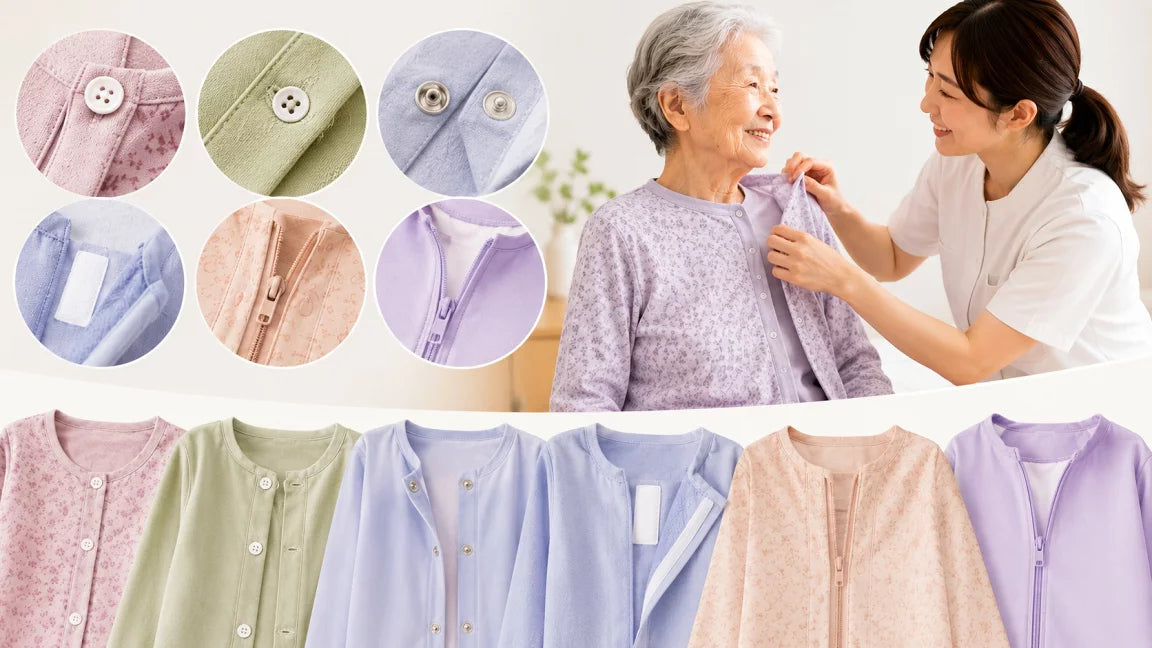
Front-opening clothes come with many kinds of fastenings, such as
- large buttons
- snap buttons
- touch fasteners (hook-and-loop tape)
- zips
and more.
No single type is the best.
What matters is choosing one that suits the person's physical condition and feelings, such as "I want to keep dressing myself."
The purpose of front-opening clothes: to keep doing what you can
In caregiving, the goal is not only to "make up for what someone can't do."
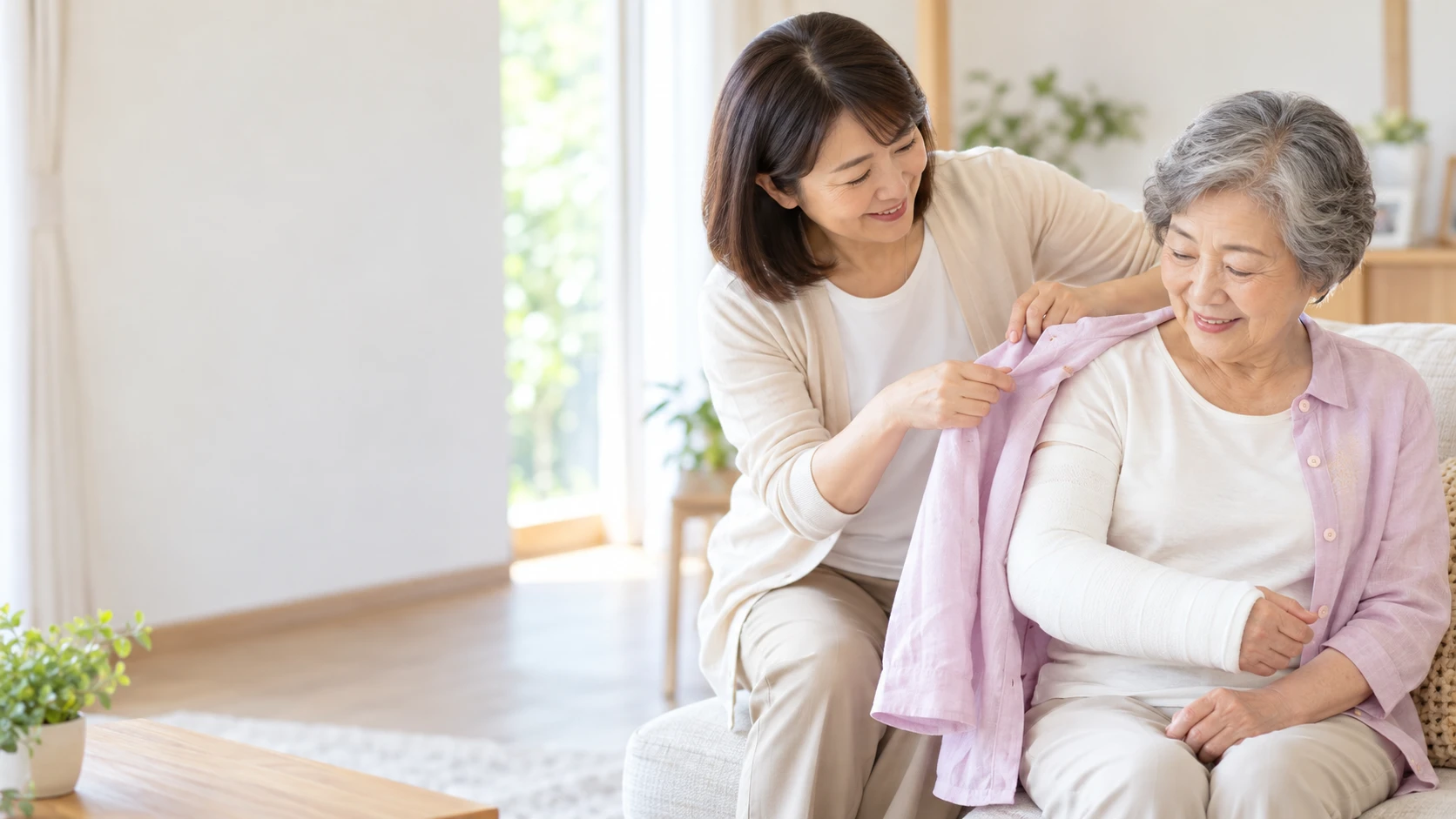
It's also important to support people so they can keep doing what they can and live in their own way.
The same goes for clothing.
With a little ingenuity,
- "I can still dress myself."
- "I can dress with just a little help."
— possibilities like these can open up.
So when choosing a type of front opening, we want to focus not on "which is easiest" but on "which lets this person live in their own way."
At the same time, even for people who find it hard to dress themselves, thoughtful clothing choices still have meaning.
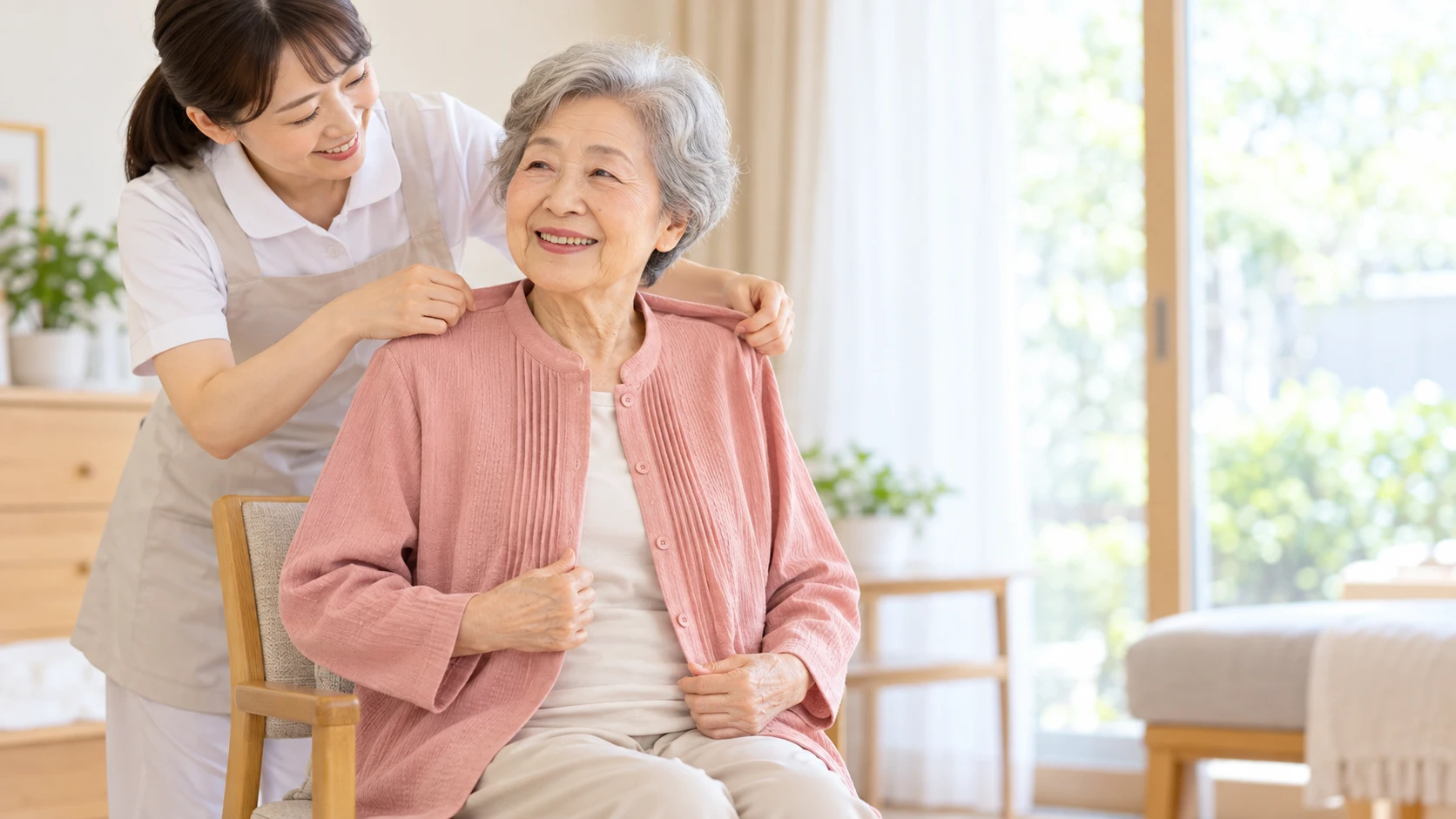
The right clothes can make changing go more smoothly.
As a result, not only is there less strain on the person's body, but the caregiver may also have more peace of mind.
That breathing room may lead to casual conversations like
- "It's lovely weather today, isn't it?"
- "That outfit really suits you."
— who knows.
We believe clothing is not simply "something to wear," but something that supports each person's own way of living each day.
Large buttons
"I can still do up buttons, but small ones are getting hard to grip."
For people like this, we recommend large buttons.
Because the buttons are bigger, they're easier to pinch with the fingers and easier to fasten and unfasten.
"I want to keep dressing with buttons as I always have."
They're also chosen by people who want to honor that feeling.
Diagonal buttonholes
Some garments have buttonholes set at a slant.
They make buttons easier to pass through and easier to fasten and unfasten, even with one hand.
Combined with large buttons, they can make dressing even easier.
"I can still use buttons, but it takes longer than it used to."
They're also recommended for people like this.
Snap buttons
Snap buttons fasten with a press — "click" — and come undone with a simple pull.
With fewer fiddly button movements, they can be less of a burden for both the person and the caregiver.
They're also chosen by people who want to shorten the time it takes to change.
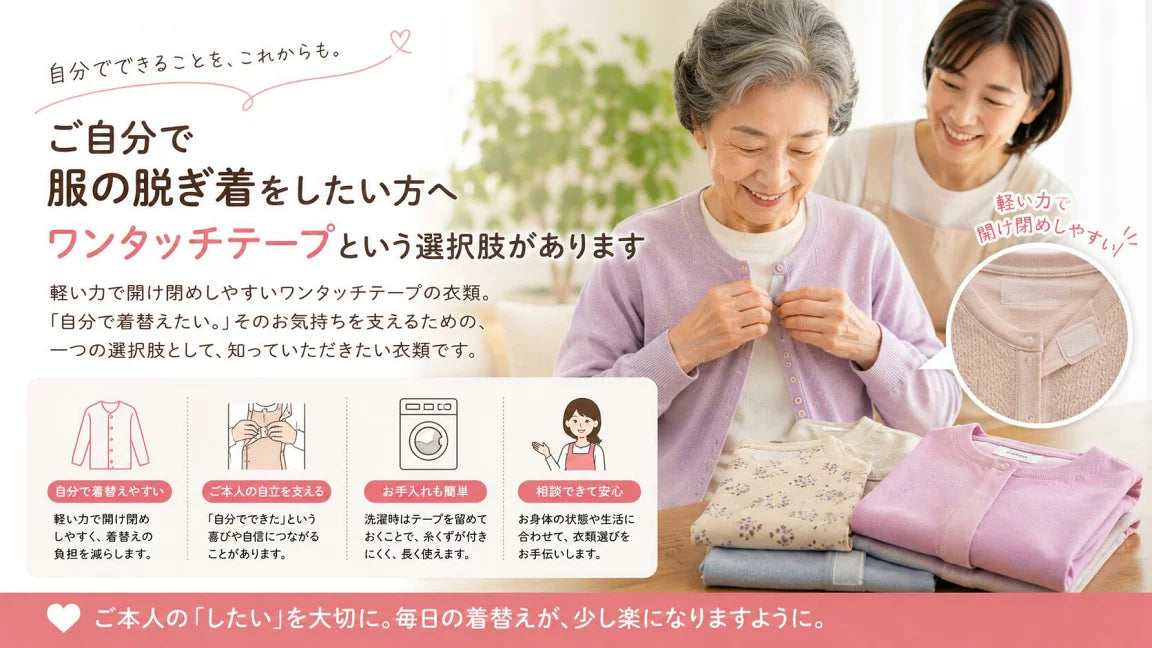
Touch fasteners
Touch fasteners close simply by pressing the hook-and-loop tape together.
Among front-opening types, they can be put on and taken off without much fingertip strength, so they're recommended for people who say
"I want to dress myself as much as I can."
— that's who they suit.
On the other hand, hook-and-loop tape tends to pick up lint and threads.
To keep using them comfortably for a long time, we recommend fastening the tape together before washing.
Hidden zips
These garments look like they have buttons, but actually open and close with a zip.
Since there's no need to do up buttons one by one, dressing can go more smoothly.
However, you do need to connect the two ends of the zip.
If the person dresses themselves, we recommend checking whether working the zip is a burden before choosing.
Long zips
For people who find it hard to raise their shoulders, or whose shoulder range of motion has become smaller, a long-zip type is also recommended.
This type can be worn either way:
- pulled on over the head
- stepped into and pulled up from the feet
Both methods work.
Also, because there's no need to connect the zip — you just pull it up to close — it's chosen by people who find connecting zips difficult.
If you're not sure which to choose
With front-opening clothes, what matters is not "which is best" but
"who it suits."
That's the key.
For example,
- wanting to dress yourself as much as possible
- dressing with help from a caregiver
- fingers becoming harder to move
- shoulders that are hard to raise
— how to choose changes depending on the person's physical condition.
If you're unsure, please ask us
At Setagaya Kaigo, we also receive many questions like "Which type of front opening should I choose?"
Rather than simply introducing front-opening products, we listen to the person's physical condition and their wish to "keep dressing myself," and think about clothing choices together with you.
A small change in clothing can help people do more for themselves or lighten the load shared with their caregivers.
We'd be glad to think together with you about clothing that supports each person's own way of living.
Ask us casually on LINE View the front-opening long-sleeved T-shirt (sa3585) View the crinkled weave pintuck blouse (sa3670)