When a family member starts rehabilitation, many people feel worries like:
- Will they really get better?
- What should I say to them?
These feelings are very common.
Of course, the effects of rehabilitation and the degree of recovery differ for each person, depending on their physical condition and the illness or injury.
This time, we share a memorable story we heard from a physical therapist who works with our shop.
*Some details have been generalised so that no individual can be identified.
A woman in her 90s who couldn't get out of bed
This is a story from when that physical therapist was in charge of home-visit rehabilitation.
A woman in her 90s had a lumbar compression fracture from a fall, and it became hard for her even to sit up in bed.
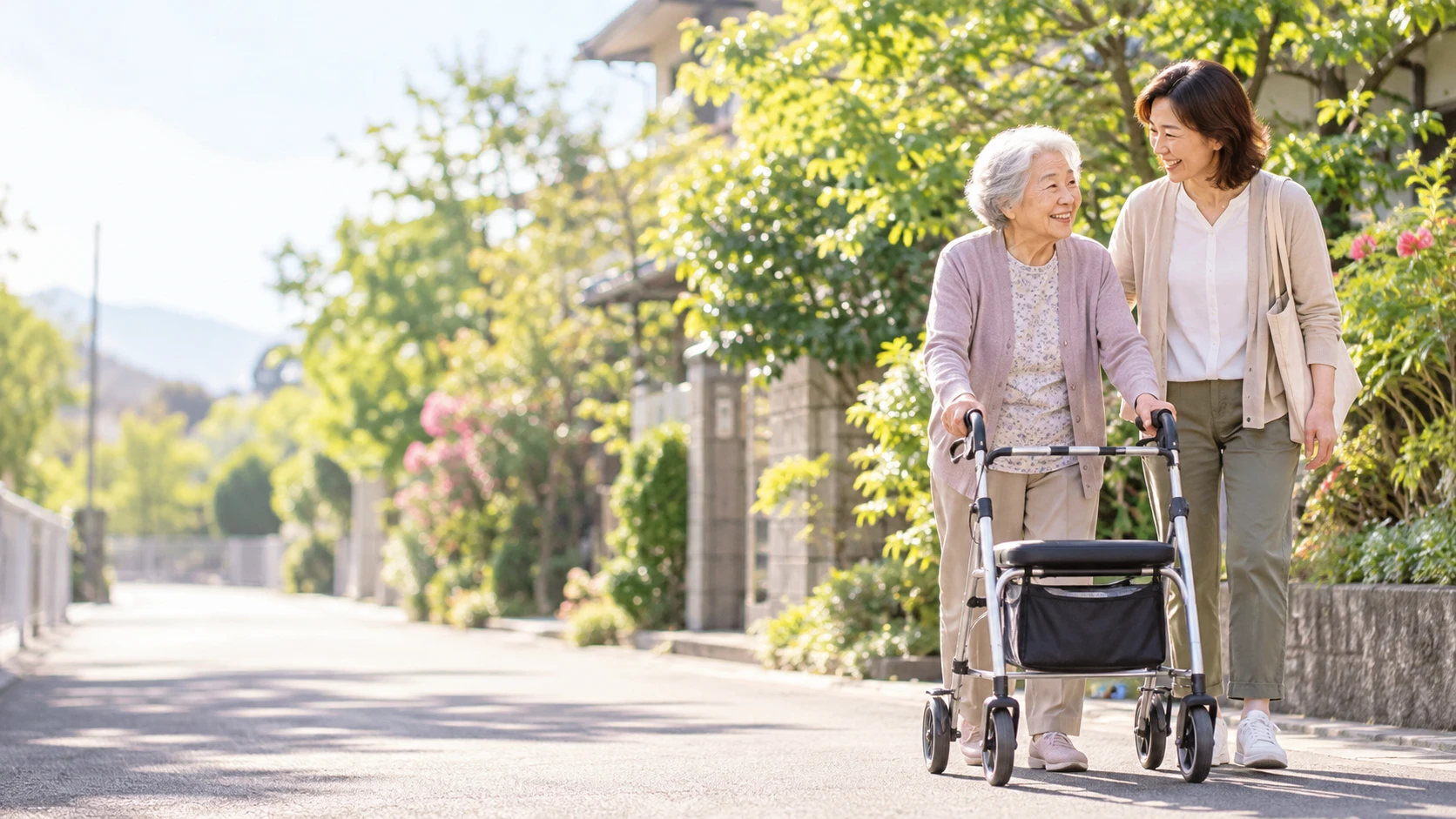
Before the fall, she was well enough to go out using a walking trolley.
The pain from the fracture was strong and she ended up almost bedridden, but she was very positive about rehabilitation.
She actively worked on exercises she could do in bed, and kept exercising on her own even on days without rehabilitation.
Then:
- Little by little, she became able to sit on the edge of the bed
- She became able to move to a wheelchair
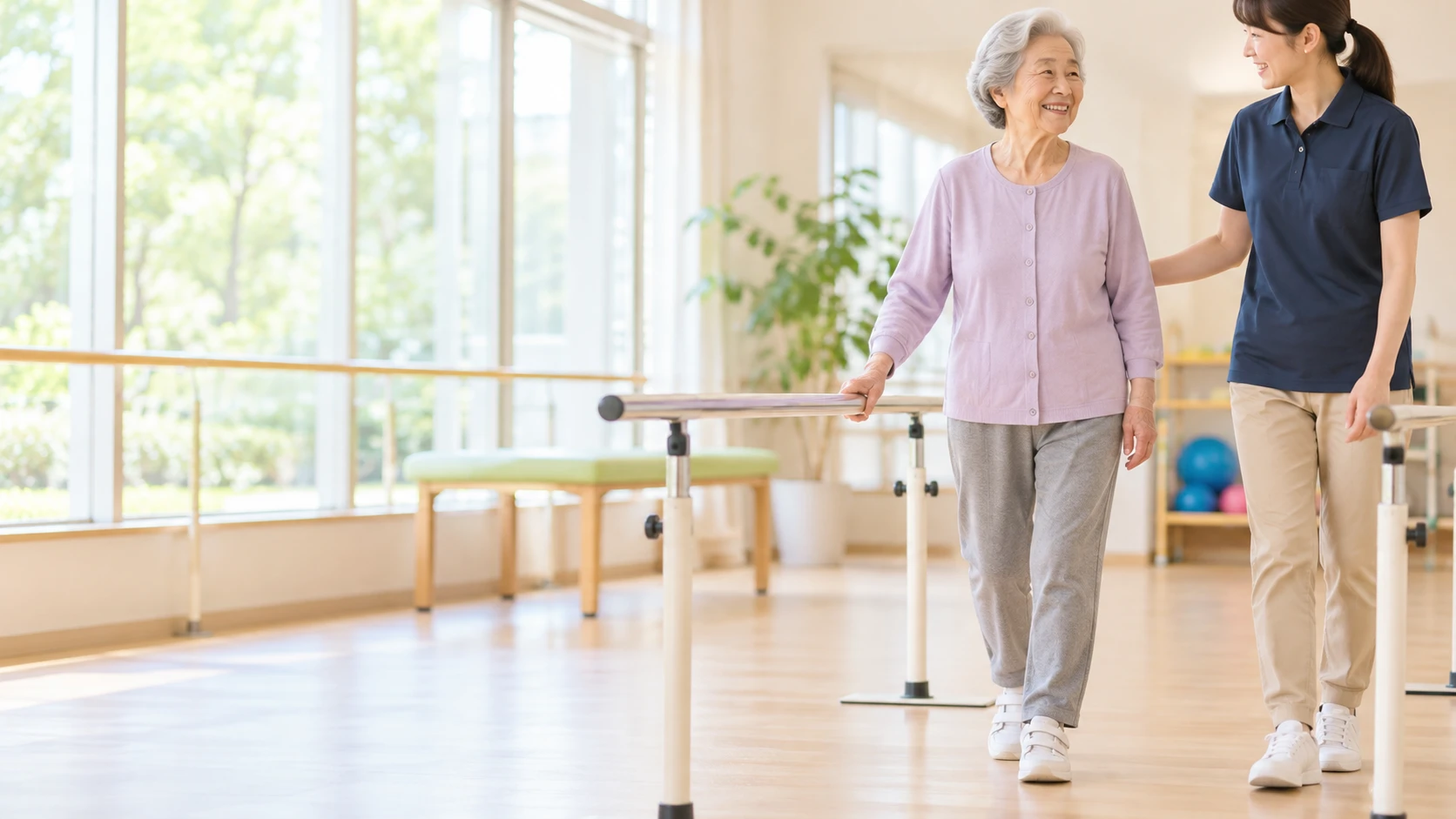
- Walking practice began
- In the end, she recovered enough to go shopping with her walking trolley
What the physical therapist took from this story
What left the strongest impression on that physical therapist was:
"The person's own motivation to work at rehabilitation"
That was it.
Of course, her recovery to this point was the result of many factors coming together, such as:
- The state of the fracture
- Her original physical strength
- Appropriate rehabilitation
- Support from those around her
and more.
So this does not mean that "rehabilitation will always bring the same recovery".
But there is also no need to give up from the start, thinking:
- She's already in her 90s.
That is what the therapist felt anew.
Family words of encouragement matter too
Many families worry about what to say to the person working hard at rehabilitation:
- What words should I use?
This is a common worry.
The physical therapist taught us:
It's important to look not only at results, but also at small changes and effort.
That was the advice.
For example:
- You're moving more than yesterday.
- You got this far today.
- Take your time, it's okay.
- Let's keep at it together, little by little.
Words like these lead to the person's sense of security and motivation.
Some words can turn into pressure
Even when meant as encouragement, some words can become pressure for the person.
For example:
- Try harder.
- Hurry up and get better.
- You used to be able to do so much more.
- Why can't you do it?
Words like these can make the person feel rushed or lose confidence.
Of course, families don't mean any harm.
"I want you to get better." It's precisely because that feeling is so strong that these words slip out.
Families, please don't carry it all alone
Rehabilitation is a long road, not only for the person but for the family too.
If days go on without the recovery you hoped for, you may feel anxious, impatient or low.
At such times, don't carry it all within the family; try talking to the physical or occupational therapist in charge, the care manager, or the community general support center.
Families being able to watch over the person with peace of mind is also a great support for the person.
What matters is respecting the person's own pace
The goal of rehabilitation is not only "returning to life as it was".
- Sitting a little longer than yesterday
- Walking a little further
- Smiling more often
Each of these changes has great meaning too.
Without rushing, we hope you can respect the person's pace and celebrate small changes together.
Finally
While continuing rehabilitation, small successes such as:
- I changed my clothes by myself
- I pulled up my trousers on my own
can also build confidence.
Choosing clothing that suits the person's physical condition is another way to support a life that feels like their own.
If you're unsure, please feel free to ask Setagaya Kaigo.
Feel free to ask us on LINE*This article is based on real experiences shared by a physical therapist who works with our shop, with some details changed and generalised so that no individual can be identified.
*The effects of rehabilitation and recovery vary from person to person. Suitable rehabilitation and ways of supporting the person differ depending on the illness, injury and physical condition, so please prioritise the guidance of the doctor, physical therapist, occupational therapist or other professionals in charge.