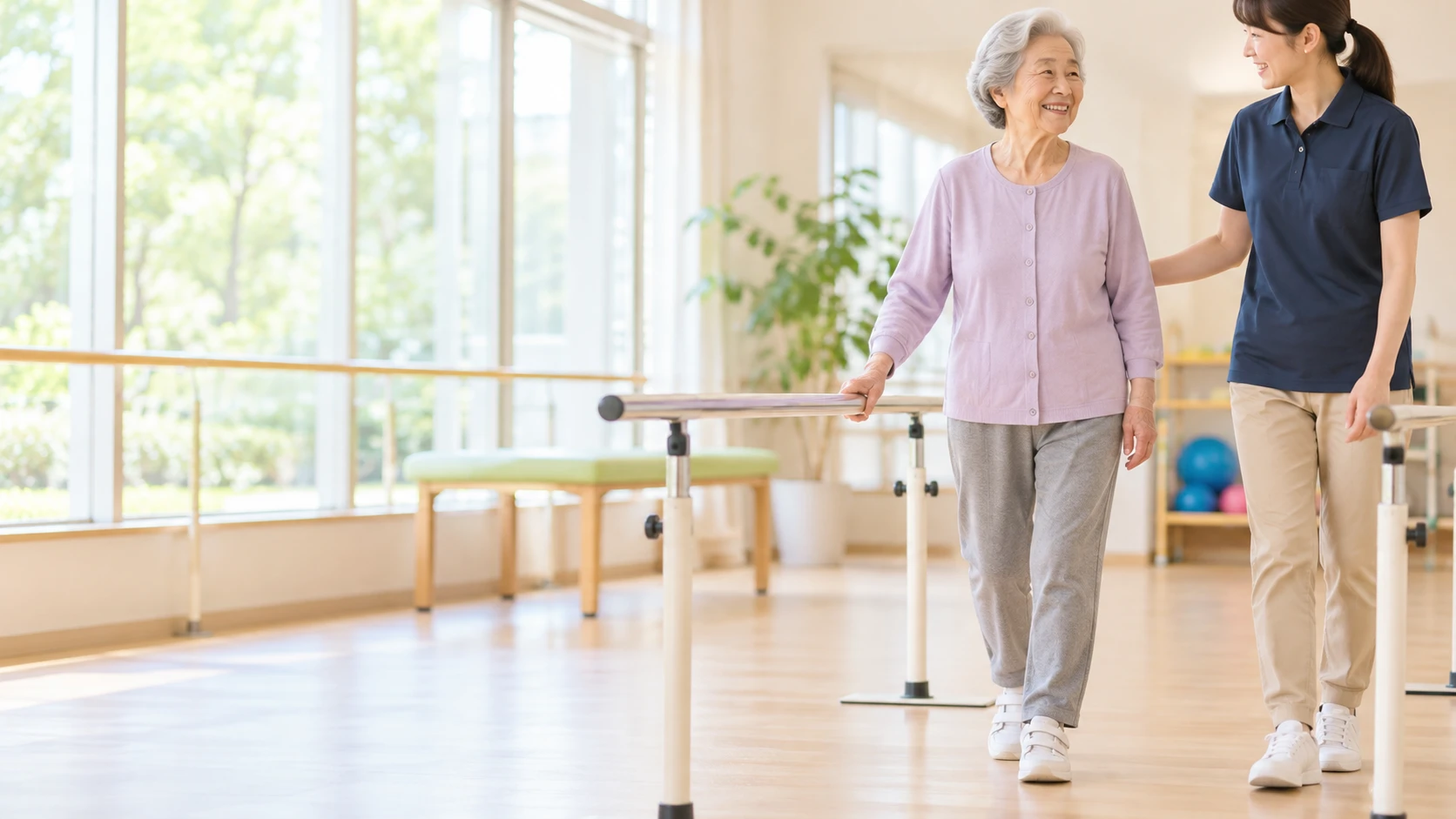
What should I wear to rehabilitation?
When starting rehabilitation for the first time, many people wonder:
- What should I wear?
- Are everyday clothes all right?
These are very common questions.
Basically, there are no rules about what to wear.
However, some clothing can make it harder to move the body or to carry out rehabilitation.
Here we introduce tips for choosing clothing for rehabilitation.
Clothes that are easy to move in are recommended
Rehabilitation can involve moving the body a lot, such as:
- Stretching
- Strength training
- Walking practice
- Practice standing up and sitting down
and more.
So we recommend clothing that is:
- Stretchy
- Easy to move in
- Not tight
Clothing like this works well.
Many people choose roomy clothes such as sweatshirts and tracksuits.
Of course, everyday clothes are fine as long as they are easy to move in.
Choose stretchy materials
Because therapists may check body movements and the range of motion of the joints, stretchy materials are well suited to rehabilitation.
If the person sweats easily, choosing materials that absorb moisture and dry quickly helps them stay comfortable.
Stretchy, easy-to-move-in clothing we recommend
Clothing can depend on the type of rehabilitation
The part of the body to be checked differs depending on the rehabilitation. So clothing that makes the affected area easy to check can help, as well as being easy to move in.
Clothing we recommend for knee rehabilitation
The therapist may check how the knee moves or whether it is swollen.
Trousers whose hems roll up easily, or trousers with zips at the hem, make the knee easy to check while reducing the effort of changing.
Trousers we recommend for showing the knees easily
Clothing we recommend for shoulder and arm rehabilitation
The therapist may check how the shoulder or arm moves, or give treatment such as electrotherapy.
So clothing that lets the shoulder be uncovered easily may be preferable.
If the shoulders or arms are hard to move and changing itself is difficult, front-opening clothing that doesn't go over the head is also an option.
Clothing we recommend that doesn't go over the head
Clothing we recommend for swallowing rehabilitation
When the therapist checks swallowing, clothing that lets the neck area be seen easily may be suitable.
Swallowing practice may also use drinks or food, so it is reassuring to choose clothing that won't bother you if it gets a little dirty.
It is reassuring to check with the rehabilitation staff in charge beforehand.
Choosing shoes matters too
For walking practice or practice standing up, we recommend well-fitting sports shoes that are light, non-slip and easy to put on and take off, opening wide with hook-and-loop fasteners or similar.
Slippers and sandals come off easily, so they may not be suitable for walking practice.
Not spending time on changing matters too
Rehabilitation time is limited.
Rather than spending time changing or uncovering the affected area, using the time fully for moving the body leads to more fruitful rehabilitation.
Going in clothes you can exercise in straight away is one option.
Depending on the person's physical condition, features such as:
- Front opening
- Good stretch
- Large buttons
- A roomy size
can make changing easier.
Underwear we recommend for easy changing
If you are unsure about clothing
- I don't know what to wear to rehabilitation
- I'm looking for trousers that make the knees easy to show
- I have hemiplegia and want clothes that are easy to change
- The facility asked us to prepare clothes that are easy to move in
At times like these, please feel free to ask us.
At Setagaya Kaigo, we work with physical therapists and occupational therapists to help choose clothing that suits the person's physical condition and rehabilitation.
Feel free to ask us on LINE