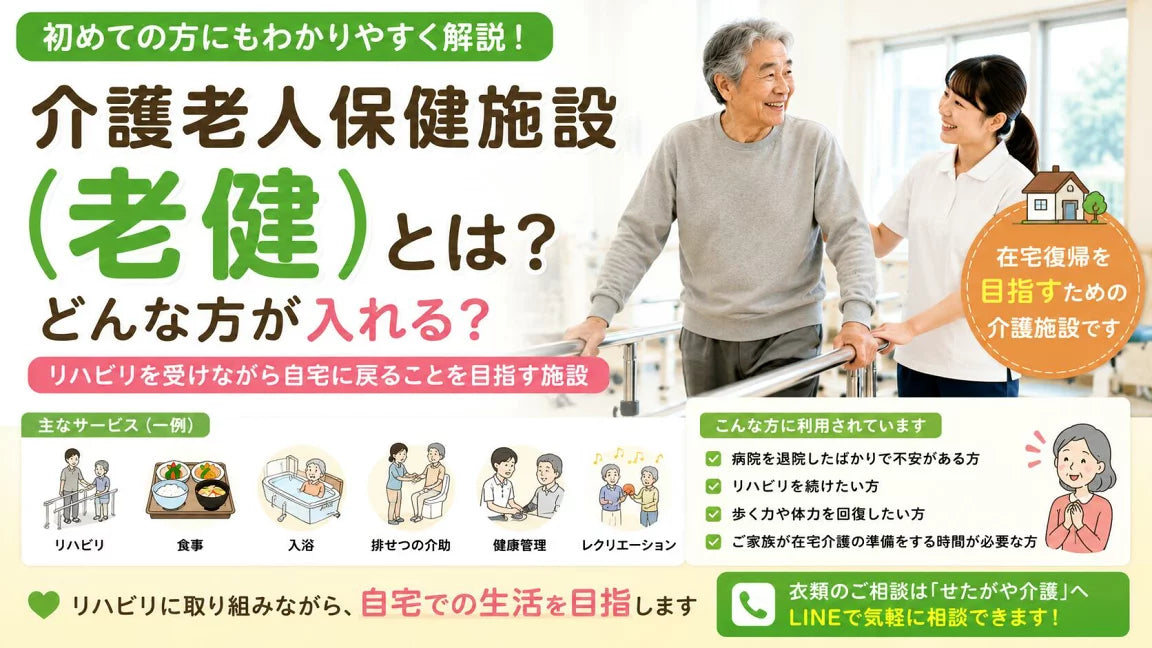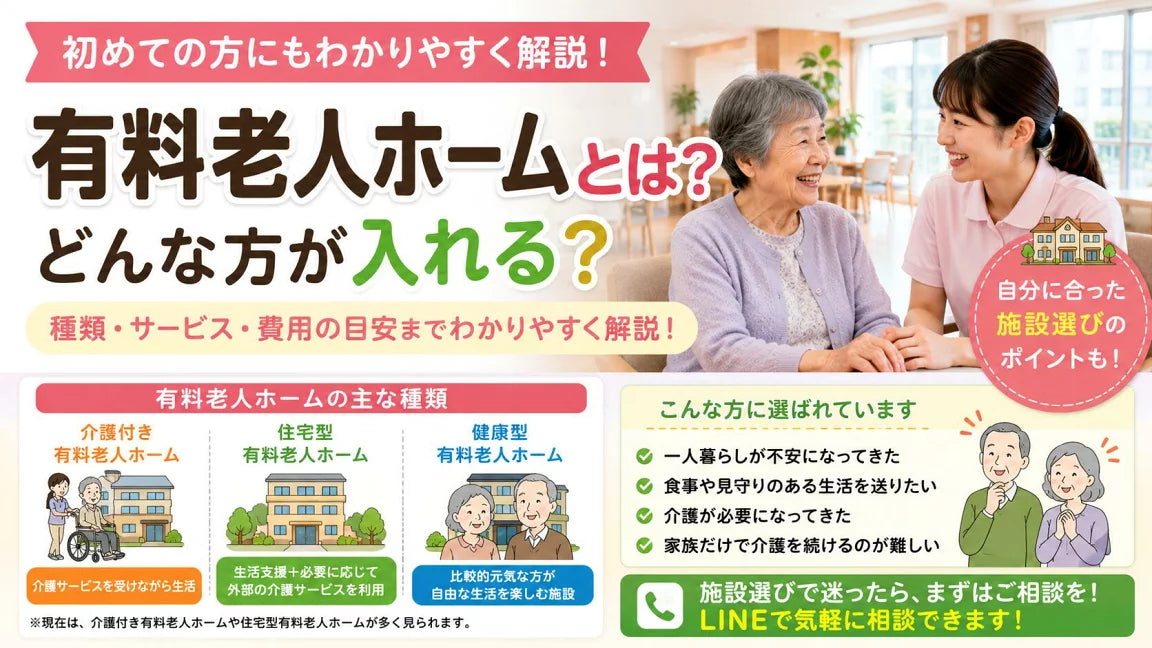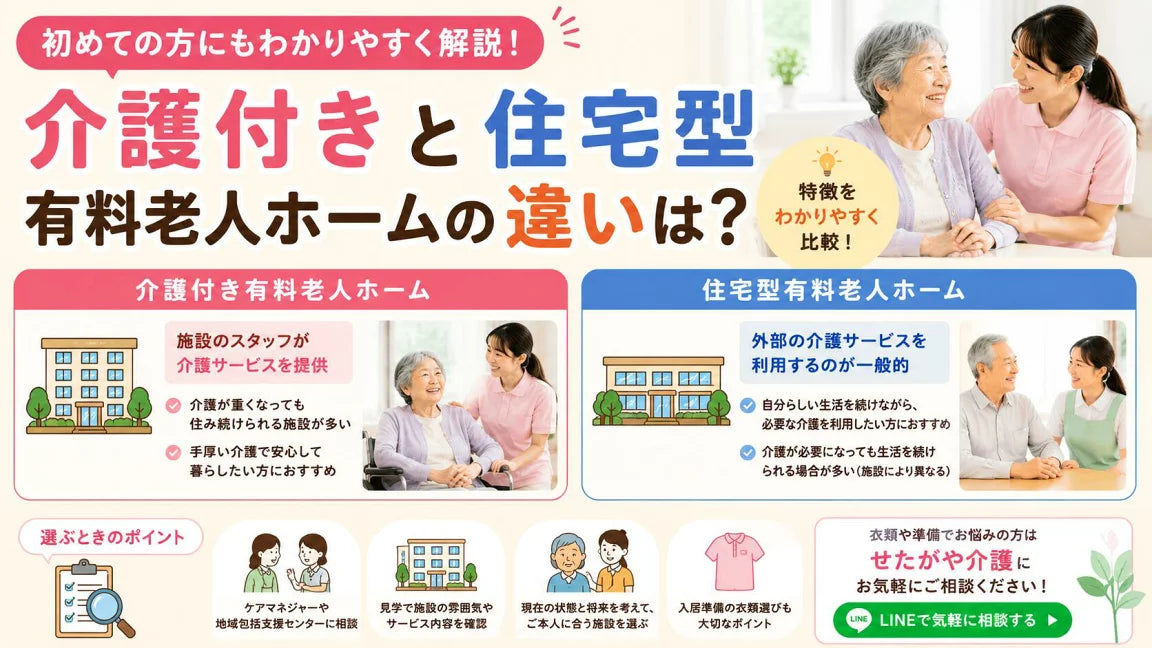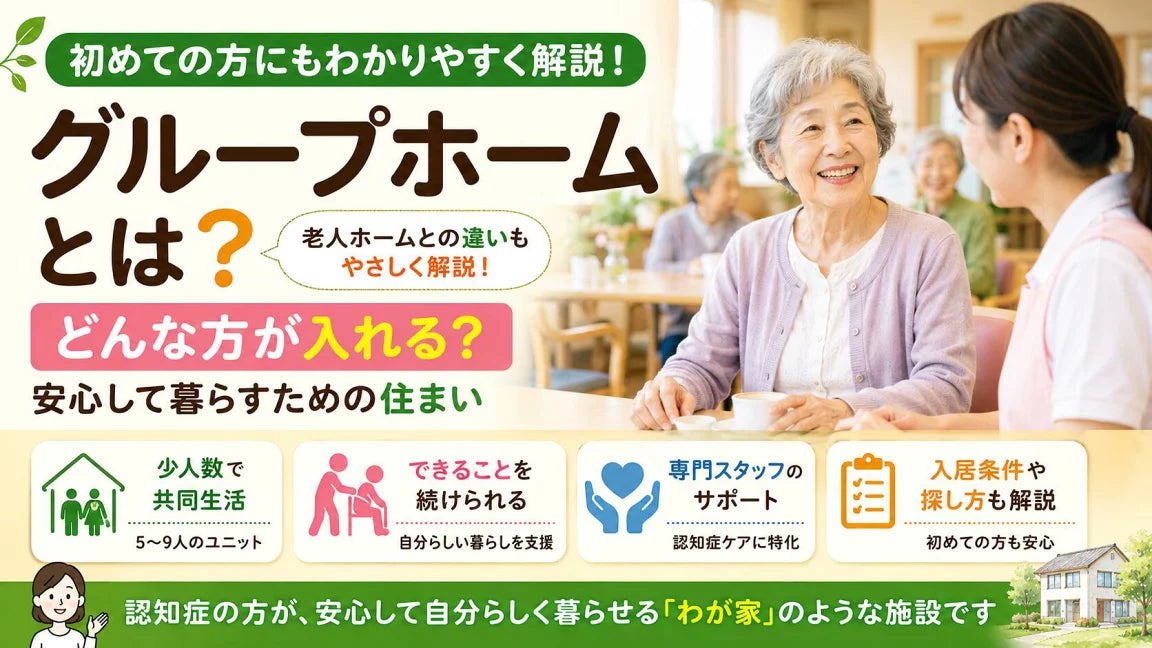
What is a group home?
When looking into care, you may come across the term "group home."
But many people probably wonder:
- Is it different from a care home?
- What kind of people live there?
Here is the short answer.
Under Japan's long-term care insurance, a group home is a care facility where people with dementia live together in a small group and continue a life that is their own.
Residents live in a homelike environment and spend each day with support from care staff.
What is life like in a group home?
In a group home, residents live together in small groups called "units."
Each unit has five to nine people, who live in a homelike environment with support from care staff.
It differs by facility, but in general daily life includes the following.
- Meals
- Bathing
- Help with daily activities such as toileting
- Cleaning and laundry
- Recreation
- Walks and contact with the local community
Having dementia does not mean the care staff do everything.
Residents are supported to keep living in their own way, taking part in what they can do themselves.
Who can use a group home?
A group home can be used by people who have been diagnosed with dementia and certified at Support Level 2 or Care Level 1 or above.
In principle it is for people aged 65 or over, but people aged 40 to 64 may also be able to use it if their dementia was caused by one of the specified diseases covered by long-term care insurance.
Because a group home is a community-based service, in principle it is for people whose residence is registered in the municipality where the facility is located.
Also, since residents live together in a small group, whether a person can move in is decided based on their condition and the support the facility can provide.
Detailed conditions differ by facility, so check in advance.
How does it differ from a special nursing home?
A group home and a special nursing home are both facilities where older people live, but their purposes differ.
A group home values letting people with dementia lead a homelike life in a small group while continuing to do what they can for themselves.
A special nursing home, on the other hand, is a public care facility where people who need care live for the long term.
Which suits depends on the person's physical condition and the symptoms of dementia.
How do you look for a group home?
People looking for a facility for the first time often wonder:
- Where should I go for advice?
That is a common worry.
In that case, start by consulting your care manager or the community general support center.
They will think together with you about a suitable facility, listening to the person's physical condition, the symptoms of dementia and the family's wishes.
We recommend actually visiting and checking things such as:
- The atmosphere of the facility
- How the staff respond
- How the residents appear
- How people with dementia are supported
before applying.
A group home suits some people more than others
A group home suits people with dementia who want to live calmly in a small group.
On the other hand, if the medical care or care needed goes beyond what the facility can handle, another facility may be more suitable.
Medical care and end-of-life care differ by facility, so it is reassuring to also check how long the person will be able to keep living there.
Choosing clothing with daily life in mind matters too
In a group home, residents continue their daily lives while what they can do for themselves is valued.
So beyond front-opening and easy-to-move-in clothing, it is also important to choose clothing the person can easily change into by themselves.
Facilities also often use laundry and tumble dryers, so it is reassuring to prepare dryer-safe clothing and clothing on which a name can easily be written.
If you are unsure about choosing clothing, please feel free to ask us.
Summary
A group home is a care facility where people with dementia live together in a small group and continue a life that is their own.
Care staff support daily life in a homelike environment so that people with dementia can live with peace of mind.
If you are looking for a facility for the first time, do not worry alone; consult your family, the community general support center or your care manager, and look for a facility that suits the person.
* This article is based on the system in Japan as of July 2026. The system may be revised, so please check with your local government or community general support center for details.
References: Long-Term Care Service Information Publication System, "What services are there? – Communal daily long-term care for dementia patients (group homes)"; Ministry of Health, Labour and Welfare, "Overview of the Long-Term Care Insurance System" (Japanese)