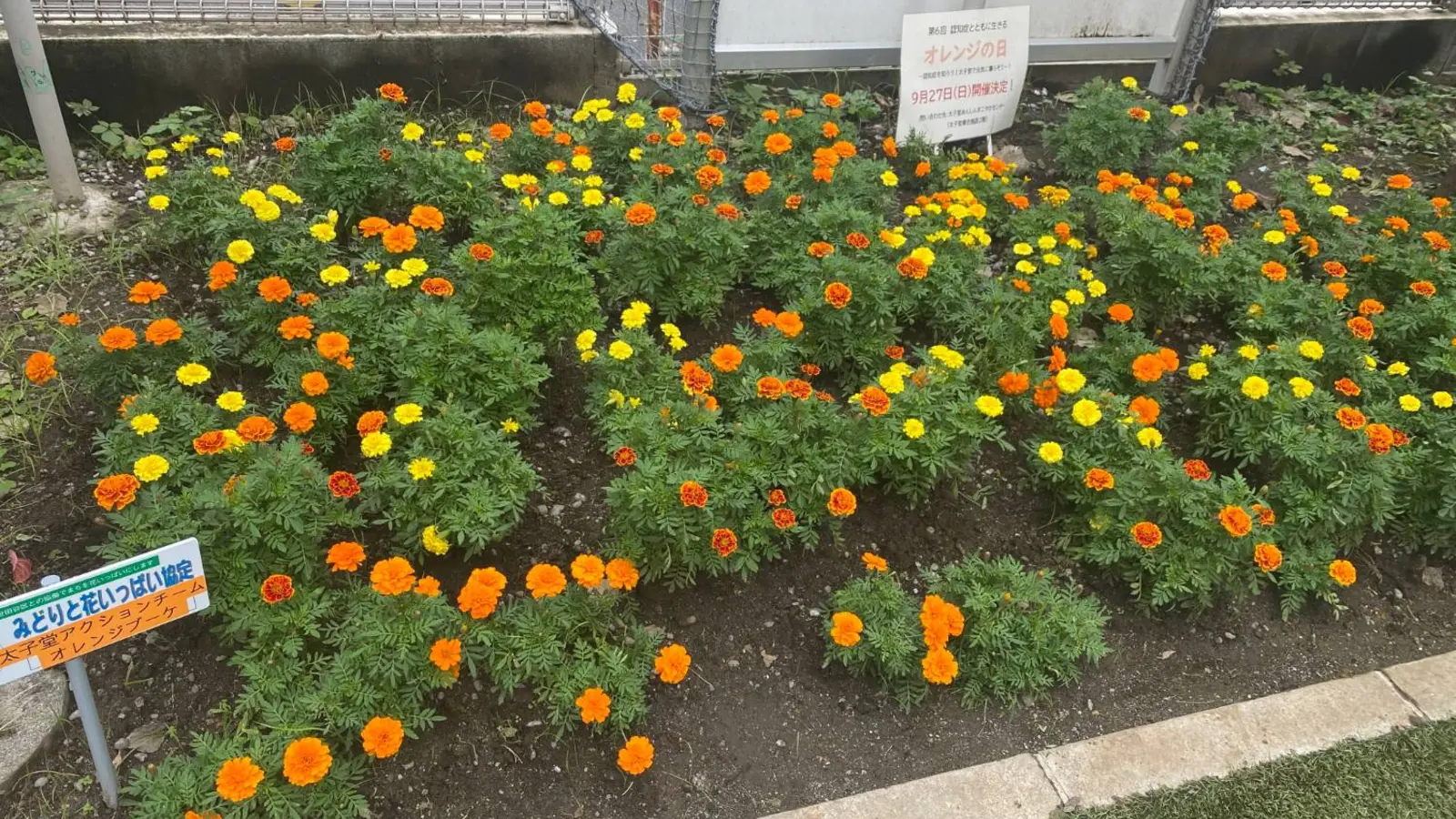
On September 27, we took part in "Orange Day," held at Sangenjaya Fureai Hiroba (community plaza).
"Orange Day" is a local event where people of all ages and backgrounds living in the area can learn and think about dementia.
Now in its sixth year, it featured an "Action Theater" for learning about dementia in a fun way, hands-on corners, a 100-yen café, and sweets sold by local welfare workshops — all easy for neighbors to drop in and join.
At Setagaya Kaigo, older people and their families come to us every day with all kinds of questions about clothing.
At the same time, we believe that knowing the functions of clothing alone is not enough to make good suggestions.
- What is dementia, really?
- How do people with dementia and their families live in the community?
- What kinds of support and connections are there?
We joined "Orange Day" so that we ourselves could learn about these things and keep learning.
We attended a talk about dementia
At the venue, we also attended a talk to learn about dementia.
We learned about the difference between dementia and ordinary forgetfulness, how cognitive function works, the types of dementia, its core symptoms, and more.
What stayed with us most was the importance of not looking only at the symptoms themselves, but keeping this question in mind:
"What is this person struggling with in their daily life?"
That perspective matters.
When dementia makes it harder to understand time or place, causes a person to forget plans, or makes things they used to do difficult, it can bring anxiety and confusion.
Behavior that makes others wonder "why would they do that?" may well have a reason from the person's own point of view.
Learning about dementia isn't just memorizing the names of symptoms;
it also means thinking about what the person is struggling with and what is making them anxious right now
— that is what we came to feel.
And we believe holding that perspective is the first step toward finding the right way to speak to and support each person.
In Setagaya City, consultation services, professionals, and local people work together so that people can keep living with peace of mind in the neighborhood they know, even after developing dementia.
There is consultation support not only for people with dementia but also for the families caring for them, as well as efforts to help local residents understand dementia.
Not only "how to prevent dementia," but also
"how to go on living after dementia"
— we felt that this perspective is important too.
The meaning behind the orange flowers
What touched us most this time was a story about the orange flowers planted around Sangenjaya.
According to the explanation we heard at the venue, these flowers carry this wish:
Even if you develop dementia, please remember that there are people in this town who will support you.
After the event, we went to see the orange flowers planted in town.
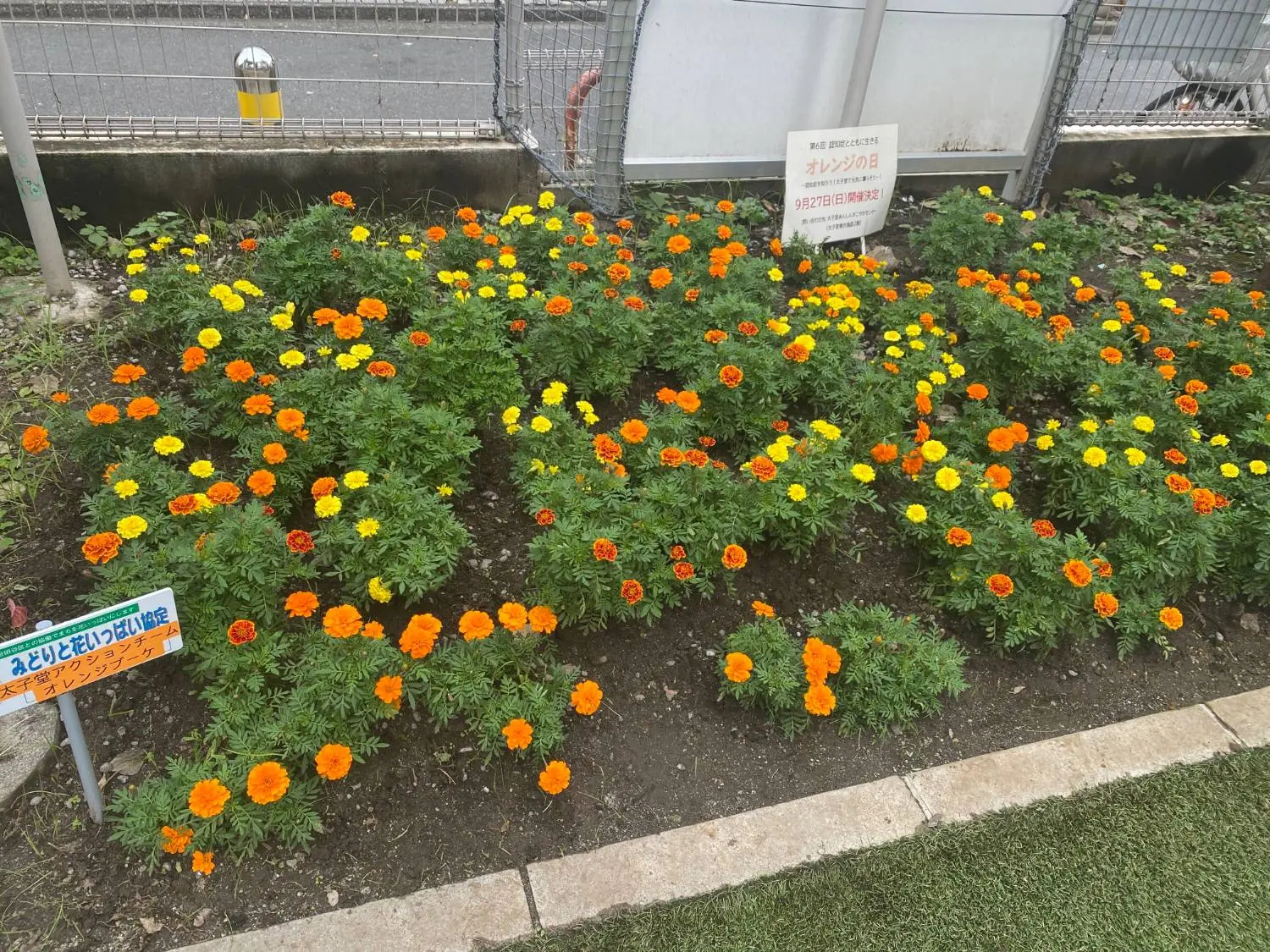
Yellow and orange flowers were blooming all across the plaza's flower bed.
If you didn't know, you might walk past thinking it was just a pretty flower bed.
But once you know its meaning, it looks like a small message from the community:
"You are not alone."
Knowing that "there are people to support you"
When dementia comes, both the person and their family may feel anxious.
At such times, knowing that
- "there is a place to talk to,"
- "there are people who will support you,"
- "it's okay to keep living in this town"
can make a very big difference, don't you think?
The Setagaya City Dementia Home Living Support Center also stresses the importance of not worrying alone, and of connecting with consultation services, professionals, and people in the community.
We were deeply impressed that the area has such systems in place, and that it also conveys them in everyday town life through events and flower beds.
Setagaya Kaigo wants to keep learning about care
Setagaya Kaigo is a shop that sells care clothing.
But what we deal with is not just "clothes."
Behind every piece of clothing is the person who needs it, their family, and a life that is unique to each and every person.
- Dementia.
- Changes in the body.
- Families who provide care.
- Life in a care facility.
- And the systems of support in the community.
We believe that learning about these things one by one leads to better suggestions when you consult us in store, by phone, or via LINE.
Taking part in "Orange Day" was one part of that learning.
Going forward, Setagaya Kaigo will keep seeing, listening, and learning — not only about clothing, but about local care, dementia, and life in older age.
And little by little, we hope to give back what we learn through our daily consultations and this column.


