How do sakoju and residential-type fee-based care homes differ?
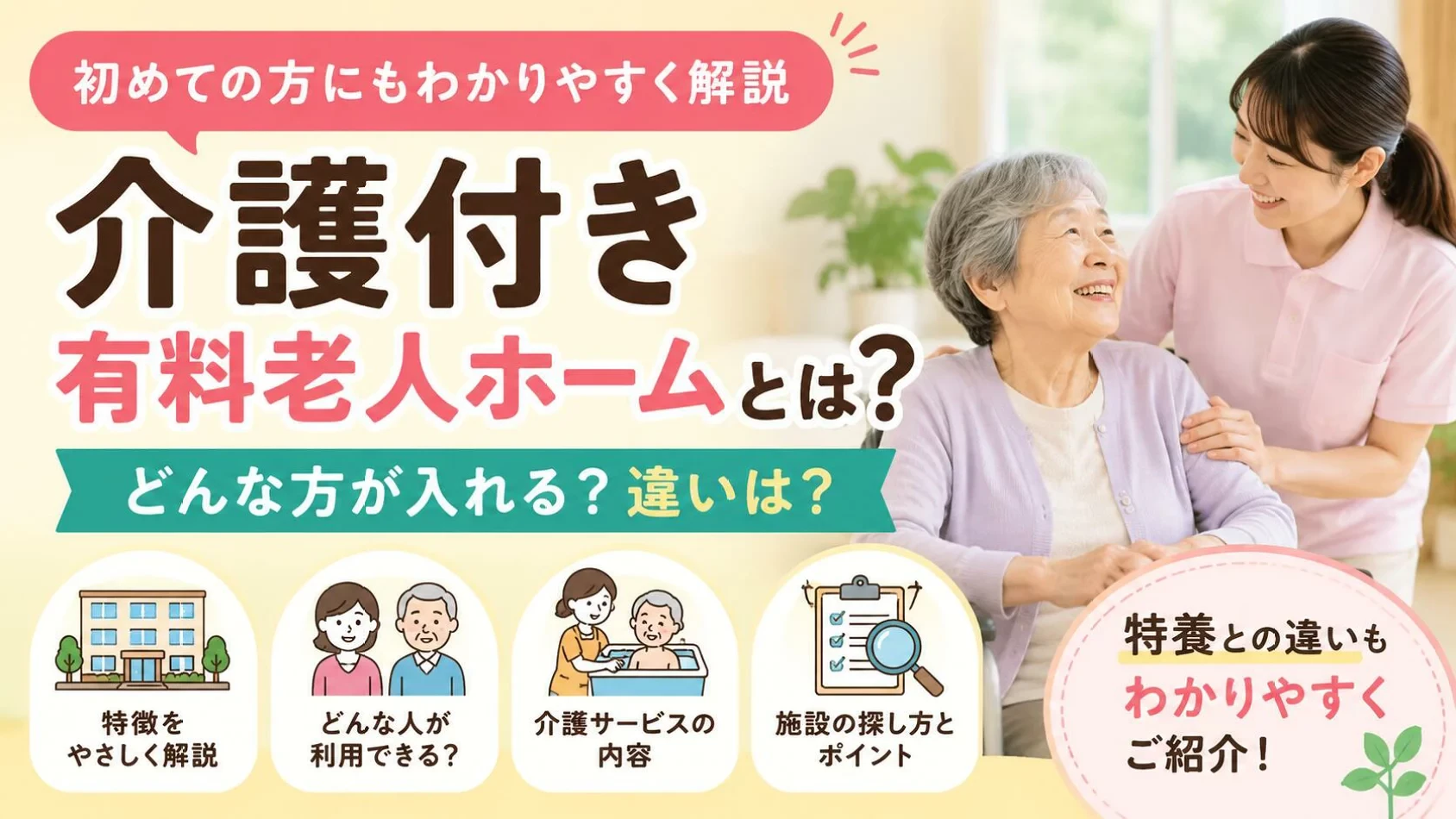
When you look for a care home or housing for older people, you may come across two names:
- Serviced housing for older people (sakoju)
- Residential-type fee-based care home
These two often appear side by side.
Because both let people live while receiving daily-life support, many people wonder:
- What's the difference?
This is a very common question.
Both are places where older people can live with peace of mind, but their roles and ways of living differ.
What is sakoju?
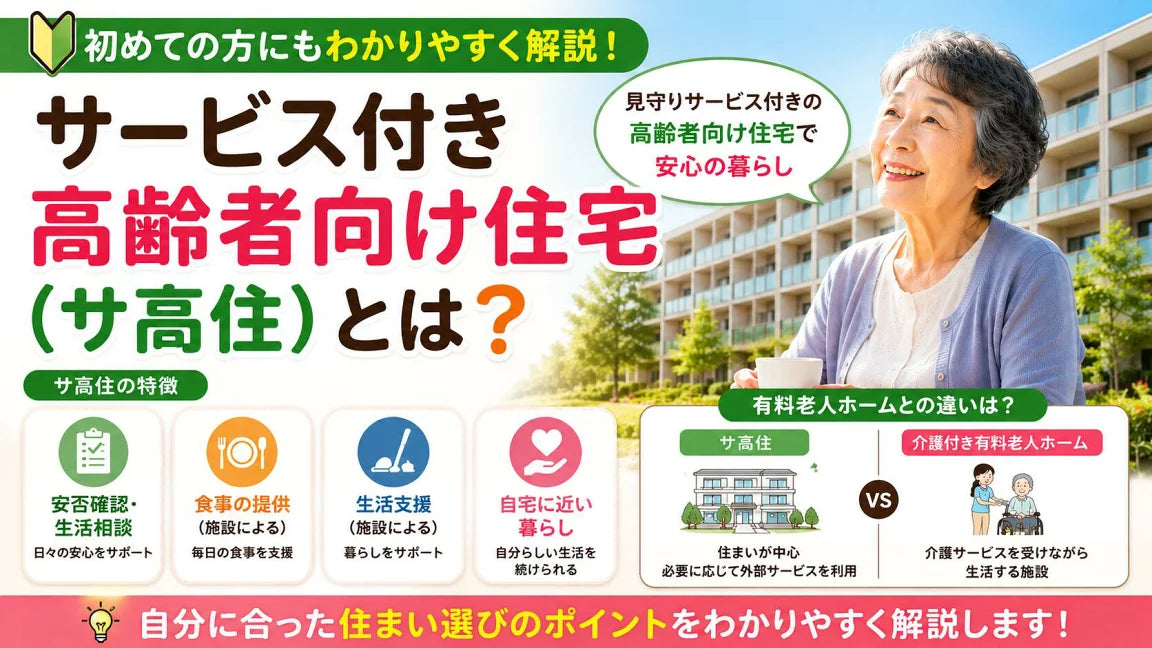
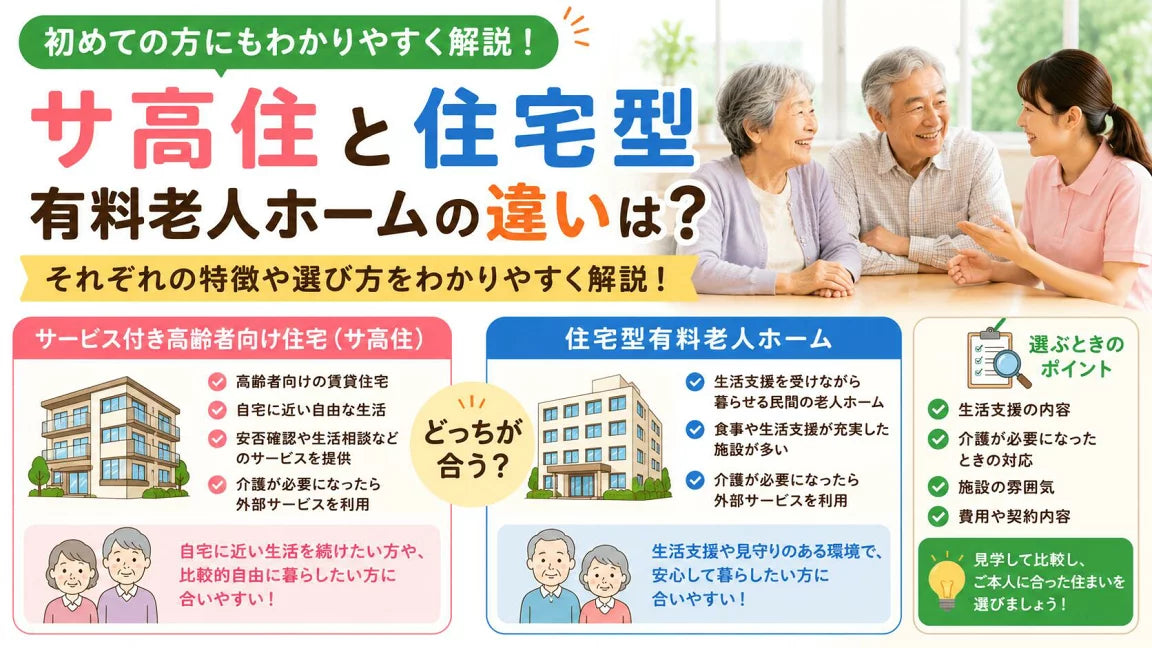
Serviced housing for older people (sakoju) is rental housing for older people.
Residents can continue a life close to living at home while receiving services such as safety checks and daily-life consultation.
When care becomes necessary, residents generally live using outside services such as home-visit care.
What is a residential-type fee-based care home?
A residential-type fee-based care home is a private care home where people can live while receiving daily-life support.
When care becomes necessary, residents generally use outside services such as home-visit care, but many homes offer well-developed meals and daily-life support.
The main differences
Way of life
Sakoju tends to suit people who value a life close to living at home.
A residential-type fee-based care home tends to suit people who want to live with peace of mind while receiving daily-life support.
Daily-life support
Both types include places that offer daily-life support, but the services differ from place to place.
It is reassuring to check during a visit how far they can help with things like meals, daily-life consultation and safety checks.
When care becomes necessary
In both cases, when care becomes necessary, it is common to use outside services such as home-visit care.
However, whether the person can keep living there when more care or medical support is needed differs from place to place.
Before moving in, it is reassuring to ask:
- Can I keep living here if my care needs become heavier?
Check this in advance.
Who does each one tend to suit?
People sakoju tends to suit
- Want to keep a life close to living at home
- Want to live at their own pace
- Want to use only the care they need
People a residential-type fee-based care home tends to suit
- Want a life with meals and someone keeping an eye on them
- Feel uneasy living alone
- Want a living environment that will feel secure in the future too
Neither one is simply better
Both sakoju and residential-type fee-based care homes have their own features.
What matters is not "which is better" but "which suits the person".
It is important to choose while thinking not only about the person's current physical condition, but also about how they want to live in the future.
What should I do if I can't decide?
When looking for a place to live for the first time, almost everyone wonders:
- Which one should we choose?
This is very natural.
At such times, talk to the care manager in charge or the community general support center.
They will listen to the person's physical condition and the family's wishes, and think with you about a suitable place to live.
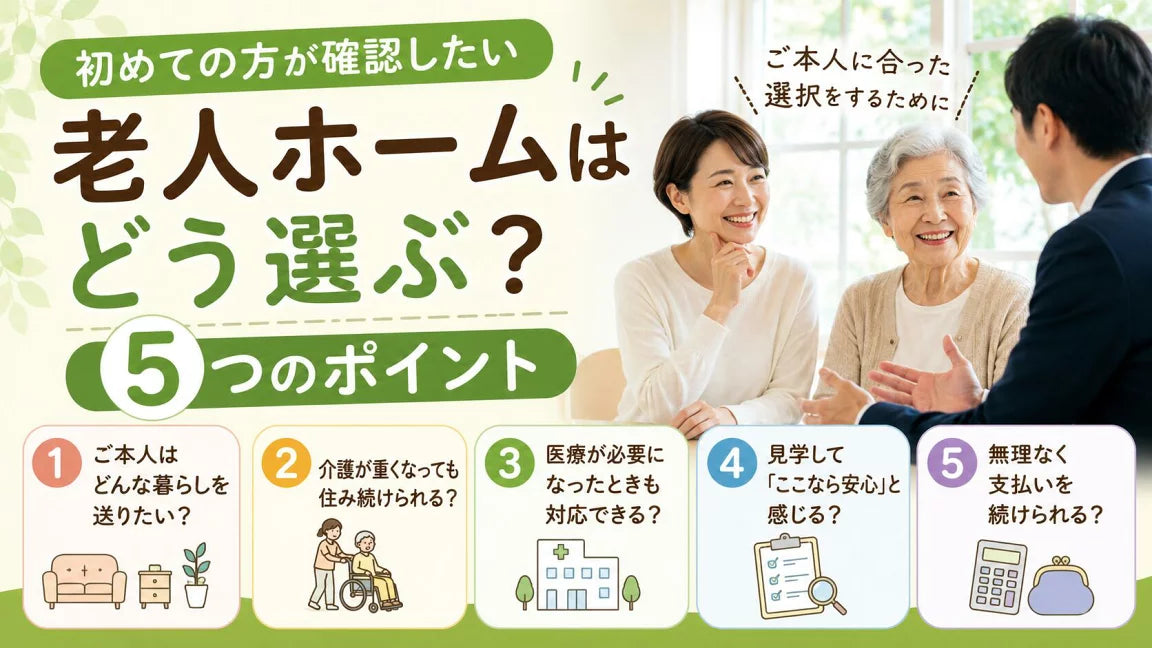
During a visit, we recommend checking things such as:
- The atmosphere of the place
- How the staff respond
- What daily-life support is offered
- What happens when care becomes necessary
These points are worth confirming.
Summary
Serviced housing for older people (sakoju) and residential-type fee-based care homes are both places where older people can live with peace of mind.
In both, it is common to use outside care services when care becomes necessary, but they differ in their way of life and the daily-life support offered.
Neither is simply better; what matters is choosing a place that suits the person's physical condition and the way they want to live.
When you can't decide, don't struggle alone. Talk to the community general support center or the care manager in charge, and choose a place that the person and the family feel good about.
*This article is based on the system as of July 2026. The system may be revised, so for details please check with your local government or community general support center.
References and sources: Long-Term Care Service Information Publication System, "About serviced housing for older people"; Ministry of Health, Labour and Welfare, "About housing for older people" and "Overview of the Long-Term Care Insurance System" (in Japanese)