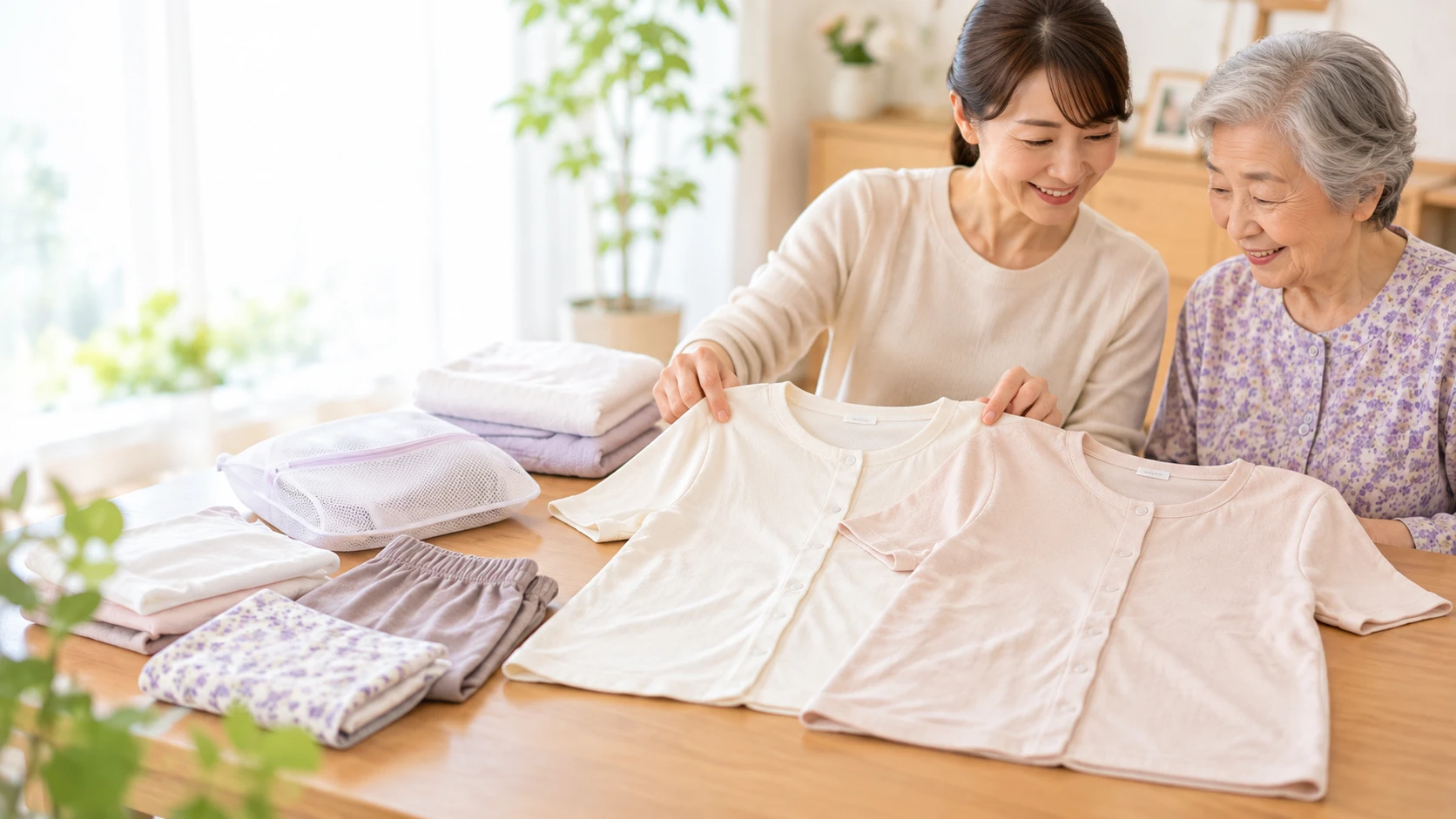
At Setagaya Kaigo, we sometimes get enquiries like, "I'm going into a rehabilitation hospital and I'm looking for hospital clothes."
When that happens, the first thing we ask is, "Does the hospital lend hospital clothes?"
That's because rehabilitation hospitals and similar places sometimes offer hospital clothes for a fee.
Even if you buy clothes, they may not be needed if the person ends up using clothes provided by the hospital.
Before buying new hospital clothes, first check whether the hospital offers a clothing rental service.
1. First, ask the hospital whether it lends hospital clothes
Rehabilitation hospitals sometimes offer a rental service for the clothes worn during a stay.
Some hospitals offer services under names such as an "admission set" or "CS set", where hospital gowns, towels and so on are provided together.
However, what is included and the fees vary from hospital to hospital.
First, check points like these.
- Availability: Can you rent hospital gowns or pajamas?
- Fees: What is the daily fee, and what are the conditions?
- What's included: Only tops and bottoms, or towels too?
- Laundry and changes: How are used clothes changed and washed?
- What to bring yourself: What else is needed, such as underwear and socks?
This may be written in the hospital's admission guide. If you're unsure, it's reassuring to check before admission.
Renting also costs money. Depending on the length of the stay, buying clothes may cost less.
On the other hand, renting can reduce the burden on the family of taking clothes home to wash.
Consider the length of the stay, the effort of laundry and the person's wishes when deciding whether to rent or to prepare clothes yourself.
Check which clothes can be borrowed from the hospital and which you need to prepare, then decide what to buy.
2. Different clothes may be needed for rehabilitation
For a stay in a rehabilitation hospital in particular, there is one more thing to check.
That is what the person will wear during rehabilitation.
Some hospitals let patients spend rehabilitation in the rented gown, while others ask them to wear their own clothes that are easy to move in.
For example, for walking practice or practice standing up and sitting down, clothes with these features are easy to use.
- Easy to move in, with some stretch
- Trouser hems that are not too long and don't get in the way of walking
- Trousers that are easy to pull up and down in the toilet
If the person uses a brace, the suitable trousers also depend on the type and shape of the brace.
Before admission, ask questions like these.
- "Is the rented gown fine for rehabilitation?"
- "Do we also need everyday clothes that are easy to move in?"
Checking these points in advance helps.
Even if everyday clothes are needed, there's no need to buy new ones if the clothes the person already wears can be used.
3. You may need to bring your own underwear and socks
Even at hospitals that lend gowns or pajamas, you may need to bring your own underwear and socks.
The number you need also changes depending on whether the hospital does the laundry or the family takes it home.
When preparing for admission, check how many of each type of clothing you need.
If underwear and socks you already have at home can be used, you can bring those.
First, compare the hospital's preparation list with the clothes you already have.
4. Choose clothes that suit the person's current condition
The person's physical condition may have changed compared with before.
For example, for someone who finds it hard to raise their arms, front-opening tops may be easier to change into than pullovers.
However, buttons can be hard to do up, so it's important to choose clothes that suit how the person can move their hands and arms.
For someone who now finds it hard to pull trousers up and down, trousers with a stretchy waist that are easy to pull up and down can help.
Changing clothes can make it easier to dress on one's own, or make moving in the toilet easier.
On the other hand, if the person can wear their usual clothes without problems, there's no need to replace them.
What matters is not buying care clothing because of a hospital stay, but checking what kind of clothing is needed now.
Check the clothing requirements given by the hospital and the person's physical condition, then choose what you need.
Points to check before admission
- Whether the hospital lends hospital clothes (fees, contents, laundry)
- What to wear during rehabilitation
- Which underwear and socks to bring, and how many
- Which clothes you already have can be used
- Whether the clothes are easy to change into for the person's current condition
5. If you're unsure about clothes for a hospital stay, ask Setagaya Kaigo
- "The hospital told us to prepare front-opening clothes."
- "We're looking for trousers to wear during rehabilitation."
- "We don't know what clothes are easy to wear in the person's current condition."
In cases like these, please talk to Setagaya Kaigo.
Setagaya Kaigo has physical therapists and occupational therapists on staff.
We help you choose clothes while listening to the person's physical condition, any difficulties when dressing, and their life in hospital.
If you have the admission preparation list from the hospital, we can give more specific advice.
Consult via LINEOnce a hospital stay is decided, you'll be busy with all kinds of preparations, and you may feel you need to gather clothes in a hurry.
But there's no need to rush out and buy everything.
Check what can be borrowed from the hospital and make use of the clothes you already have. Then let's think together about only the clothes that are newly needed.
Setagaya Kaigo helps you choose clothes that give peace of mind to both the person and their family.