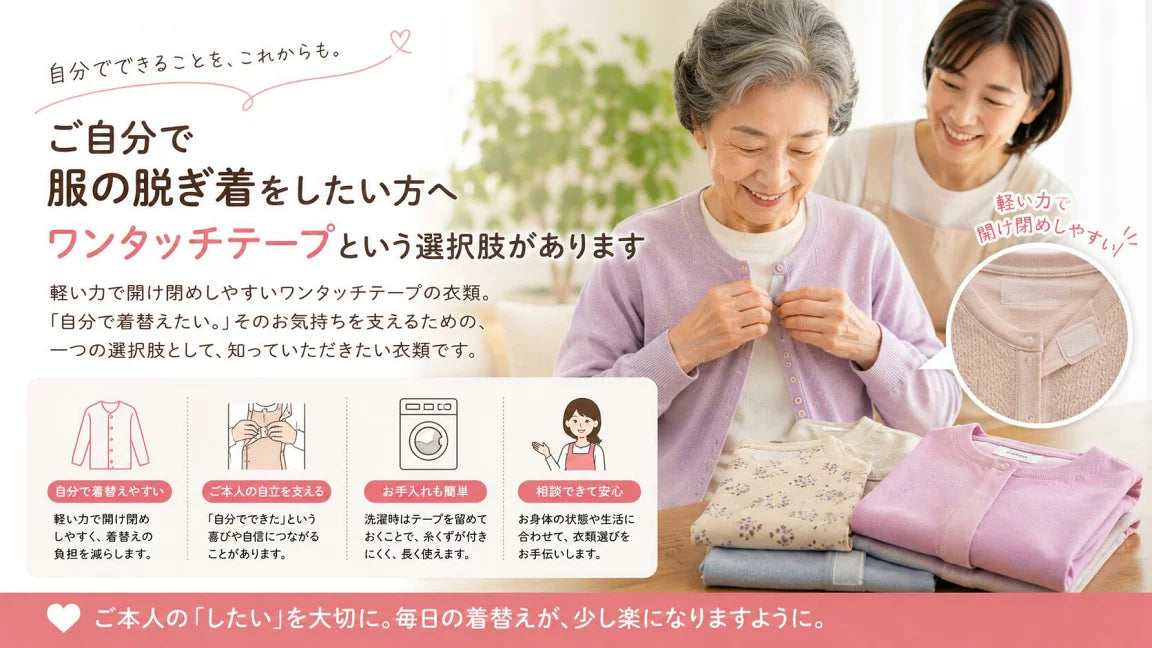
When looking for clothes for a family member with a tracheostomy, you may wonder whether the clothes will touch the tube at the neck, or what kind of neckline to choose.
When choosing clothes for someone with a tracheostomy, not only the shape of the neckline but also the fabric and ease of dressing matter.
Drawing on patient leaflets published by hospitals overseas, this column introduces the points to check when choosing clothes for someone with a tracheostomy.
1. Check the shape of the neckline
When choosing tops for someone with a tracheostomy, the most important thing is that the clothes don't block the opening of the tracheostomy tube.
Memorial Sloan Kettering Cancer Center in the United States advises avoiding clothing that may cover the tracheostomy tube opening.
A patient leaflet from an NHS hospital in the UK also gives not blocking the end of the tube as the condition for choosing clothes.
So take care when choosing clothes with a close-fitting neck or a high collar.
The following shapes are options.
- Collarless: no high collar, with room around the neck
- Wider neckline: fabric at the neck is less likely to touch the area around the tube
- Front-opening: the opening at the neck can be adjusted, for example by leaving the top button undone
However, you can't judge whether clothes are safe to wear from the collar type or appearance alone.
For example, some collarless round necks are still close-fitting. And even with the top button undone, the fabric may droop and cover the tube opening.
Suitable clothing also depends on the position of the tube, how it's secured and the medical devices used.
When choosing clothes, check that they don't block the opening when actually worn and don't catch on the tube or its ties.
For medical safety, check with the doctors or nurses who manage the tracheostomy.
2. Watch out for fuzzy fabric and fibers that shed
Besides the shape of the neckline, pay attention to the fabric.
For someone with a tracheostomy, it's also important that fibers shed from clothes don't get into the tube opening.
Memorial Sloan Kettering Cancer Center's patient leaflet also advises avoiding fuzzy blankets or clothing that may shed fibers, such as fleece.
Especially for fabric near the neck, check the following.
- Is the fabric very fuzzy?
- Does it shed fibers easily?
- Could the fabric cover the tube opening while worn?
In winter you may want to choose clothes for warmth, but it's important to look at the material too.
Some people use a dedicated heat and moisture exchanger (HME) or similar device on the tube, as instructed by medical staff.
Using such a medical device is different from covering the opening with clothes. Follow medical staff's instructions on how to use these devices.
3. For easier dressing, consider front-opening, stretchy clothes
When choosing clothes for someone with a tracheostomy, think about getting dressed as well.
Pullover clothes have to go over the head when dressing.
Front-opening tops, on the other hand, don't go over the head, so it may be easier to avoid touching the area around the tube when dressing.
Depending on their condition, some people find it hard to dress themselves and need help.
In that case, tops that open wide at the front and have soft, stretchy fabric are an option.
When choosing clothes, check the following.
- Does it open wide at the front and is it easy to handle when dressing?
- Is the fabric soft and stretchy?
- Is there enough room in the sleeves?
- Is there no risk of catching the tube or its ties when dressing?
However, front-opening doesn't always mean easy to put on.
Suitable clothing varies with the person's condition, for example for someone who finds buttons difficult or can't move their arms easily.
It's important to choose clothes that are easy to put on for the person and whoever helps them, while keeping the neck area safe.
Examples of front-opening clothes that are easy to change into
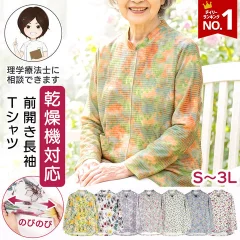 Front-opening Long-sleeve T-shirt (Seta CaRE; snap buttons; dryer-safe)Snap buttons mean it goes on without pulling it over the head. Cotton-blend fabric, with a printed label at the neck.
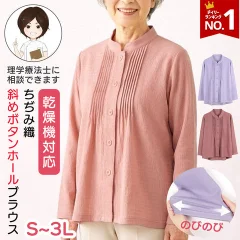 Chijimi-weave Pintuck Blouse (front-opening; dryer-safe)Light, stretchy crinkle-weave fabric, with diagonal buttonholes that make the buttons easier to do up and undo.
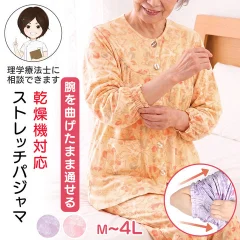 Stretch Pajamas (women's; front-opening; dryer-safe)Front-opening pajamas that make it easier to help someone change, even lying down. The sleeve and hem elastic can be replaced. Dryer-safe (up to 60°C). Sizes M to 4L.
These are examples of clothes designed with front openings and ease of dressing in mind. They are not guaranteed to be suitable for people with a tracheostomy. Please check the neckline shape and safety when worn with medical staff.
4. For a hospital stay, check with the hospital before preparing clothes
If the person is going into hospital, before buying new hospital clothes, check whether the hospital lends hospital clothes and whether it specifies or recommends what to wear.
There may also be rules on the shape of clothing for managing the tracheostomy tube and daily care. This column explains in more detail what to check before admission.
Do you need to buy hospital clothes? What to check before admission to a rehabilitation hospital5. Clothes you already have may be usable
Having a tracheostomy doesn't necessarily mean you must buy special new clothes.
For example, front-opening pajamas or cardigans you already have at home may be usable if the neckline, material and ease of dressing are suitable.
First, check whether any of the clothes the person has been wearing can be used.
Of course, they must not block the tube opening or get in the way of necessary care.
What matters is not buying special clothes because of a tracheostomy, but choosing clothes that suit the person's condition and daily life.
Points to check before choosing clothes
- The neckline doesn't block the tracheostomy tube opening
- The fabric isn't fuzzy and doesn't shed fibers easily
- It won't catch on the tube or its ties when dressing
- For a hospital stay, you've checked rental and any dress rules
- You've asked a doctor or nurse whether it's fine to use
6. If you're unsure about choosing clothes, ask Setagaya Kaigo
- "We're looking for front-opening clothes with room at the neck."
- "They need help dressing, so we want clothes that are easy to put on them."
- "We don't know what clothes suit their current condition."
In cases like these, please talk to Setagaya Kaigo.
Setagaya Kaigo has physical therapists and occupational therapists on staff.
We help you choose clothes while listening to the person's physical condition, any difficulties when dressing, and their daily life.
However, managing the tracheostomy tube and whether clothes are medically fine to use must be checked by medical staff.
Consult via LINEMake use of the clothes you already have, and let's think together about only the clothes that are newly needed.
Setagaya Kaigo helps you choose clothes that give peace of mind to both the person and their family.
References and sources
The explanations in this column about safety around the tracheostomy tube are based on patient leaflets published by the following hospitals.
1. Memorial Sloan Kettering Cancer Center (US): explains not covering the tracheostomy tube opening with clothing, and avoiding clothing that may shed fibers, such as fleece.
Memorial Sloan Kettering Cancer Center: Caring for Your Tracheostomy2. Gloucestershire Hospitals NHS Foundation Trust (UK): gives not blocking the end of the tracheostomy tube as the condition for choosing clothes around the neck.
Gloucestershire Hospitals NHS Foundation Trust: Temporary tracheostomy*This column provides general information on choosing clothes and does not guarantee medical safety in individual cases. When choosing clothes, follow the instructions of the medical staff who manage the tracheostomy.