Walks are precious time for both mind and body
When caring for a family member begins, many people think:
- I'd like to take them out for a walk.
Many feel this way.
Time spent breathing fresh air, feeling the seasons and looking at the scenery can also be a refreshing change for the person.
On the other hand, out of worry about falls and so on, many families feel uneasy:
- Is it all right to walk together?
This is a common concern.
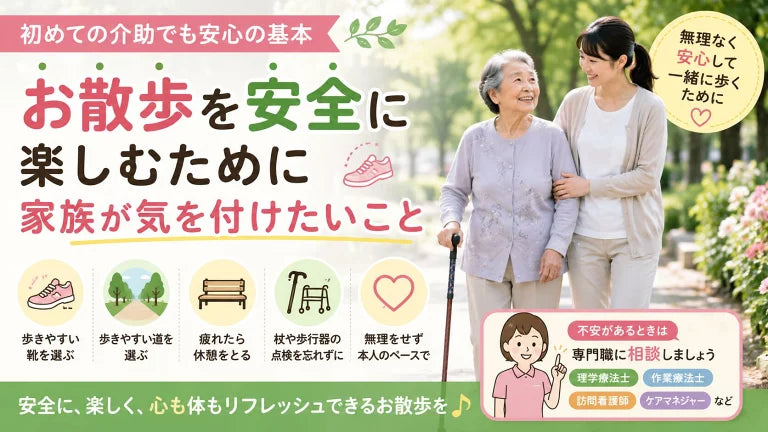
Here we introduce points families should know to enjoy walks safely.
Don't push it — value the person's own pace
Walking speed and how far someone can walk differ from person to person.
Because the person may lose their balance, don't pull on their arm or hand; match their walking speed.
- Let's stop here for today.
Ending without strain like this also leads to safe walks.
*For specific ways of helping, please consult a professional such as a physical or occupational therapist.
Choose routes that are easy to walk
Where possible, it is reassuring to choose:
- Routes with few steps
- Flat routes
- Routes with good visibility where you can walk safely
Routes like these.
On rainy days or when the ground is slippery, it is also important not to push it and to go another day.
Choose shoes that are easy to walk in
Shoes that are easy to walk in also help prevent falls.
For example, we recommend:
- The right size for the feet
- Shoes that hold the heel firmly
- Non-slip soles
Shoes like these.
Slippers and sandals that come off easily can cause falls.
Keep an eye out: "Are they getting tired?"
During a walk, pay attention to the person's expression and the way they walk.
For example, it is reassuring to walk while checking:
- Are they out of breath?
- Do they look tired?
- Are they unsteady on their feet?
and so on.
If they feel tired, don't push it — take a rest on a bench or similar.
If they use a walking stick or walker, checking it matters too
Check the walking stick or walker they usually use regularly.
For example, it is reassuring to look at:
- Is the rubber tip of the stick worn down?
- Is the walker wobbly?
and so on.
If you are worried about how they walk, consult a professional
How a person walks and how to help them depend on their physical condition.
Rather than forcing help in your own way, we recommend consulting a physical therapist, occupational therapist or visiting nurse and learning a method that suits the person.
Clothing also affects how easy it is to walk
When walking, clothing matters more than you might think.
For example:
- Trousers that are not too long at the hem
- Clothing in materials that are easy to move in
- Clothes that don't squeeze the body too much
These make walks more comfortable.
Trousers chosen with ease of walking in mind
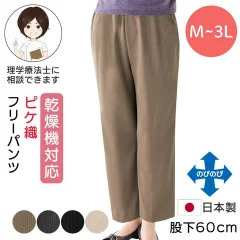
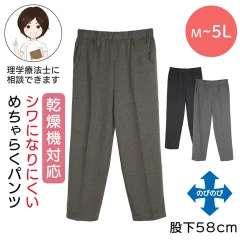
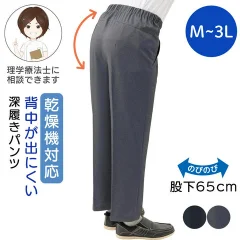
If you are unsure about clothing, ask Setagaya Kaigo
At Setagaya Kaigo, we listen to things such as:
- The person's physical condition
- How easy it is to walk
- How easy it is to change
- How easy it is to move in daily life
and suggest care clothing that suits the person.
Please feel free to ask us.
Feel free to ask us on LINESummary
A walk is precious time, not only for moving the body but also for feeling the seasons and having a change of mood.
To enjoy walks safely, what matters most is not to push it and to match the person's pace.
If you are worried about how they walk or how to help, don't struggle alone. Consult professionals such as physical therapists, occupational therapists or visiting nurses, and enjoy walks in a way that suits the person.
*This article is based on general thinking as of July 2026. Ways of helping someone walk differ depending on the person's physical condition. For specific ways of helping, please consult a professional such as a physical or occupational therapist.