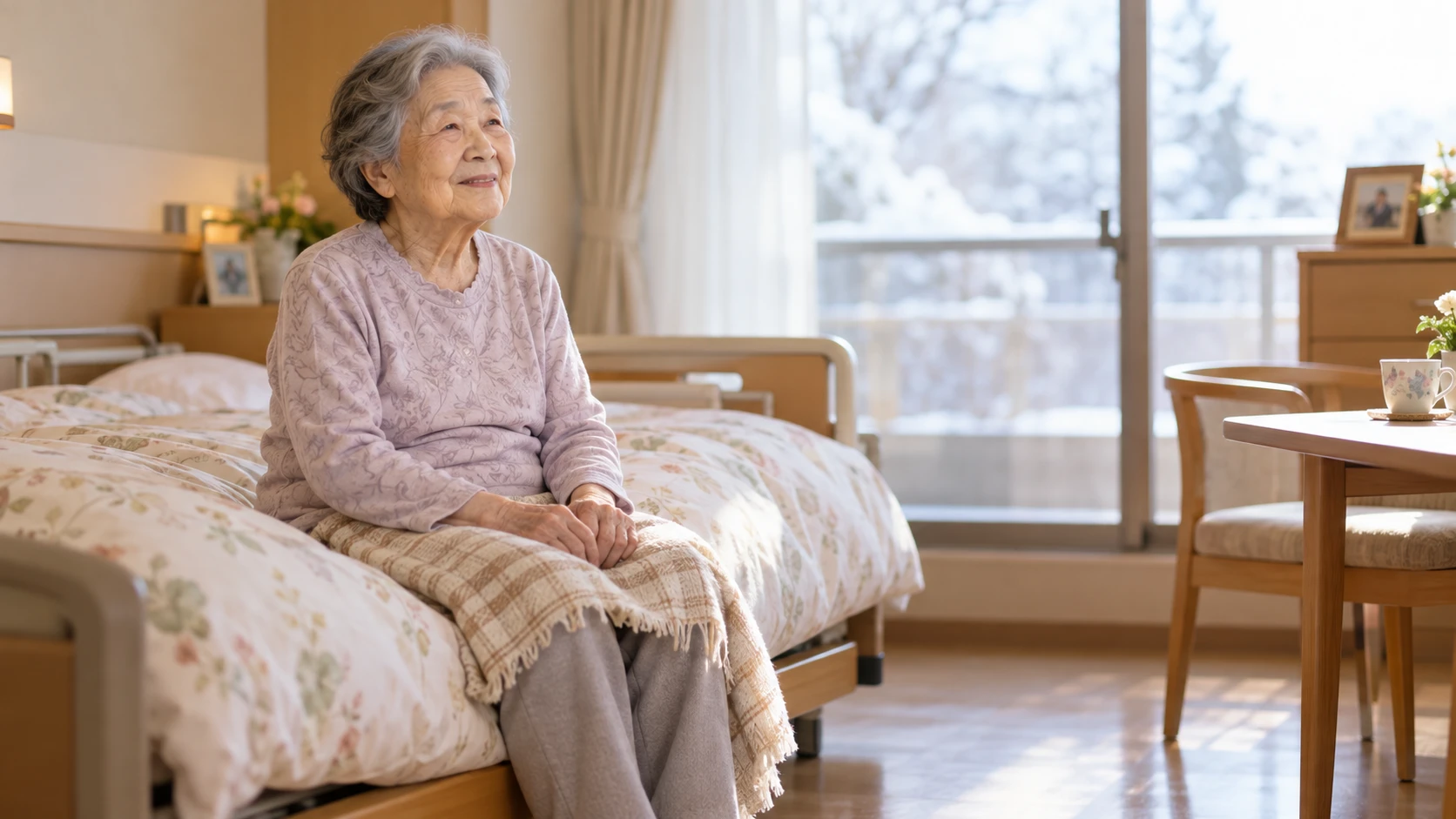
When the temperature drops suddenly, it places various strains on the body.
Older adults in particular may have reduced ability to regulate body temperature and reduced muscle strength, which makes them more susceptible to the cold.
Here are three points to watch for during the cold season.
1. The body tends to stiffen
In a cold environment the muscles tense up easily, and the body can feel harder to move.
Because muscle strength and balance may already be reduced with age, a body that is harder to move in the cold can lead to unsteadiness when standing up or walking.
It is important to keep the body from getting too cold, using warm socks, leg warmers, a belly warmer and the like.
2. Blood pressure tends to rise in cold places
In a cold place, the blood vessels constrict to keep body heat from escaping.
As a result, blood pressure tends to rise.
People whose blood pressure is usually on the high side, or who have heart or blood vessel conditions, need to be careful about blood pressure changes in cold weather.
3. Sudden temperature differences strain the body
Moving from a warm room to a cold changing room or toilet, or going from a cold changing room into a hot bath, can cause large swings in blood pressure.
The strain placed on the body by such sudden temperature changes is commonly called "heat shock" in Japan.
Older adults, and people with conditions such as high blood pressure or heart disease, need to take particular care.
What you can do at home about temperature differences
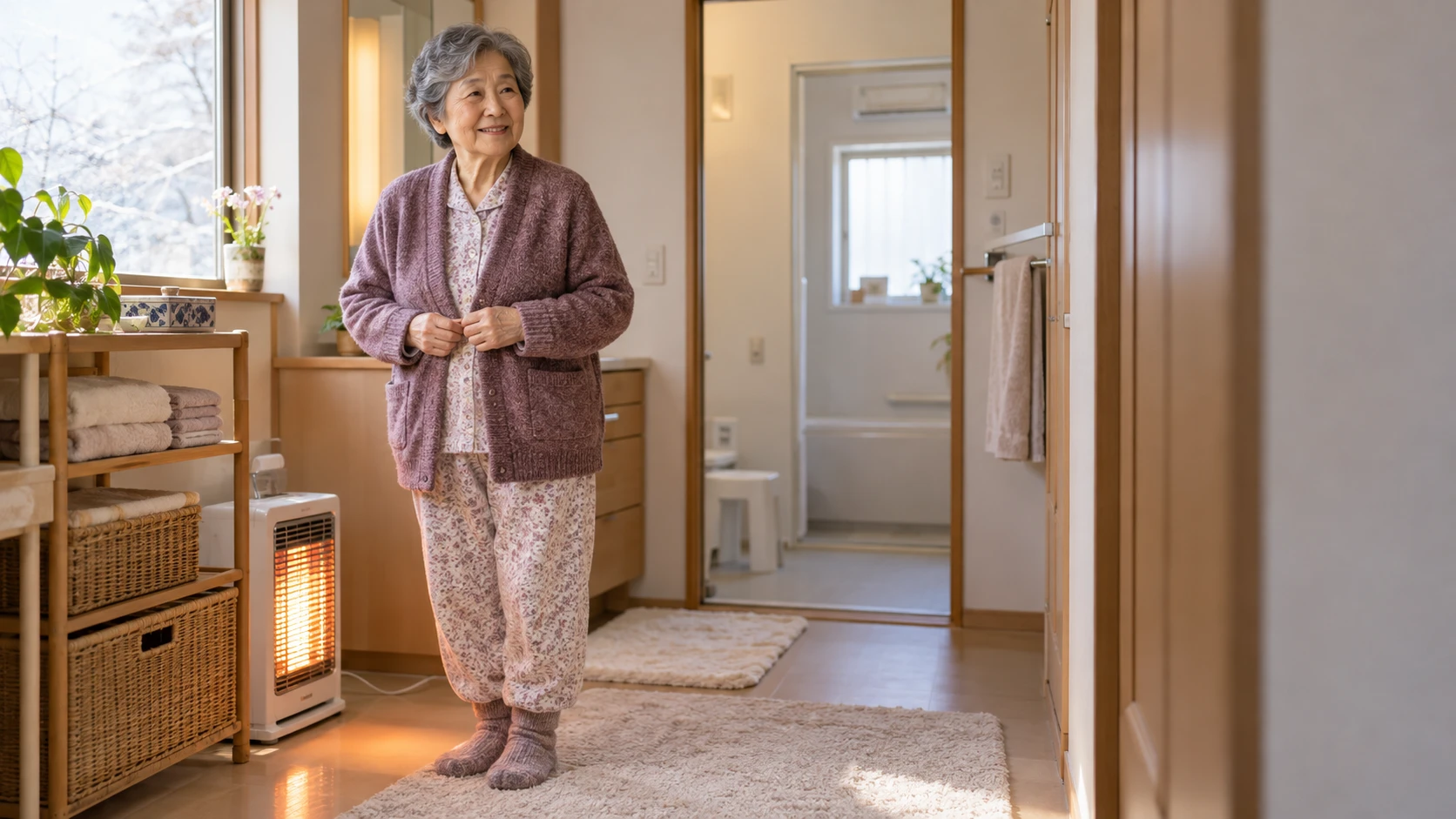
In the cold season, it is important to keep the temperature difference between rooms as small as possible, even inside the home.
- Warm the changing room and toilet as needed
- Warm the changing room and bathroom before bathing
- Do not make the bath water too hot
- Do not stand up suddenly; move slowly
- Avoid having extremely cold spots in the home
These measures can reduce the strain on the body caused by temperature differences.
So that the cold season can be spent with peace of mind, review the home environment together — not only the person themselves, but with the family too.
* This article was written with the cooperation of a physical therapist.